Installation guide
 Owner’s manual



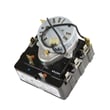
How do I know if my Kenmore dryer thermal fuse is blown?
On Kenmore dryer model 41793142203, a blown thermal fuse (or thermal limiter) commonly shows up as a dryer that won’t start or runs but won’t heat. The most reliable way to confirm it is to unplug the dryer and test the fuse for continuity with a multimeter, as outlined in the 41793142203 owner's manual.
Quick symptoms to look for
- Dryer does not start even though the outlet has power
- Dryer tumbles but won’t heat (especially on electric models if one house fuse is also blown)
- Cycle runs but clothes stay damp and drying time increases
- Dryer stops mid-cycle after overheating or restricted airflow
- You recently had a clogged lint screen or vent restriction
How we confirm a blown thermal fuse (continuity test)
- Disconnect power: Unplug the dryer (and shut off gas if you have a gas model).
- Access the thermal fuse/thermal limiter area (location varies by configuration).
- Remove at least one wire from the fuse terminal.
- Set a multimeter to continuity or ohms.
- Touch probes to the fuse terminals.
- Good fuse: continuity (beep) or near 0 ohms
- Blown fuse: no beep or no measurable continuity
Don’t miss these common look-alikes
The manual’s troubleshooting checklist highlights other issues that can mimic a blown fuse.
| What you see | Common cause | What to check first |
|---|---|---|
| Dryer won’t start | Loose plug, tripped breaker, blown house fuse | Outlet fit, breaker/fuse box, dedicated circuit |
| Tumbles but no heat (electric) | One of two house fuses blown | Replace the blown house fuse(s) |
| No heat (gas) | Gas supply valve closed or poor air supply | Confirm valve open; verify airflow/venting |
Why it matters
A thermal fuse usually opens because the dryer overheated. Replacing the fuse without fixing the overheating cause (lint buildup, crushed vent, blocked exhaust) can lead to repeat failures and poor drying performance.
Last updated: February 2026
How do I tell what model my Kenmore dryer is?
Your Kenmore dryer’s model number is printed on the identification plate on the left side of the door opening. For this unit, the model format typically starts with 417.; write down the full model and serial number so we can match the correct parts and specifications.
Where to look (fast checklist)
- Open the dryer door and look along the left inner door opening for the ID plate
- Copy the full model number (for example, 41793142203) exactly as shown
- Copy the serial number as well; it helps confirm production details
- Take a clear photo of the plate for reference when ordering parts
- Use the model number when checking dimensions, features, and installation requirements in the 41793142203 owner’s manual
What the model number tells you
Kenmore model numbers often start with a 3-digit prefix that identifies the product family. For this dryer, the manual shows the model prefix as 417., which is why entering the complete model number is the most reliable way to get the right Kenmore dryer parts.
| What to record | Example for this dryer | Why it matters |
|---|---|---|
| Model number | 41793142203 | Ensures exact part fit and correct diagrams |
| Serial number | (from ID plate) | Helps confirm version changes within a model |
| Fuel type and hookup | Gas or electric (from install info) | Affects installation parts and troubleshooting |
Why it matters
Using the exact model number prevents ordering look-alike parts that do not fit. It also helps us match model-specific details like rough-in dimensions and door swing options found in the 41793142203 installation guide.
Last updated: February 2026
What is the average lifespan of 41793142203?
The average lifespan of a Kenmore dryer like model 41793142203 is 13 years. Regular lint and vent cleaning, correct installation, and replacing wear items (like the drum belt and bearings) on time are the biggest factors in reaching that service life.
What affects lifespan the most
- Airflow and lint control: restricted venting makes the dryer run hotter and longer.
- Drum support wear: bearings, glides, and felt seals wear and can strain the motor.
- Door closure and switches: a weak latch or switch can cause no-start issues.
- Load size: frequent overloading accelerates belt and bearing wear.
- Preventive cleaning: internal lint buildup increases heat and fire risk.
Maintenance schedule we recommend
The manual for this model calls out periodic deep cleaning; use it as your baseline: see the owner's manual.
| Task | Frequency | Why it matters |
|---|---|---|
| Clean lint screen | Every load | Improves airflow and drying time |
| Check and clean vent duct | Every 3 to 6 months | Prevents overheating and long dry times |
| Clean cabinet interior and exhaust duct | Every 18 months | Reduces lint buildup and fire risk |
| Inspect drum support and belt | Yearly | Prevents squealing, thumping, and no-tumble |
Parts that commonly wear before the dryer is “worn out”
Replacing these wear parts often restores normal operation and extends life:
- Belt 134503600 (part number 134163400) if the drum stops tumbling
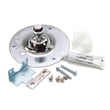
- Dryer drum bearing 131825900 if you hear grinding or the drum feels rough
- Dryer drum glide 137513300 if you hear scraping at the front of the drum
- Lower felt 5303937183 if clothes snag or you see lint leaking around the drum
Why it matters
Knowing the typical 13-year lifespan helps you decide whether a repair (belt, bearing, thermostat, igniter) is a smart investment versus replacing the dryer, especially if performance problems are caused by airflow or normal wear.
Last updated: March 2026