Owner’s manual


How do I tell what model my Kenmore dryer is?
Your Kenmore dryer’s model number is printed on the model and serial number label; on model 11074842400, that label is located at the top inside the dryer door well. Once you have the full model number, we can match the correct parts, diagrams, and specifications.
Where to look on Kenmore model 11074842400
Check these spots in this order:
- Top inside the dryer door well (most common for this model)
- Along the door opening on the cabinet frame
- On the rear panel (less common)
- Inside the cabinet near the lint screen housing (varies by design)
For the exact label location and how it’s referenced in the documentation, use the 11074842400 owner's manual.
What to write down (and why)
Record the information exactly as shown on the label.
- Model number (example format for this series: starts with 110)
- Serial number (helps identify production run details)
- Purchase date (useful for service history and maintenance planning)
Quick guide to what each item does
| Label item | What it’s used for | When it matters most |
|---|---|---|
| Model number | Matching parts and diagrams | Ordering parts like a belt, thermostat, or timer |
| Serial number | Identifying version changes | When a part has multiple revisions |
| Purchase date | Ownership records | Warranty and maintenance tracking |
Why it matters
Kenmore dryers can look similar across different series, but parts like the drum belt, door switch, operating thermostat, and timer can vary by model. Using the exact model number prevents ordering the wrong replacement and reduces downtime.
Last updated: February 2026
What are the most common issues with 11074842400?
For Kenmore dryer model 11074842400, the most common problems are no heat or weak heat, not starting, long dry times, squealing or thumping noises, and the drum not turning. These issues usually trace to airflow restrictions, worn drum support parts, or failed ignition and control components.
Quick checks we recommend first
- Clean the lint screen and confirm strong airflow at the outside vent hood.
- Make sure the door fully closes and the latch engages.
- Verify the cycle and temperature settings match the load.
- Listen for motor hum, clicking at the burner, or belt slip noises.
- Unplug the dryer before removing panels or testing parts.
Common symptoms, likely causes, and related parts
| Symptom | Most common cause | Parts often involved for this model |
|---|---|---|
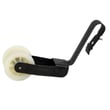
| Drum will not turn | Broken belt or seized support parts | Dryer drum belt 341241, dryer idler pulley WP691366 |
| Dryer will not start | Door switch or start switch issue | Dryer door switch WP3406107, dryer push-to-start switch WP3404233 |
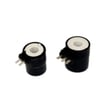
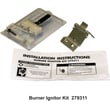
| No heat (gas) | Ignition system or gas valve components | Igniter 279311, dryer valve coil kit 279834, dryer radiant sensor WP338906 |
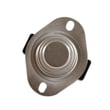
| Overheats or shuts off | Restricted venting or thermostat problem | Dryer high-limit thermostat W11050897, dryer operating thermostat WP3387134 |
| Loud squeal or thump | Worn rollers, idler, or belt path wear | Dryer repair kit 4392065 |
Why it matters
A clogged vent or failing thermostat can cause overheating and repeated shutdowns, while worn belt and drum support parts can lead to a no-tumble condition. Catching the root cause early helps protect the motor and control components.
Where to find model-specific guidance
Use the wiring diagrams, troubleshooting steps, and disassembly notes in the 11074842400 owner's manual to match symptoms to the correct test points and parts.
Last updated: March 2026
What is the average lifespan of 11074842400?
The average lifespan of a Kenmore dryer like model 11074842400 is 13 years. With good airflow (clean venting), routine lint removal, and timely replacement of wear parts, many dryers reach or exceed that service life.
What most affects dryer lifespan
- Venting kept clear and short (restricted airflow drives heat stress)
- Drum support wear (rollers, idler pulley, belt)
- Heat system condition (gas ignition parts and thermostats)
- Load habits (overloading strains the belt and motor)
- Regular cleaning (lint buildup increases temperatures and run time)
Typical lifespan by component (what you replace vs. what ends the dryer)
| Component | Typical role in lifespan | Example parts for this model |
|---|---|---|
| Belt and tensioning | Normal wear items | Dryer drum belt 341241, dryer idler pulley WP691366 |
| Drum support wear items | Normal wear items that get noisy | Dryer repair kit 4392065 |
| Ignition and heat controls (gas) | Common mid-life repairs | Igniter 279311, dryer valve coil kit 279834, dryer operating thermostat WP3387134 |
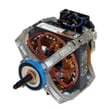
| Motor and control | Less frequent, higher-impact repairs | Dryer motor 279827, dryer electronic control board WPW10476828 |
How to help your 11074842400 reach its full life
- Clean the lint screen every load and wash it monthly to remove fabric softener film.
- Inspect and clean the vent duct at least yearly.
- Stop using the dryer if you smell burning or hear persistent squealing; address wear parts early.
- Use timed dry only when needed; sensor cycles reduce over-drying and heat exposure.
Why it matters
Most dryers fail early from overheating and mechanical wear. Keeping airflow strong and replacing inexpensive wear parts on time reduces stress on the motor, burner system, and electronic controls.
For maintenance intervals and cleaning steps specific to this model, follow the 11074842400 owner's manual.
Last updated: March 2026