Owner’s manual


Does a Samsung washer have a filter that needs to be cleaned?
Yes. The Samsung WA52M7750AW washer has a water-inlet mesh filter in the fill hose connection that needs periodic cleaning; keeping it clear helps prevent slow filling and the 4C water-supply code. Cleaning it once or twice a year is typical for this model (more often if you have sediment).
What filter(s) should you clean on this model?
On the WA52M7750AW, the manual calls out the mesh filter at the inlet valve (where the water hose connects). Some Samsung washers may also have a “magic filter” (lint filter) depending on configuration, so we recommend confirming what your unit includes in the WA52M7750AW owner's manual.
Quick checklist
- Unplug the washer before servicing.
- Turn off both water faucets.
- Remove the inlet hoses from the back of the washer.
- Pull the small mesh screens from the inlet valve ports.
- Rinse and brush off sediment; reinstall screens and hoses.
- Turn water back on and check for leaks.
When to clean it (and what symptoms point to a clogged filter)
A clogged inlet mesh filter restricts water flow and can cause fill problems.
| What you notice | Likely cause | What to do |
|---|---|---|
| Washer fills slowly | Sediment in inlet screen | Clean inlet mesh filter |
| 4C code | Low water flow to washer | Clean screens; verify faucets fully open |
| Poor rinse results | Reduced fill volume | Clean screens; re-run cycle |
| Intermittent filling | Debris shifting in screen | Clean screens; check hose kinks |
Why it matters
A clean inlet mesh filter protects the water inlet valve, helps the washer fill at the correct rate, and reduces nuisance error codes and cycle interruptions.
Last updated: February 2026
What is the lifespan of a Samsung front load washer?
Most Samsung front-load washers last 10 to 15 years with normal household use and basic maintenance. For your Samsung WA52M7750AW (a top-load model), we see a similar real-world lifespan range when it is leveled correctly, not overloaded, and kept clean; use the WA52M7750AW owner's manual for the care and use details that help it reach that range.
Typical lifespan at a glance
| Washer type | Typical lifespan | What shortens it fastest |
|---|---|---|
| Front-load washer | 10 to 15 years | Overloading, poor drainage, mildew buildup |
| Top-load washer (like WA52M7750AW) | 10 to 15 years | Out-of-level cabinet, repeated unbalanced loads, neglected cleaning |
What helps you get the full lifespan
- Load items loosely and avoid overfilling the drum.
- Use the correct detergent amount; too much can cause residue and odors.
- Run the washer’s cleaning cycle regularly (often labeled Self Clean on Samsung models).
- Keep the lid open after loads so moisture can evaporate.
- Make sure the washer sits solidly and level; adjust feet if it rocks.
Parts that commonly affect “end of life” symptoms
When a washer seems “worn out,” it is often a few serviceable parts causing the trouble. On the WA52M7750AW, common wear-related issues include:
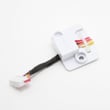
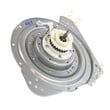
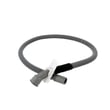
- No drain or slow drain: check the drain path; a failing pump can mimic a dead washer (see washer drain pump assembly DC97-19289B).
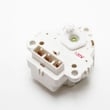
- Won’t fill or fills slowly: sediment or a failing valve can cause long cycles (see Samsung washer water inlet valve DC97-15459G).
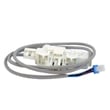
- Lid won’t lock or cycle won’t start: a lid lock problem can stop operation (see washer lid lock assembly DC34-00025E).
Why it matters
Knowing the expected lifespan helps you decide whether to maintain, repair, or replace. If your washer is under about 10 years old, fixing a single failure (drain pump, inlet valve, lid lock) often restores full performance and extends service life.
Last updated: February 2026
What is the most common problem with Samsung washing machines?
For Samsung washers like model WA52M7750AW, the most common issues we see are spin problems (shaking, banging, not reaching full spin) and drain problems (won’t drain, stops mid-cycle). Many cases trace back to load balance, leveling, or a restricted drain path; check the WA52M7750AW owner's manual for model-specific troubleshooting and test steps.
Most common symptoms and what they usually mean
- Excessive vibration or “walking”: washer not level, load is unbalanced, or calibration is needed.
- Won’t drain or drains slowly: kinked hose, blockage, or a failing pump.
- Stops mid-cycle: often triggered by drain, lid lock, or out-of-balance detection.
- Error codes on the display: the washer is pointing you to a system (water level sensor, motor, drain, etc.).
- Odors or residue: excess suds and buildup; cleaning cycles and drying the tub help.
Quick checks we recommend first (fastest wins)
- Redistribute the load (avoid one heavy item by itself).
- Level the washer; re-check all feet are firmly on the floor.
- Run the built-in test cycle (Rinse+Spin with about 6 lb of laundry) to confirm it fills, spins without excessive rocking, and drains well.
- Run Calibration Mode after installation or after moving the washer (improves load weight detection).
- Inspect the drain setup: hose height, kinks, and clogs at the standpipe.
When it’s likely a part problem
If the washer consistently fails the same function (especially draining or locking), a component is often at fault.
| Symptom | Common suspect | What you’ll notice |
|---|---|---|
| Won’t drain / ND-type behavior | Drain pump or drain hose | Water left in tub, long drain time |
| Won’t start spin, stops when spinning | Lid lock | Lid won’t lock, cycle pauses |
| No fill / slow fill | Water inlet valve | Long fill time, low water flow |
Model-matched parts we commonly replace for these symptoms include the washer drain pump assembly dc97-19289f, washer lid lock assembly DC34-00025E, and Samsung washer water inlet valve DC97-15459G.
Why it matters
Spin and drain issues can trigger repeated stops, poor cleaning, and standing water. Addressing leveling, calibration, and drain flow early prevents bigger wear on the motor and suspension.
Last updated: February 2026