Owner’s manual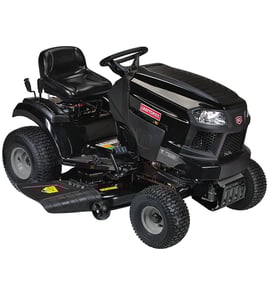



How much horsepower is a 382cc engine?
A 382cc small-engine typically produces about 12 to 13 horsepower on a riding mower like the Troybilt LTX-1842, depending on the engine series, governor setting, and how the manufacturer rates output. For the exact engine rating used on your tractor, check the engine identification details in the LTX-1842 owner's manual.
Most 382cc single-cylinder vertical-shaft engines fall into a narrow working range:
- Typical gross HP range: 12 to 13 HP
- Typical torque feel: strong enough for a 42-inch deck in normal grass
- Best performance: with a sharp blade, clean air filter, and correct belt tension
- Power drops quickly: when the deck is clogged or the blade is dull
Horsepower is not determined by displacement alone. It changes with:
- Engine design (valve train, compression, carburetion)
- Rated RPM and governor setting
- Test standard used (gross vs net ratings)
- Condition (air filter, fuel quality, spark, exhaust restriction)
| Engine size (cc) | Typical horsepower range |
|---|---|
| 300 to 350 | 10 to 12 HP |
| 382 | 12 to 13 HP |
| 420 to 500 | 14 to 18 HP |
Knowing the approximate horsepower helps you match expectations for mowing speed and cutting quality. If your LTX-1842 feels weak, the issue is usually maintenance or drive/deck wear, not the cc rating.
If the tractor moves slowly or slips under load, inspect the ground drive belt and idler system; a worn belt is a common cause. The variable belt 490-501-y035 is one of the key drive components used on this model family.
Last updated: February 2026
What are the most common issues with LTX-1842?
The most common issues we see on the Troybilt LTX-1842 lawn tractor involve drive and deck belt wear, poor cutting from dull or damaged blades, and steering or braking problems caused by worn pulleys, gears, or hardware. Regular inspection and timely part replacement prevent most breakdowns.
- Tractor will not move or slips under load: worn or stretched drive/variable belt, or a failing idler pulley.
- Mower deck will not engage or cuts inconsistently: worn deck belt, damaged spindle/mandrel components, or a blade issue.
- Uneven cut or heavy vibration: bent/dull blade, loose mounting hardware, or a worn spindle assembly.
- Hard steering or excessive play in the wheel: worn steering gear or pinion gear, loose steering shaft connections.
- Weak stopping or dragging: brake puck wear or linkage out of adjustment.
- Park on level ground, set the parking brake, remove the key, and let hot parts cool.
- Inspect belts for glazing, cracking, fraying, or rubber dust near pulleys.
- Check blade condition and tightness; look for bends and rounded cutting edges.
- Spin idler pulleys by hand (engine off); roughness or wobble indicates wear.
- Check steering for looseness at the steering wheel and front axle pivot points.
| Symptom | Common wear item | Example part on this model page |
|---|---|---|
| Slipping or no drive | Variable/drive belt | Variable belt 754-0467 |
| Poor cut quality | Blade | Lawn mower blade 742-0616A |
| Belt squeal, poor engagement | Idler pulley | Idler pulley 756-0981A |
| Weak braking | Brake puck | Puck brake 717-0678 |
| Steering play | Steering gear | Steering gear 717-1550D |
On an LTX-1842, belts, blades, pulleys, and steering/brake components are wear items. Catching wear early protects the deck, spindles, and transmission from secondary damage and keeps your cut quality consistent.
For model-specific diagrams, adjustment points, and maintenance intervals, use the LTX-1842 owner’s manual.
Last updated: March 2026
What engine is in a Troy-Bilt LTX 1842?
The Troy-Bilt LTX-1842 lawn tractor uses a single-cylinder, vertical-shaft gasoline engine; the exact engine brand and horsepower depend on the specific production version of the LTX-1842. We recommend confirming the engine model and type directly from the engine ID label and the parts list in the LTX-1842 owner's manual.
Look for the engine identification label on the engine itself (not on the mower frame). Common locations include the blower housing, valve cover area, or near the muffler.
- Record the engine manufacturer (often Briggs & Stratton or Kohler on tractors in this class)
- Record the engine model, type, and code/spec numbers
- Match those numbers to the engine section of the parts information
- Use the engine code/spec to get the correct tune-up and gasket parts
- If the label is dirty, wipe it gently; do not scrape off printed numbers
The LTX-1842 manual includes an engine accessory parts list for models LTX-1842 and LTX-2146, which confirms the tractor is supported with model-specific engine-related components (for example, muffler and exhaust-related hardware). That means the most accurate way to pin down the exact engine is by the engine ID label plus the manual’s parts references.
| Part type | What it helps with | When it’s commonly needed |
|---|---|---|
| Muffler/deflector | Directs exhaust and reduces noise | Rust, cracks, loud exhaust |
| Exhaust gasket | Seals exhaust to prevent leaks | Popping noise, soot marks |
| Fuel line hose | Delivers fuel to carburetor | Cracking, fuel smell, leaks |
Engine families can look identical but use different carburetors, filters, spark plugs, and gaskets. Using the engine model and code prevents wrong-part returns and helps your LTX-1842 start easier, run smoother, and cut consistently.
Last updated: February 2026