Owner’s manual


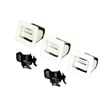
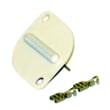
Can I replace a dryer heating element myself?
Yes, on the Kenmore 11066912691 electric dryer, replacing the heating element is a common DIY repair if you can safely disconnect power, access the heater housing, and reconnect wires correctly. We recommend following the step-by-step disassembly and safety guidance in the 11066912691 owner's manual.
- Unplug the dryer or shut off the breaker before opening any panels.
- Never work on the heater circuit with power connected.
- Avoid damaging wires and thermostats while you have the cabinet open.
- Replace all panels before operating the dryer.
- Clean lint from the base and venting while you are in there (lint buildup is a fire risk).
Most Kenmore electric dryers of this design use a heater housing that you access from the rear or lower front area. The basic workflow is:
- Disconnect power.
- Remove the access panel(s) to reach the heater housing.
- Label or photograph wire locations.
- Remove the old element and install the replacement.
- Reassemble, restore power, then run a heat cycle and confirm warm air at the exhaust.
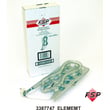
If you are replacing the element, use the correct part for this model: dryer heating element WP3387747.
After reassembly, run the dryer 5 to 10 minutes on a heat cycle (not Air Dry/Air Fluff) and verify airflow and heat.
| What you observe | What it usually means | What to do next |
|---|---|---|
| Drum runs, no heat | One house fuse is blown or breaker tripped (dryer can still run) | Reset/replace the tripped side, then retest |
| Weak airflow at outside hood | Vent restriction or crushed/kinked vent | Clean/replace venting with heavy metal or flexible metal vent |
| Heat starts then stops | Overheating from poor airflow, lint buildup, or a failed safety device | Clean venting and inspect safety components |
A heating element failure can look like a “no heat” problem, but restricted venting or a tripped fuse/breaker can cause the same symptom. Verifying airflow and cleaning lint while you repair helps prevent repeat failures and long dry times.
Last updated: February 2026
How do I know if my Kenmore dryer thermal fuse is blown?
If your Kenmore electric dryer model 11066912691 won’t start or it runs but produces no heat, the thermal fuse is a top suspect. The sure way to know is a continuity test with a multimeter; a good fuse shows continuity, a blown fuse reads open.
- Dryer won’t start even with the door closed and a cycle selected
- Dryer runs but clothes stay damp because there’s no heat
- Dryer seems to “operate,” but heat never comes on (often happens when one house fuse trips)
- Dry times suddenly get much longer
- You notice weak airflow at the outside exhaust hood
- Unplug the dryer (or switch off the breaker).
- Access the thermal fuse location shown in the 11066912691 owner's manual.
- Pull at least one wire off the fuse terminal.
- Set a multimeter to continuity or ohms.
- Touch probes to the fuse terminals.
- Continuity / near 0 ohms: fuse is good
- No continuity / OL: fuse is blown and must be replaced
A thermal fuse usually opens because the dryer overheats from restricted airflow. The manual’s troubleshooting guidance points to checking airflow and cleaning or replacing crushed or kinked venting.
Airflow checks we recommend:
- Clean the lint screen and run the dryer 5 to 10 minutes
- Check strong airflow at the outside exhaust hood
- Inspect the vent for kinks, crushing, or heavy lint buildup
- Use heavy metal or flexible metal venting (avoid plastic or foil-style vent)
| What you see | Likely cause | What to check next |
|---|---|---|
| Runs, no heat | House power issue | One fuse blown or breaker tripped (dryer can run but not heat) |
| Won’t start | Blown thermal fuse | Continuity test on the fuse |
| Poor drying | Vent restriction | Airflow at exhaust hood, vent condition |
| Heat cycles oddly | Control thermostat issue | Consider testing the operating thermostat |
The thermal fuse is a safety device; replacing it without correcting venting problems often leads to repeat failures and longer dry times.
Last updated: February 2026
How do I tell what model my Kenmore dryer is?
Your Kenmore dryer’s model number is printed on the model and serial number plate; once you find it, write down the full model number and serial number so you can match the correct parts and follow the right operating and installation instructions for your exact dryer.
On most Kenmore electric dryers, the model and serial number plate is in one of these common spots:
- Inside the dryer door opening (around the door frame)
- On the back panel of the dryer cabinet
- Near the lint screen housing (depending on the design)
- Behind the lower access panel (on some versions)
For your Kenmore model 11066912691, the 11066912691 owner's manual explains that the model and serial numbers are located on the model and serial number plate and should be recorded for future reference.
Record these exactly as shown on the plate:
- Model number (example: 11066912691)
- Serial number
- Date of purchase (if you still have it)
The model number is what we use to ensure you get parts that fit your exact Kenmore dryer configuration. Even small model variations can change the correct heating, drum support, or door switch parts.
| Item | What it tells us | Used for |
|---|---|---|
| Model number | The exact dryer design and parts list | Ordering parts, diagrams, manuals |
| Serial number | Production run details | Service history, warranty reference |
Try these steps before you give up:
- Wipe the plate gently with a damp cloth and dry it
- Use a flashlight at an angle to make faint printing stand out
- Take a close-up photo and zoom in
- Copy the number exactly, including all digits
Last updated: February 2026
How to tell if a dryer heating element is bad?
A bad heating element in our Kenmore electric dryer model 11066912691 usually shows up as a dryer that tumbles normally but produces little or no heat, so loads take much longer to dry. We confirm it by safely testing the heater circuit for continuity and checking for a short to the heater housing; see the 11066912691 owner's manual for the model’s heat-check steps.
- Dryer runs but clothes stay cool or damp
- Dry times suddenly get much longer
- You feel little or no heat in the drum a few minutes into a heated cycle
- A burning smell only on first use can be normal; persistent overheating smells point to a problem
- The dryer may stop heating if a safety device opens (thermal fuse or thermal cut-off)
The manual’s final setup check is a good real-world test: run a heated cycle (not Air/Fluff) for about 5 minutes, then open the door and feel for heat inside the drum. If there’s no heat, move on to electrical testing and airflow checks. Refer to the 11066912691 owner's manual.
- Unplug the dryer (or switch off the breaker) before opening panels.
- Access the heater terminals and test continuity across the heating element.
- Test for a short to ground by checking from each heater terminal to the metal heater housing.
Typical readings for many electric dryer elements are about 10 to 50 ohms across the element. An open circuit (no continuity) or a short to the housing means the element is bad.
| Test | What you’re checking | What “bad” looks like |
|---|---|---|
| Continuity across element | Element coil is intact | No continuity (open) |
| Terminal to housing | Coil is not touching metal | Continuity to housing (short) |
If the element tests good, these parts commonly stop heat on Kenmore electric dryers:
- Dryer thermal fuse WP3390719 (opens if the dryer overheats)
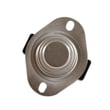
- Dryer operating thermostat WP3387134 (controls cycling temperature)
- Wiring at the heater terminals (burnt or loose connections)
A dryer that “runs but won’t heat” is often caused by overheating from restricted airflow (crushed/kinked vent, lint buildup). Fixing the airflow issue prevents repeat failures of the heating element, thermal fuse, and thermostat.
Last updated: February 2026
How to tell if a dryer start switch is bad?
On a Kenmore 11066912691 electric dryer, a bad start switch usually shows up as a dryer that will not run when you press PUSH TO START (with the door closed and the timer set). The quickest confirmation is a continuity test: the switch should read closed only while the button is pressed.
We rule out the common “won’t run” causes listed in the troubleshooting section of the 11066912691 owner's manual.
- Confirm the dryer door closes firmly (opening the door stops the dryer).
- Set the Cycle selector (timer) to a drying cycle, not OFF.
- Press PUSH TO START firmly.
- Check house power: reset tripped breakers or replace blown fuses (use time-delay fuses if applicable).
- Clean the lint screen and make sure airflow is not restricted.
- Unplug the dryer (or switch off the breaker).
- Access the console and locate the start switch behind the PUSH TO START button.
- Label and remove the wires from the switch terminals.
- Set your multimeter to continuity (or lowest ohms range).
- Test across the switch terminals:
- Button not pressed: meter should show open (no beep, OL/infinite).
- Button pressed: meter should show closed (beep, near 0 ohms).
| Test result | What it indicates | Next step |
|---|---|---|
| No continuity when pressed | Start switch is bad | Replace the start switch |
| Continuity when pressed | Switch is likely good | Check door switch, motor, belt, thermal fuse |
| Intermittent readings | Worn/loose internal contacts | Replace the start switch |
These failures can mimic a bad start switch.
- Blown thermal fuse (often tied to vent restriction); see dryer thermal fuse WP3390719.
- Failed door switch or misaligned door latch.
- Seized motor or drum that will not turn freely.
- Broken belt or idler issue (some models will still run; others may not).
- Timer or control not sending power in the selected cycle.
A start switch is a simple on-demand contact; if it cannot close electrically, the motor circuit never energizes. If it tests good, replacing it will not fix the real problem, so the continuity test prevents wasted time and parts.
Last updated: February 2026
What are common problems with Kenmore dryers?
Common problems we see on Kenmore electric dryers like model 11066912691 are no heat, long dry times, drum not turning, and unusual noise. Most of these trace back to airflow restrictions (lint and venting), normal wear items (rollers, idler), or heat-safety parts opening to prevent overheating; see the 11066912691 owner's manual for operating and troubleshooting basics.
- Dryer won’t heat: failed heating circuit parts such as the dryer heating element WP3387747, operating thermostat, or a blown thermal fuse.
- Takes too long to dry: crushed or kinked venting, clogged lint screen, or restricted exhaust ducting.
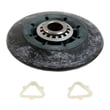
- Drum won’t tumble: worn idler pulley, drum support rollers, or a drive motor issue.
- Loud thumping/squealing: drum rollers can thump after sitting, and worn rollers or an idler pulley can squeal.
- Stops when door opens: this is normal; the dryer will not restart until the door is closed and Start is pressed.
- Clean the lint screen before every load.
- Confirm the vent behind the dryer is not crushed or kinked.
- Run a timed cycle and verify strong airflow at the outside vent hood.
- Avoid overloading; heavy loads extend dry time and stress drum support parts.
- If you hear a thump after the dryer has been sitting, let it run 5 minutes; it often smooths out.
| Symptom | Common fix part | What it does |
|---|---|---|
| No heat | Dryer heating element (WP3387747) | Produces heat for electric drying |
| No heat or won’t run (overheat event) | Dryer thermal fuse (WP3390719) | Opens to stop heat/run when overheating occurs |
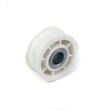
| Squeal or drum drag | Dryer idler pulley (279640) | Keeps belt tension steady |
| Thump/rumble | Support kit (WPW10314173) | Restores drum support roller function |
Airflow problems do more than slow drying; they raise operating temperatures, which can trip heat-safety devices (like a thermal fuse) and accelerate wear on rollers, seals, and the blower system.
Last updated: February 2026
What is the life expectancy of a Kenmore dryer?
A Kenmore dryer typically lasts 10 to 13 years. With consistent care (especially good airflow and lint control), many Kenmore electric dryers like model 11066912691 run 15 years or more before major repairs become common. See the 11066912691 owner's manual for the maintenance routine that keeps performance steady.
Most dryers fail early due to heat stress and restricted airflow, not because the timer or motor “wears out” first.
- 10 to 13 years: typical service life for a household dryer
- 15+ years: common with light to moderate use and good venting
- Shorter lifespan: heavy daily loads, long vent runs, crushed vent hose, or skipped cleaning
- Longer lifespan: prompt repairs, stable power supply, and keeping the drum support system in good shape
These actions reduce overheating, long dry times, and strain on the drive system.
- Clean the lint screen after every load; replace a damaged screen such as the screen W10120998
- Keep the exhaust path clear (lint buildup is the #1 cause of overheating)
- Avoid overloading; it stresses the belt, rollers, and motor
- Listen for thumping or squealing; worn rollers are often addressed with a support kit WPW10314173
- If the dryer overheats or stops mid-cycle, check airflow first; a blown dryer thermal fuse WP3390719 is often a symptom of vent restriction
| What you’re seeing | Most likely impact on lifespan | Usual next step |
|---|---|---|
| Clothes take longer to dry | Higher heat stress, faster wear | Clean venting and lint areas |
| Loud thumping/squeal | Drum support wear | Inspect rollers/idler, replace as needed |
| No heat but drum turns | Heating circuit issue | Test heater, thermostat, fuses |
| Repeated shutdowns | Overheating risk | Fix airflow before replacing parts |
A dryer that runs hot or runs too long wears out the heating system, thermostats, and drum support parts faster. Good airflow and routine cleaning keep temperatures controlled, cycles shorter, and the motor and timer under less strain.
Last updated: February 2026