Installation guide
 Owner’s manual



What is the average lifespan of a Maytag dishwasher?
A Maytag dishwasher typically lasts about 10 years with normal household use and basic maintenance. For your Maytag MDB8959SFE4, keeping filters and spray paths clean and using rinse aid helps reduce wear on key systems like the pump, heater, and door seals.
Most dishwashers reach end-of-life due to leaks, poor cleaning, or motor/pump issues rather than the tub itself.
- Water quality: hard water speeds up mineral buildup and can shorten component life
- Maintenance: regular cleaning reduces strain on the circulation system
- Loading habits: overloading can block spray arms and increase cycle stress
- Detergent and rinse aid: correct amounts prevent residue and improve drying
- Heat and drying use: heated dry can increase wear on the heating system over time
Your installation literature notes modern, energy-efficient dishwashers often run longer cycles (about 2 to 3 hours per load) and rely on rinse aid for good drying. Those longer cycles are normal and not a sign the dishwasher is wearing out early. See the MDB8959SFE4 installation guide for operating expectations and setup checks.
| Item | Typical expectation | Why it matters |
|---|---|---|
| Lifespan | ~10 years | Helps plan repair vs. replace decisions |
| Cycle length | 2 to 3 hours (often longer with options) | Longer cycles are normal for energy savings |
| Drying performance | Best with rinse aid | Reduces spotting and moisture left behind |
If you see these repeatedly, it often means major components are wearing out:
- Water left in the tub after cycles (drain system problems)
- Loud grinding or humming during wash (pump or motor strain)
- Persistent leaks at the door or bottom edge
- Dishes stay dirty even after cleaning filters and spray arms
- Burning smell or no heat (heating circuit issues)
Knowing the typical lifespan helps you decide when a repair (like a pump, valve, or seal) makes sense versus investing in a newer, more efficient dishwasher.
Last updated: January 2026
Does my Maytag dishwasher have a filter that needs to be cleaned?
Yes. Your Maytag dishwasher model MDB8959SFE4 uses a filter system that should be checked and cleaned periodically to prevent poor cleaning, odors, and drain problems. We recommend following the exact filter access and cleaning steps in the MDB8959SFE4 owner’s manual.
Common signs the filter area needs attention include:
- Grit or food particles left on dishes after a cycle
- Cloudy glasses even with rinse aid
- Musty odor inside the tub
- Standing water or slow draining at the end of the cycle
- Unusual grinding or rattling during wash or drain
Use these steps as a safe, general approach; your manual shows the exact filter style and removal method for MDB8959SFE4.
- Turn off the dishwasher and let it cool if it just ran
- Remove the lower rack
- Twist and lift out the cylindrical filter (and any flat screen below it, if equipped)
- Rinse under hot water; use a soft brush to remove grease and debris
- Clean the sump area around the filter opening (remove glass or labels carefully)
- Reinstall the filter fully seated and locked before running a cycle
| Avoid | Why it matters |
|---|---|
| Running without the filter installed | Debris can reach the pump and cause damage or clogs |
| Using harsh cleaners or wire brushes | Can damage filter mesh and reduce performance |
| Leaving the filter loose | Can cause noise, leaks, or poor wash results |
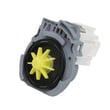
A clogged drain path or a weak drain pump can mimic a “dirty filter” problem. If your dishwasher still won’t drain after cleaning, the drain pump is a common next check on this model. The model-specific replacement part is the dishwasher drain pump WPW10348269.
A clean filter keeps water moving correctly through the wash system, helps the spray arms maintain pressure, and reduces strain on the drain system. That directly improves cleaning performance and helps prevent repeat clogs.
Last updated: January 2026
What is the most common problem with a Maytag dishwasher?
The most common Maytag dishwasher problem is poor cleaning or poor draining, usually caused by a clogged filter/sump area, a blocked drain hose, or a failing drain pump. On the Maytag MDB8959SFE4, start with basic cleaning and drain checks before replacing parts.
- Turn off power at the breaker before inspecting under the unit.
- Remove and rinse the filter area and clear any debris from the sump.
- Check the sink/disposer connection for a blockage (and confirm the disposer knockout plug was removed if newly installed).
- Inspect the drain hose routing for kinks and make sure it has a proper high loop.
- Run hot water at the sink for 30 to 60 seconds before starting a cycle.
| Symptom | Most likely cause | What to check first |
|---|---|---|
| Water left in tub | Drain restriction or weak drain pump | Hose, air gap/high loop, pump inlet |
| Dishes gritty or still dirty | Clogged filter/spray issues | Filter, spray arms, loading |
| Detergent not dissolving | Low water temp or poor wash action | Hot water, spray arms, dispenser |
| Won’t start | Door not latching or control issue | Latch, power, cycle selection |
If the dishwasher won’t drain or drains slowly, these model-matched parts are common fixes:
- Dishwasher drain pump WPW10348269: replaces a weak or seized pump that can’t push water out.
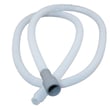
- Dishwasher drain hose 8269144A: replaces a split, kinked, or internally restricted hose.
Poor draining and poor cleaning often share the same root cause: restricted water flow. When water cannot circulate or evacuate correctly, you can get standing water, odors, detergent residue, and repeat cycle failures.
Use the MDB8959SFE4 installation guide for drain routing requirements, cabinet opening considerations, and installation checks that directly affect draining and performance.
Last updated: January 2026
Is Maytag MDB8959SFE4 discontinued?
Yes. The Maytag MDB8959SFE4 dishwasher model is typically considered discontinued once the manufacturer stops producing it, even though we may still offer replacement parts and documentation to keep it running.
We treat a dishwasher as discontinued when it is no longer being manufactured, but support often continues through parts availability.
- If you can still buy common service parts, the model is discontinued but still supportable
- If key assemblies become hard to find, repairs may shift toward alternative fixes (cleaning, adjustments) or major component replacement
- Your best confirmation points are the model’s documentation and the parts list for your exact model number
Discontinued does not mean “unrepairable.” For MDB8959SFE4, many high-wear items are commonly replaced during ownership.
| What you need | What to do | Example part for this model |
|---|---|---|
| Dishwasher won’t drain | Check drain path, then test the drain pump | Dishwasher drain pump WPW10348269 |
| Door won’t latch or won’t start | Inspect latch alignment and switch action | Dishwasher door latch WPW10653840 |
| Not drying well | Verify heater circuit and rinse aid use | Element assembly W10703867 |
Knowing the model is discontinued helps set expectations: you can usually keep a Maytag dishwasher running for years with routine maintenance, but planning ahead for parts (like a drain pump, door latch, or heating element) prevents downtime.
- Use the MDB8959SFE4 installation guide to confirm installation requirements (water, drain, electrical) that can affect performance
- Check for error indications and match them to Maytag guidance using Maytag microclean he dishwasher error codes
- If symptoms are “won’t start,” follow a structured diagnosis path before replacing parts
Last updated: January 2026