Owner’s manual
 Error Codes


What year did the Maytag Neptune come out?
The Maytag Neptune washer line first came out in 1997. For your Maytag MAVT236AWW, the owner's manual is dated 2006, which helps confirm the Neptune launch year is separate from your specific washer’s manual publication date.
Quick timeline
| Item | Date | What it tells you |
|---|---|---|
| Maytag Neptune introduction | 1997 | First year Neptune washers were introduced |
| MAVT236AWW use and care guide | 2006 | The manual printing date for this washer model’s guide |
How to confirm what you have at home
Neptune is a product line name, while MAVT236AWW is a specific model number. To confirm whether your washer is a Neptune model (and to match the right parts list), we recommend:
- Check the model/serial tag and confirm it reads MAVT236AWW
- Compare your control panel layout to the diagrams and features in the manual
- Use the model number (not just “Neptune”) when ordering parts like a water inlet valve or drain hose
- If you are troubleshooting, start with the troubleshooting section in the manual before replacing parts
Why it matters
Maytag used the Neptune name across multiple versions and years. Using the exact model number MAVT236AWW prevents ordering the wrong components (for example, a water inlet valve, inlet hose, or drain hose that fits a different Neptune variant).
Last updated: February 2026
What is the most common problem with a Maytag washer?
For the Maytag MAVT236AWW washer, the most common day-to-day problem we see is a no-spin or poor-spin complaint caused by an unbalanced load or the lid not being fully closed. The good news is these are usually quick fixes using the operating and troubleshooting steps in the owner's manual.
Most common issues (and what to check first)
- Unbalanced load during spin: Open the lid, redistribute items, close the lid, then restart the cycle.
- Lid not fully closed: This washer is designed not to agitate or spin with the lid open.
- Drain hose problems: Straighten the hose and remove kinks; make sure the drain hose is secured in the standpipe or laundry tub.
- Suds lock from too much detergent: Rewash without detergent, then use a low-sudsing detergent and the correct amount.
- Power interruption: Check the fuse or reset the circuit breaker, then restart the cycle.
Quick symptom-to-cause guide
| Symptom | Most likely cause | What we recommend |
|---|---|---|
| Won’t spin | Lid open or load off-balance | Close lid; redistribute load; restart |
| Spins but clothes are too wet | Out-of-balance load completed cycle | Redistribute; set for final spin again |
| Won’t drain well | Kinked drain hose or home drain restriction | Straighten hose; clear restriction |
| Stops and starts | Normal cycle pauses or motor overload protector | Wait briefly; reduce load size |
Why it matters
Spin and drain complaints often look like “the washer is broken,” but on the MAVT236AWW they are frequently caused by load balance, suds, or a simple hose routing issue. Fixing those first prevents repeat shutdowns and helps protect the motor from overload.
When a part is the likely fix
If the washer consistently won’t fill, won’t shut off water, or fills very slowly even after checking the supply valves and inlet screens, the water valve can be the root cause. For this model, a common replacement is the washer water inlet valve WP21001932.
Last updated: February 2026
How do I reset the lid lock on a Maytag washer?
For a Maytag MAVT236AWW washer, the most reliable “lid lock reset” is a power reset plus a proper restart: unplug the washer for 5 minutes, plug it back in, then close the lid completely and restart the cycle. This model will not agitate or spin with the lid open. See the owner's manual for operating and restart details.
Quick reset steps (safe and effective)
- Press the cycle selector/control dial in to the off position.
- Unplug the washer for 5 minutes.
- Plug it back in.
- Close the lid firmly (do not slam); make sure it is fully closed.
- Select a cycle again and press the cycle selector dial to start.
- If the washer stopped mid-cycle, open the lid, redistribute the load, close the lid, and restart.
If it still will not spin or agitate
On the MAVT236AWW, a “lid lock” symptom is often just the washer correctly preventing spin for safety when it senses the lid is open or not fully closed.
Check these common causes:
- Lid not fully closed or hinge misalignment
- Load shifted during spin (uneven distribution)
- Control dial not set correctly before restarting
- Power issue (tripped breaker or blown fuse)
- Excess suds (suds lock) from too much detergent
What the washer is designed to do (so the behavior makes sense)
This Maytag washer is designed so it will not agitate or spin when the lid is open, but it can still fill with the lid open so water is available for pretreating or diluting fabric softener.
| Lid position | Fill | Agitate | Spin |
|---|---|---|---|
| Lid open | Yes (can) | No | No |
| Lid closed | Yes | Yes | Yes |
When a part is likely involved
If the lid is fully closed and the washer still will not agitate or spin, inspect the lid switch area and lid alignment. A worn hinge can prevent the lid from closing squarely.
Helpful related part for lid alignment:
Why it matters
Resetting and restarting correctly prevents timer/control damage and helps you avoid repeat no-spin/no-agitate stops caused by an open-lid safety condition, an uneven load, or excess suds.
Last updated: February 2026
How long does a Maytag Neptune washer last?
A Maytag Neptune washer typically lasts 10 to 13 years with normal household use. For your Maytag MAVT236AWW, consistent cleaning, correct loading, and fixing small issues (like draining or filling problems) quickly are the biggest factors in reaching that lifespan.
Typical lifespan and what affects it
Most washers in this class reach the 10 to 13 year range; heavy use and poor maintenance shorten it.
- Load size: Overloading increases strain on the drive system and suspension.
- Detergent use: Too many suds can cause performance issues (including “suds lock”).
- Leveling and flooring: An unlevel washer or weak floor increases vibration and wear.
- Water quality and inlet screens: Sediment can restrict filling and stress the inlet valve.
- Routine interior cleaning: Helps prevent odor, residue, and staining.
Maintenance steps that extend washer life
We follow the care guidance in the owner's manual and these practical habits:
- Clean and freshen the washer interior every 60 to 120 days (more often with frequent cold-water washing).
- Use the correct amount of low-sudsing detergent; if you get a suds lock, rewash without detergent.
- Keep loads balanced; if a load finishes overly wet, redistribute and run a final spin.
- Confirm the washer is leveled; vibration and “walking” accelerate wear.
- Periodically disconnect hoses and clean inlet screens if filling slows.
Quick symptom-to-part check (common wear areas)
If you are troubleshooting filling or draining, these model-compatible parts are common starting points.
| Symptom | What to check first | Example part for MAVT236AWW |
|---|---|---|
| Slow or no fill | Clogged inlet screens, faucet fully open | Washer water inlet valve WP21001932 |
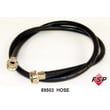
| Leaking at drain | Drain hose routing, cracks, loose clamp | Washer drain hose WP21001872 |
| Vibration or thumping | Leveling, load balance, weak floor | (Often setup related; re-level first) |
Why it matters
A washer that is kept clean, level, and properly loaded runs smoother, spins more effectively, and avoids the repeated stress that wears out components like the inlet valve, drain hose, and drive parts.
Last updated: February 2026