Owner’s manual
 View engine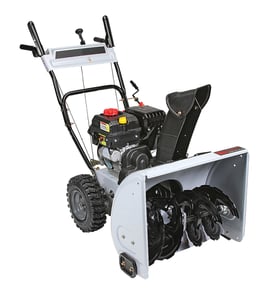



How to tell if a snowblower auger belt is bad?
On the Craftsman snow thrower model 247889701, a bad auger belt usually shows visible wear (cracks, fraying, glazing) or causes poor performance such as the augers not turning consistently, weak snow throwing, or a rubber-burning smell from belt slip. Confirm belt condition and auger control adjustment using the 247889701 operator’s manual.
Quick signs the auger belt is failing
- Cracks across the ribs or on the belt’s inner surface
- Frayed edges, missing chunks, or cords showing
- Shiny, glazed belt surface (often from slipping)
- Augers stop under load or only turn intermittently
- Burning rubber smell after engaging the auger control
What to check on model 247889701 before replacing the belt
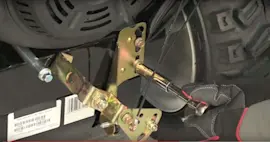
Even a good belt can act “bad” if the auger control cable is out of adjustment.
- With the auger control released, the cable should have very little slack but should not be tight
- Engage the auger for about 10 seconds, release, and confirm the augers fully stop
- If the augers creep when disengaged or slip badly when engaged, adjust the auger control cable before condemning the belt
For a compatible replacement belt for this model, use the snowblower auger drive belt 256963.
Symptoms vs. likely cause
| What you notice | Most likely cause | What we recommend |
|---|---|---|
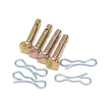
| Augers do not turn at all | Broken/derailed belt, or sheared pins | Inspect belt path; check shear pins |
| Augers turn but snow throws weakly | Belt slipping (worn/glazed) or cable too loose | Inspect belt surface; adjust cable |
| Belt smells hot or looks shiny | Belt slipping from wear or low tension | Replace belt; verify pulley/idler movement |
| Augers keep moving after release | Cable too tight or linkage issue | Adjust cable so augers fully stop |
Why it matters
A slipping auger belt reduces throwing distance and can overheat, glaze, and fail suddenly. Catching belt wear early helps protect the auger drive system and keeps your Craftsman snowblower clearing snow safely and efficiently.
Last updated: January 2026
Should I spray my snowblower with WD-40?
Yes, you can spray a light coating on the Craftsman 247889701 snow thrower to help reduce snow sticking and to protect bare metal from surface rust, but we do not treat original WD-40 as a long-lasting lubricant. For the chute and auger housing, a silicone spray typically lasts longer and is less likely to affect plastics and rubber. See the lubrication and storage guidance in the 247889701 operator's manual.
Where spraying helps most (and where it does not)
Use a light, even coat and wipe off excess.
- Good targets: inside of the discharge chute, chute base, auger housing interior (with engine off)
- Okay for protection: exposed fasteners and painted surfaces (light wipe-down)
- Avoid: belts, pulleys, friction wheel area, tires, and any control surfaces you need to grip
- Never spray: a hot muffler, engine exhaust area, or near open flame
WD-40 vs silicone spray: quick comparison
| Product type | Best use on a snowblower | Typical downside |
|---|---|---|
| WD-40 (water displacer) | Short-term moisture displacement and light rust prevention | Not a durable lubricant; can wash off quickly |
| Silicone spray | Chute and housing non-stick coating | Overspray can make floors slippery |
| Light oil (3-in-1 type) | Pivot points and shafts (where specified) | Can attract dirt if overapplied |
How to apply it safely
- Shut the engine off, remove the key, and let moving parts stop completely.
- Brush out packed snow and ice first; spray works best on a clean surface.
- Apply a thin coat, then cycle the chute by hand (engine off) to spread it.
- Keep sprays away from drive components; contamination can cause slipping.
Why it matters
A non-stick coating helps prevent chute clogs in wet, heavy snow and reduces corrosion during storage. On the 247889701, keeping the chute and auger housing clean also supports consistent throwing performance.
Last updated: January 2026
How to get rid of an old snowblower?
If you’re disposing of a Craftsman snow thrower like model 247889701, start by making it safe: run it out of fuel (or drain it), drain the engine oil, and remove the ignition key. Then choose the best option for your area: sell, donate, recycle as scrap metal, or schedule bulky-item pickup.
Safe prep steps (do these first)
- Move the snowblower outdoors and let the engine cool completely.
- Shut the engine off and remove the ignition key.
- Drain gasoline from the tank (or run the engine until it stops from lack of fuel).
- Drain engine oil into an approved container.
- Wipe up any spills and let fumes dissipate before transporting.
- Secure the unit upright during transport to prevent leaks.
For model-specific storage and fuel-handling guidance, follow the 247889701 operator’s manual.
Best disposal options (from most value to least)
- Sell for parts or repair: List it locally and note whether it starts, drives, and throws snow.
- Donate (working units): Many charities, community tool libraries, and reuse centers accept seasonal equipment.
- Scrap metal recycler: Most gas snowblowers are largely steel and can be recycled after fluids are removed.
- City bulky waste pickup: Some municipalities accept small engine equipment with prep requirements.
- Junk removal service: Convenient if you cannot transport it.
Quick decision table
| Condition of snowblower | Best choice | Why |
|---|---|---|
| Runs and throws snow | Donate or sell | Highest reuse value |
| Runs but needs work | Sell as-is | Someone can repair it |
| Not running, missing parts | Scrap/recycle | Metal recovery |
| Leaking fuel or oil | Recycler after draining | Safer handling |
Why it matters
Gasoline and used engine oil are hazardous; draining them helps prevent spills, fire risk, and environmental damage. Proper prep also makes recycling and pickup services more likely to accept the machine.
Last updated: January 2026
How long should a gas snowblower last?
A gas snowblower typically lasts 10 to 15 years with normal residential use and consistent maintenance. For the Craftsman 247889701, the operator’s manual also cites an average useful life of 7 years or about 60 operating hours, which is a safety and inspection benchmark, not a hard failure date. See the 247889701 operator's manual.
What “average useful life” means for this model
In the Craftsman 247889701 documentation, “average useful life” is a guideline for when annual inspections become especially important.
Use this as a practical rule: if you are near or past that benchmark, plan on more frequent checks of wear items and safety systems.
| Measure | What it tells you | Typical takeaway |
|---|---|---|
| Years owned | Calendar aging, corrosion, rubber hardening | Storage and rust prevention matter more over time |
| Operating hours | Actual engine and drive wear | Heavy-use machines wear faster even if “newer” |
| Maintenance history | Predicts reliability | Regular oil changes and belt checks extend life |
Biggest factors that extend snowblower life
We see the longest-lasting gas snowblowers get these basics right:
- Fresh fuel habits (avoid stale gas; use fuel within about 30 days when possible)
- Correct oil type and level (this model specifies 5W-30 and about 20 oz capacity)
- End-of-season storage steps (run fuel out, change oil, protect against rust)
- Belt and cable adjustments to prevent slipping and premature wear
- Routine lubrication of shafts, wheels, and pivots
For seasonal upkeep ideas, use how to make your snowblower last longer.
When replacing a wear part makes sense
If performance drops but the engine is still healthy, replacing common wear parts can restore reliability. For example, a worn auger belt can reduce throwing power; the compatible snowblower auger drive belt 256963 is one option used on this model.
Why it matters
A snowblower that is maintained on schedule starts easier, throws snow farther, and is less likely to fail mid-storm. Planning maintenance around both years and hours helps you avoid surprise breakdowns.
Last updated: January 2026