Owner’s manual
 View engine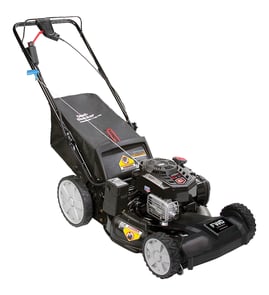



How to find Craftsman model number?
On the Craftsman gas walk-behind lawn mower model 917377131, the model number is typically printed on a sticker on the rear of the mower deck, usually between the lower handle mounts. Once you find it, match the full number exactly to get the right parts and diagrams.
Where to look on the mower
Check these common ID-label locations on walk-behind mowers:
- Back of the deck (rear-facing side), between the lower handle mounts
- Rear flap area (lift the discharge door and look near the hinge points)
- Side of the deck near a rear wheel height adjuster
- Top of the deck near the engine mounting area (less common)
What to write down (and why)
Record the full model number and any serial or product number shown on the label. This helps us match the correct Craftsman parts list for your exact build.
| Label item | What it’s used for | Tip |
|---|---|---|
| Model number (example: 917377131) | Finds the correct parts diagrams | Copy every digit exactly |
| Serial number | Identifies production run | Helpful when parts changed mid-run |
| Product number (if shown) | Confirms variant | Take a photo for accuracy |
If the sticker is missing or unreadable
Use these practical workarounds:
- Clean the deck area with a damp rag; grass film can hide the print
- Use a flashlight at a low angle to make faded text easier to see
- Take a close-up photo and zoom in
- Check your original paperwork and compare to the label format in the 917377131 owner's manual
Why it matters
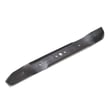
Craftsman walk-behind mowers often have similar-looking decks, blades, and drive systems, but the correct blade, belt, or control parts can vary by model. Using the exact model number prevents ordering the wrong items (for example, a mismatched lawn mower blade 532406713).
Last updated: January 2026
Should I use 87 or 91 gas for lawn mower?
For the Craftsman 917377131 gas walk-behind lawn mower, we recommend using fresh regular unleaded 87-octane gasoline. Higher octane (like 91) does not add power or improve reliability in a mower engine designed for regular fuel; it mainly costs more.
What to use (and what to avoid)
- Use 87 octane regular unleaded from a busy station (fresher fuel).
- Use ethanol-free gas when available; it stores better and helps reduce fuel-system issues.
- If you must use E10 (10% ethanol), keep it fresh and do not store it long-term.
- Avoid old gas (typically anything sitting 30 days or more without stabilizer).
- Avoid mixing octanes; pick one fuel type and keep it consistent.
Quick comparison
| Fuel choice | Works in 917377131? | Best for | Notes |
|---|---|---|---|
| 87 octane regular | Yes | Everyday mowing | Correct choice for most walk-behind mowers |
| 91 octane premium | Yes | No real advantage | Higher octane is not “cleaner” by itself |
| Ethanol-free (often 87-90) | Yes | Storage, fewer carb issues | Great option if available |
| Old/stale gas | No | None | Common cause of hard starting and surging |
Why it matters
Most mower performance problems blamed on “bad octane” are actually fuel freshness problems. Fresh 87-octane fuel helps your carburetor, fuel lines, and starting system stay cleaner and more reliable over the season.
Tips to prevent fuel problems
- Add fuel stabilizer if the mower will sit more than a couple of weeks.
- Run the engine dry (or follow the storage steps) before off-season storage.
- If the mower starts then dies, surges, or won’t start after storage, drain the tank and refill with fresh fuel.
For model-specific fuel and storage guidance, follow the 917377131 owner's manual.
Last updated: January 2026
What is the average lifespan of 917377131?
A Craftsman gas walk-behind lawn mower like model 917377131 typically lasts 8 to 12 years with normal residential use and basic maintenance. Regular oil changes, clean fuel practices, and keeping the blade and drive system in good shape make the biggest difference.
What affects lifespan most
- Maintenance frequency (oil changes, air filter service, spark plug checks)
- Fuel quality and storage (fresh fuel, stabilizer for off-season storage)
- Cutting conditions (dusty yards, wet grass, heavy leaf mulching)
- Deck care (cleaning grass buildup to reduce corrosion)
- Wear parts replaced on time (blade, belt, wheels, drive components)
Typical replacement intervals (what we see most often)
Use this as a planning guide; confirm procedures and specs in the 917377131 owner's manual.
| Item | Typical interval | Why it matters |
|---|---|---|
| Engine oil | Every season or ~25 hours | Reduces engine wear and overheating |
| Blade | Sharpen 1 to 3 times/season; replace when bent or too thin | Cleaner cut, less engine strain |
| Drive belt | 3 to 6 years (self-propelled use) | Keeps drive speed and traction consistent |
| Wheels/height adjust | As needed | Maintains cut height and straight tracking |
Parts that commonly extend mower life
If your mower is cutting poorly or vibrating, replacing worn cutting parts is often the fastest way to restore performance.
- Lawn mower blade 532406713 (fresh edge and correct balance)
- Lawn mower blade adapter 581547901 (prevents slipping and wobble at the crankshaft)
- Belt 532157769 (helps self-propel drive work correctly)
Why it matters
A mower that is maintained and repaired early usually avoids expensive failures like severe vibration damage, premature engine wear, and drive system breakdowns. Small fixes, especially in the blade and drive areas, protect the engine and improve cut quality.
Last updated: March 2026