Owner’s manual
 View engine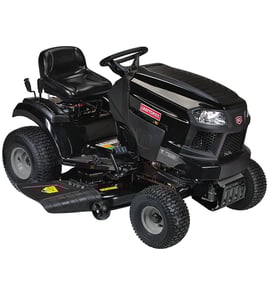


Do Craftsman lawn mowers use Honda engines?
Some Craftsman mowers use Honda engines, but it depends on the specific mower model and production run. For your Craftsman riding tractor model 917253653, the engine brand is identified in the equipment information and maintenance sections of the owner's manual.
Use these quick checks to confirm the engine manufacturer and exact engine model:
- Look for the engine ID label on the engine shroud or valve cover (it lists the engine make and model).
- Check the tractor product identification information in the owner's manual.
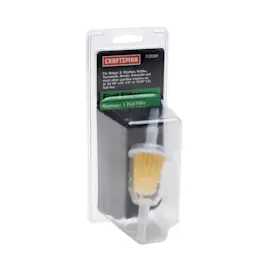
- Match the engine model to the correct tune-up parts (air filter, spark plug, fuel filter) for that engine.
- Compare the engine label to the mower hood and frame decals; they often list horsepower and engine family.
- If you are ordering parts, use the tractor model number 917253653 and the engine model number together to avoid mismatches.
Craftsman has been sold with engines from multiple manufacturers across different mower lines. Here is what is most common:
| Craftsman mower type | Common engine brands | What to verify |
|---|---|---|
| Push mower | Honda, Briggs & Stratton | Engine label and tune-up parts |
| Riding lawn tractor | Briggs & Stratton, Kohler (varies by model) | Engine model and spec number |
| Rear-engine rider | Briggs & Stratton (common) | Engine label and carburetor/tune-up parts |
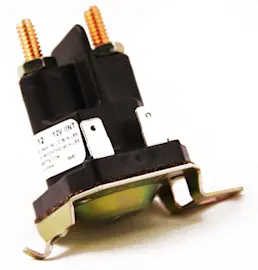
Engine brand affects maintenance parts and troubleshooting steps. For example, a no-start or clicking-start issue can point you toward different ignition and starting components, such as the lawn tractor ignition switch 532193350 or lawn tractor starter solenoid 582042802, depending on your tractor’s wiring and engine setup.
Last updated: February 2026
How to find the year of a Craftsman lawn tractor?
On a Craftsman lawn tractor, we identify the year by locating the model and serial information label and decoding the date code on that label. For model 917253653, the label typically shows a month and year reference (and may include a full date code) that lets you determine the build date; confirm the exact format in the owner's manual.
We recommend checking these common label locations first:
- Under the seat on the seat pan or fender area
- On the frame rail near the engine compartment
- Near the battery tray area
- Under the hood on the dash support
- On the rear frame near the transaxle
Craftsman riding mowers commonly use a date code on the serial label. Two formats you may see are:
- MMDDYY: first 2 digits = month, next 2 = day, last 2 = year
- MMYY (battery or component labels): month and year only (used for service reference)
| Code on label | Interprets as | What you learn |
|---|---|---|
| 072811 | 07/28/11 | Built July 28, 2011 |
| 0419 | 04/2019 | Month and year only |
Knowing the year helps us match the correct parts and diagrams for your Craftsman 917253653, especially for wear items like belts, blades, and electrical parts that can vary by production run.
If you are ordering parts, we use the model and serial details to avoid mismatches. Common examples include:
- Deck drive and ground drive belts (example: lawn tractor ground drive or blade drive belt, 1/2 x 92-2/5-in 592855201)
- Ignition and starting components (example: lawn tractor ignition switch 532193350)
- Deck spindle and mandrel components (example: lawn tractor mandrel housing 587819701)
Last updated: February 2026
Is it worth replacing a lawn mower engine?
Yes, replacing the engine on your Craftsman 917253653 front-engine lawn tractor is worth it when the tractor’s deck, steering, and drive system are still solid and the total engine-swap cost stays well below the cost of replacing the whole tractor. It is also a good choice when you can do most of the labor yourself.
- The mower deck is not rusted through, cracked, or badly bent.
- The transmission and drive system still pull strongly and do not slip.
- The steering is tight enough to track straight (no severe play).
- You can get the correct engine and mounting hardware without major modifications.
- The total cost (engine + belts/parts + your time) is clearly less than replacing the tractor.
- You plan to keep the tractor for several more seasons.
Use this as a practical way to decide.
| What you see on the tractor | Typical recommendation | Why |
|---|---|---|
| Deck and drivetrain are in good shape | Replace the engine | You keep the value of the tractor you already own |
| Deck is weak but drivetrain is good | Consider deck repair first | A new engine will not fix cut quality or safety issues |
| Transmission is failing or steering is unsafe | Do not engine-swap | You will still have a tractor that is unreliable to drive |
| Multiple major issues (engine + deck + drive) | Replace the tractor | Stacked repairs exceed the tractor’s value |
Even with a new engine, worn wear-items can cause poor performance. These are common add-ons for this model:
- Lawn tractor ground drive or blade drive belt, 1/2 x 92-2/5-in 592855201 if belts are glazed, cracked, or stretched
- Lawn tractor starter solenoid 582042802 if you only get a click when starting
- Lawn tractor ignition switch 532193350 if the key switch is intermittent
An engine swap is only a win if the tractor remains safe to operate afterward. Your owner's manual calls out key safety steps like disengaging the blade clutch, shifting to neutral, setting the parking brake, stopping the engine, and removing the key before servicing. Following those steps prevents accidental blade engagement and unexpected movement.
Last updated: February 2026
What are the common problems with Craftsman lawn mowers?
Common problems we see on Craftsman riding mowers like model 917253653 include no-start or clicking, poor cutting quality, excessive vibration, drive or deck belt issues, and safety interlock shutdowns. Many of these are caused by normal wear items (belts, blades, pulleys, switches) and basic maintenance.
- Engine clicks but won’t crank: weak battery, corroded battery cables, bad solenoid, or a safety switch not made.
- Engine cranks but won’t start: stale fuel, dirty air filter, fouled spark plug, or fuel delivery issues.
- Uneven cut or poor bagging/mulching: dull or bent blades, deck out of level, or mowing too fast.
- Vibration while mowing: bent blade, blade imbalance after sharpening, or a worn mandrel/spindle.
- Mower won’t move or slips under load: worn drive belt, idler pulley issues, or linkage problems.
Before you troubleshoot, follow the safety steps in the owner's manual.
- Disengage the PTO (blade clutch) and shift to neutral before starting.
- Set the parking brake and remove the key before inspecting anything.
- Disconnect the spark plug wire(s) before working near blades or belts.
- Avoid mowing on slopes over 15°.
- Stop blades before crossing gravel, pavement, or other non-grass surfaces.
If you’re seeing the symptoms above, these model-matched parts are frequent solutions:
| Problem area | Common wear part | Example for this model |
|---|---|---|
| Deck vibration/noisy cutting | Mandrel/spindle area | Lawn tractor mandrel housing 587819701 |
| Slipping drive or deck performance | Belt and idlers | Lawn tractor ground drive or blade drive belt, 1/2 x 92-2/5-in 592855201 |
| No-crank/clicking | Starting circuit | Lawn tractor starter solenoid 582042802 |
| No power to start/run | Key switch circuit | Lawn tractor ignition switch 532193350 |
Catching wear early prevents bigger failures. For example, running with dull or bent blades can create imbalance and vibration; the manual notes blades should be kept sharp and replaced if bent or damaged, and blade bolts must be tightened securely.
Last updated: February 2026