Owner’s manual
 Error Codes



What is the average lifespan of a Samsung dryer?
Samsung dryers typically last 10 to 15 years with normal household use. For your Samsung DV52J8700EW dryer, consistent airflow and lint control are what most often push lifespan toward the high end; chronic overheating and restricted venting shorten it.
What affects dryer lifespan the most
- Vent restriction (crushed duct, long run, clogged exterior hood) that traps heat
- Lint buildup in the lint screen area and blower housing
- Overloading that strains the drum belt and drive motor
- High heat cycles used constantly instead of mixed or sensor cycles
- Worn drum support parts that let the drum drag and increase load on the motor
Maintenance that adds years (simple, high impact)
Use the schedule below as a practical baseline; your DV52J8700EW manual may specify additional model-specific cleaning points.
| Task | How often | Why it matters |
|---|---|---|
| Clean lint screen | Every load | Keeps airflow strong and drying times short |
| Check vent airflow at exterior hood | Monthly | Prevents overheating and long dry times |
| Clean vent duct (full run) | Every 6 to 12 months | Reduces heat stress on thermostats and heater |
| Level the dryer and reduce vibration | As needed | Protects rollers, belt, and motor |
Parts that commonly wear as a dryer ages
If you notice squealing, thumping, or the drum struggling to turn, these are common wear items on many Samsung dryers:
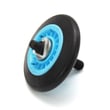
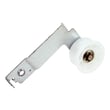
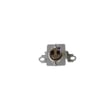
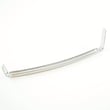
- Samsung dryer drum support roller DC97-16782A (noise, thump, flat spots)
- Samsung dryer drum belt 6602-001655 (drum not turning, slipping, burning smell)
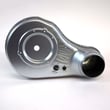
- Dryer blower wheel DC67-00180B (poor airflow, rumbling, vibration)
Why it matters
A dryer that takes longer to dry runs hotter and longer, which accelerates wear on the heating system (heating element, high-limit thermostat, thermal cut-off) and increases strain on the drive system. Keeping airflow strong is the most reliable way to extend service life.
Last updated: February 2026
How to find part number for Samsung dryer?
To find the correct part number for your Samsung dryer, we match parts to the model number first. For Samsung model DV52J8700EW, the model and serial tag is typically on the front frame behind the door; if it’s missing, check the back panel for a secondary label, then confirm the part in the DV52J8700EW owner's manual.
Where to look for the model and serial label
Check these common locations on Samsung dryers:
- Front frame behind the dryer door opening (most common)
- Back of the cabinet (often a secondary label)
- Inside the door area near the opening (around the frame)
- On the side panel near the bottom edge (less common)
How we recommend you identify the right part
Once you have the model number, use this process to avoid ordering the wrong item:
- Confirm the full model number exactly as printed (letters and numbers matter).
- Use the model-based parts list to locate the part by diagram section (drum, heater, controls, door).
- Cross-check the part description with your symptom (no heat, won’t start, squealing, long dry times).
- Compare the old part’s markings to the listing when possible (especially thermostats and sensors).
Common examples for DV52J8700EW
| Symptom | Common part type to check | Example part for this model |
|---|---|---|
| Dryer squeals or thumps | Drum support roller, belt | Samsung dryer drum support roller DC97-16782A |
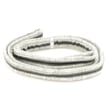
| No heat or overheating | Heating element, thermostats, thermal cut-off | Dryer heating element assembly DC97-14486E |
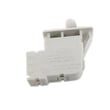
| Dryer won’t start | Door switch, control issues | Dryer door switch DC64-00828B |
Why it matters
Samsung often uses similar-looking parts across different dryers, but wiring, temperature ratings, and mounting can vary by model revision. Matching parts to DV52J8700EW prevents fit issues and repeat failures.
Last updated: February 2026
Is it worth replacing a heating element in a Samsung dryer?
Yes; for Samsung dryer model DV52J8700EW, replacing the heating element is usually worth it when the dryer tumbles normally but does not heat, because the part cost is typically far less than replacing the entire dryer. Confirm the failure with the diagnostic steps in the DV52J8700EW manual before ordering parts.
When replacing the heating element makes sense
We recommend a heating-element repair when the rest of the dryer is in good shape and the problem is isolated to the heat circuit.
Common “good candidate” signs:
- Drum turns and airflow feels strong, but clothes stay cold or damp
- No burning smell, no repeated overheating shutdowns
- No obvious control panel issues (random beeping, dead display)
- Dryer is not excessively noisy (squeal, thump, grinding)
- You have a clear electrical diagnosis (continuity/ohms test)
What to check first (often cheaper than an element)
A failed safety device or sensor can mimic a bad element. Check these items before you commit to an element replacement:
- Lint screen and venting restrictions (poor airflow can trip safeties)
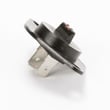
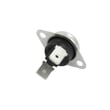
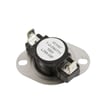
- Thermal cut-off and high-limit thermostat operation
- Temperature sensing (thermistor) readings
- Power supply (electric dryers can run on 120V but not heat without full 240V)
Helpful parts that commonly affect heating on this model:
| Symptom | More likely cause | Example part for DV52J8700EW |
|---|---|---|
| Runs but no heat | Open heater or open thermal cut-off | Dryer heating element assembly DC97-14486E or dryer thermal cut-off thermostat DC47-00016A |
| Heats then stops | Overheating from restricted airflow | Dryer high-limit thermostat DC47-00018A |
| Erratic temps, long dry times | Sensor issue | Dryer thermistor DC32-00007A |
Why it matters
Replacing the wrong part wastes time and money, and a heating failure caused by restricted venting can quickly damage a new heater or trip the thermal cut-off again. A quick airflow and safety-device check helps the repair last.
Related troubleshooting help
If your dryer is showing a code or using Smart Care, use our Samsung smart care dryer error codes guide to narrow the problem before replacing parts.
Last updated: February 2026