Error Codes


How do I know if my Kenmore dryer thermal fuse is blown?
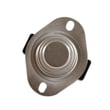
On Kenmore electric dryer model 11096575100, a blown thermal fuse usually shows up as a dryer that will not start or runs but won’t heat, depending on the design. The sure way to confirm is a continuity test with a multimeter after unplugging the dryer.
Common symptoms you can check first
- Dryer won’t start even though the outlet has power
- Dryer tumbles but produces no heat (clothes stay damp)
- Cycle stops early or heat cuts out repeatedly (often tied to airflow problems)
- Burning smell or unusually hot cabinet (stop using it and check venting)
How we confirm a blown thermal fuse (continuity test)
- Unplug the dryer (electric shock risk).
- Access the fuse area (commonly on the blower housing or exhaust duct).
- Remove at least one wire from the fuse terminal.
- Set a multimeter to continuity or ohms.
- Touch probes to the fuse terminals.
What the meter reading means
| Meter result | What it means | What to do next |
|---|---|---|
| Beep or near 0 ohms | Fuse is good | Keep troubleshooting heat or start circuit |
| No beep or OL/infinite | Fuse is blown | Replace the fuse and correct the airflow issue |
Why the fuse blows (and what to fix so it doesn’t happen again)
A thermal fuse is a one-time safety device; it opens when the dryer overheats. Overheating is usually caused by restricted airflow.
- Clean the lint screen and housing
- Inspect the vent hose for kinks, crushing, or long runs
- Clear lint buildup in the exhaust duct and outside vent hood
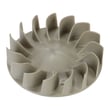
- Make sure the blower wheel is intact and moving air (see dryer blower wheel WP694089)
- If heat is erratic, check temperature control parts such as dryer operating thermostat WP3387134
Related parts that often get replaced together
If the fuse is open due to overheating, we often see heat circuit protection parts replaced as a set.
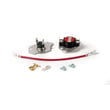
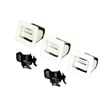
- Cut-off kit 279816 (thermal cut-off kit)
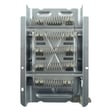
- Element 279838 (heating element, if it’s grounded or damaged)
- Venting components (not a part kit, but critical to correct)
Why it matters
Replacing the fuse without fixing airflow can cause repeat failures, longer dry times, and overheating that can damage the heating element, thermostat, or wiring.
Last updated: February 2026
How do I tell what model my Kenmore dryer is?
Your Kenmore dryer’s model number is printed on the appliance’s ID tag; for Kenmore 11096575100, you’ll use that exact number to match the correct parts, diagrams, and electrical dryer components. Check the most common tag locations first, then confirm every digit before ordering.
Where to find the model number tag
On most Kenmore electric dryers, the model and serial tag is typically in one of these spots:
- Inside the door opening on the front panel (most common)
- On the door frame or the cabinet lip around the opening
- On the back panel of the dryer cabinet
- Behind the lint screen area (lift out the lint screen and look around the housing)
- Inside the lower front access area (if your design has a lower panel)
What the model number looks like (and what to write down)
Kenmore model numbers are usually a long string of digits. For parts lookup, we recommend recording:
- Full model number (example: 11096575100)
- Serial number (helps with production variations)
- Any suffixes or additional characters if shown
| What you see on the tag | What it’s used for | Why it matters |
|---|---|---|
| Model number | Finding exact-fit parts | Prevents ordering the wrong belt, heater, or switch |
| Serial number | Matching production run details | Helps confirm compatible revisions |
Why it matters when ordering parts
Even small model-number differences can change which parts fit your dryer, especially for high-wear or safety-related items.
Common examples on Kenmore 11096575100 include:
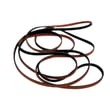
- Drum belt 341241 for a drum that won’t tumble
- Door switch W10820036 for a dryer that won’t start when the door closes
- Element 279838 for no-heat or weak-heat symptoms
Quick tip for faster identification
If the tag is worn, use a flashlight and take a close-up photo; zooming in often makes faint numbers readable.
Last updated: February 2026
What is the average lifespan of 11096575100?
A Kenmore electric dryer like model 11096575100 typically lasts 13 years with normal household use and basic maintenance. Keeping airflow strong and replacing wear items on time helps the dryer heat, tumble, and run safely for its full service life.
What affects lifespan most
- Vent restriction (long runs, crushed duct, lint buildup) that overheats the heater and thermostats
- Overloading that strains the drive system and drum support
- Worn belt or idler that causes slipping, squealing, or no-tumble symptoms
- Heat cycling issues from a failing thermostat or thermal cut-off
- Electrical connection problems at the terminal block (loose or heat-damaged wires)
Maintenance that adds years
- Clean the lint screen every load; wash it with mild soap monthly to remove residue.
- Inspect and clean the vent line regularly; keep the outside hood opening freely.
- Listen for squeals or thumps; address them early to prevent motor and drum wear.
- If drying times increase, check airflow first before replacing heating parts.
- Replace common wear parts when symptoms appear, such as the drum belt 341241 or dryer idler pulley WP691366.
Common “end-of-life” symptoms and likely causes
| Symptom | What it often points to | Example part on this model |
|---|---|---|
| Drum will not turn | Belt or idler failure | Drum belt 341241 |
| Runs but no heat | Heater circuit issue | Element 279838 |
| Overheats or shuts off | Airflow restriction or safety cut-off | Cut-off kit 279816 |
| Loud rumble or vibration | Blower wheel or drum support wear | Dryer blower wheel WP694089 |
Why it matters
A dryer that is near its typical lifespan can still be a great candidate for repair because many failures are limited to a few service parts (belt, heater, thermostat, blower wheel). Fixing the root cause, especially airflow, prevents repeat breakdowns.
Last updated: March 2026