Owner’s manual
 Error Codes


How do I tell what model my Kenmore dryer is?
Your Kenmore dryer’s model number is printed on the model and serial number plate; on model 11070842990, that plate is on the cabinet (commonly in the door opening area). Write down the full model number and serial number so we can match the correct parts and specifications.
Where to look for the model number plate
Check these common locations on Kenmore dryers:
- Inside the dryer door opening on the front frame
- On the door itself (edge or inner panel)
- On the back panel of the dryer cabinet
- Near the lint screen housing (depending on design)
The 11070842990 owner's manual explains that you’ll need the complete model and serial numbers when requesting information, and that both are located on the model and serial number plate.
How to read the number you find
Kenmore model numbers are long on purpose; each section helps identify the platform and parts list.
- Record the full model number exactly as shown (all digits)
- Record the serial number exactly as shown
- Take a clear photo of the plate for future reference
- Use the model number to select diagrams and compatible replacement parts
Quick example
| What you see | What it means for parts lookup |
|---|---|
| Model number (example: 11070842990) | Identifies the exact dryer design and parts catalog |
| Serial number | Helps narrow production details when needed |
Why it matters
Using the exact model number prevents ordering the wrong items (for example, a belt, thermostat, or gas ignition part that looks similar but fits differently). It also helps when you’re checking operating instructions and troubleshooting steps.
Last updated: February 2026
How to open Kenmore dryer front panel?
On the Kenmore gas dryer model 11070842990, we open the front panel by disconnecting power, releasing the top so we can reach the mounting screws, then lifting the front panel up and off the lower retaining clips. Use the steps in the 11070842990 owner's manual as your model-specific reference.
Safety first (gas dryer)
- Unplug the dryer before starting.
- If you smell gas: do not operate switches; leave the area and contact your gas supplier.
- Work with the dryer cool and empty.
- Keep screws and clips organized so the panel seats correctly during reassembly.
Steps to open the front panel
- Disconnect power (unplug).
- Remove the lint screen (if your lint screen is on top) and any screws revealed in that area.
- Release the top panel: slide a putty knife under the front edge of the top (near the left and right corners) to pop the spring clips, then lift the top.
- Remove front panel fasteners: take out the screws along the top inside edge of the front panel (and any screws inside the door opening, if present).
- Disconnect the door switch wiring: unplug the harness from the door switch so the front panel can come off cleanly.
- Lift the front panel up and off the lower clips/tabs, then pull it forward.
What you can access once the front is off
| What you’re checking | Common symptom | Related part (if needed) |
|---|---|---|
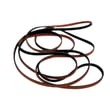
| Belt and drum drive | Drum will not turn, squealing | Dryer drum belt 341241, idler pulley |
| Door switch circuit | Dryer will not start | Door switch |
| Blower housing area | Poor airflow, rumbling | Blower wheel |
Why it matters
Opening the front panel is the starting point for common Kenmore dryer repairs like replacing a worn belt, inspecting the idler pulley, or checking the door switch wiring. Correct panel removal also prevents bent panels and broken retaining clips.
Last updated: February 2026
What is the average lifespan of 11070842990?
A Kenmore gas dryer like model 11070842990 typically lasts 13 years with normal household use and proper venting and maintenance. Keeping airflow strong and lint buildup low is the biggest factor in reaching (or beating) that average; see the 11070842990 owner's manual for care and safety guidance.
What affects lifespan the most
- Vent restriction (long runs, crushed duct, clogged hood) increases heat and wear
- Lint buildup inside the cabinet and ducting raises fire risk and stresses components
- Overloading strains the motor, belt, drum support, and idler pulley
- High heat cycles used constantly accelerate thermostat and sensor wear
- Delayed repairs (squeals, thumps, no-heat) often lead to bigger failures
Maintenance schedule we recommend
| Task | How often | Why it matters |
|---|---|---|
| Clean lint screen | Every load | Maintains airflow and drying performance |
| Check vent hood flap opens freely | Monthly | Prevents backpressure and overheating |
| Clean vent duct (dryer to outside) | Every 6 to 12 months | Reduces dry times and heat stress |
| Professional internal lint cleaning | Every 2 to 3 years | Lint inside the dryer can fuel a fire |
Parts that commonly wear on this model
If the dryer still heats but gets noisy, stops tumbling, or takes longer to dry, these are frequent wear items:
- Dryer drum belt 341241 (drum won’t turn, burning rubber smell)
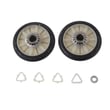
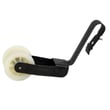
- Idler pulley WP691366 (squealing, belt slipping)
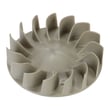
- Dryer blower wheel WP694089 (rumbling, weak airflow)
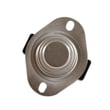
- Dryer operating thermostat WP3387134 (overheating or temperature issues)
Why it matters
A gas dryer’s burner system and safety controls depend on correct airflow. The manual’s vent-length guidance and lint-cleaning intervals help prevent overheating, reduce drying time, and extend the life of the motor, belt, and thermostats.
Last updated: March 2026