Error Codes


What are signs my GE ice maker is broken?
If your GE GSE25ESHCSS ice maker is failing, the most common signs are no ice, very slow ice production, hollow or tiny cubes, leaking at the dispenser, or a grinding/clicking noise from the ice maker area. These symptoms usually point to a water supply, freezing, or dispenser-door issue.
- No ice at all (bin stays empty for 24 hours)
- Ice production is slow (only a few cubes per day)
- Cubes are small, hollow, or misshapen
- Water drips from the dispenser or you see ice clumps in the bin
- You hear repeated clicking, buzzing, or grinding near the ice maker
- Ice tastes or smells off (often tied to filtration or stagnant water)
- Confirm freezer temperature: Most side-by-side units make ice best around 0°F; warmer temps commonly stop ice production.
- Check the shutoff arm or switch: Make sure the ice maker is turned on and not blocked by a jammed bin.
- Inspect the water supply: Verify the house shutoff valve is fully open and the supply line is not kinked.
- Look for a frozen fill tube: If the tube is iced up, the mold will stay dry and no cubes will form.
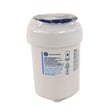
- Replace the water filter if flow is weak: A restricted filter can cause small cubes or no fill. Use the GE refrigerator water filter MWFP.
| Symptom | Most likely cause | What to check next |
|---|---|---|
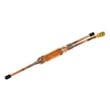
| No ice, mold is dry | No water getting to ice maker | Filter, supply line, refrigerator water valve WR57X33326 |
| Small or hollow cubes | Low water flow | Filter, water pressure, valve |
| Ice clumps or dispenser leaking | Chute door not sealing | Refrigerator dispenser ice chute door kit WR17X11653 |
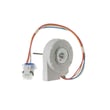
| Loud fan noise, warm freezer | Airflow/cooling issue | Frost buildup, rca refrigerator evaporator fan motor WR60X10185 |
Catching these signs early helps prevent bigger problems like frozen water lines, dispenser leaks, and temperature swings that can spoil food.
Last updated: January 2026
What is the most common problem with a GE refrigerator?
Cooling problems are the most common issue we see with GE refrigerators like model GSE25ESHCSS. The root cause is often restricted airflow or a defrost-related failure that leads to warm temperatures, soft ice, and food spoiling, even though the lights and display still work.
- Dirty condenser coils causing poor heat release and longer run times
- Evaporator fan not moving cold air through the freezer and fresh food sections
- Frost buildup from a defrost system problem (heater, defrost thermostat, sensor)
- Air damper stuck closed or partially blocked, limiting cold air to the refrigerator side
- Door gasket leaks letting warm, humid air in and creating excess frost
- Water filter restriction reducing dispenser flow (sometimes mistaken for a cooling issue)
- Confirm temps: freezer near 0°F, refrigerator near 37°F.
- Listen for airflow: you should typically hear the evaporator fan when the compressor is running.
- Check for heavy frost on the freezer back panel (a strong defrost-system clue).
- Clean the condenser area and make sure the condenser fan runs when the compressor runs.
- Inspect door seals for gaps, tears, or areas that do not grip a paper strip.
| Symptom | Likely area | Example part for GSE25ESHCSS |
|---|---|---|
| Warm fridge, freezer OK | Airflow/damper | Refrigerator air damper assembly WR13X10988 |
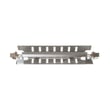
| Frosted freezer panel, warming | Defrost system | Refrigerator defrost heater WR51X10055 |
| Temps swing up and down | Sensing/control | Refrigerator temperature sensor WR55X10025 |
| Weak/no water flow at dispenser | Filtration/water path | GE refrigerator water filter MWFP |
Cooling issues usually start small (longer run times, minor temp swings) and then turn into food-safety problems. Catching airflow restrictions, frost buildup, or a failing sensor early helps prevent bigger failures and reduces energy use.
Last updated: January 2026
How to tell if a GE water filter is clogged?
A clogged water filter on your GE GSE25ESHCSS side-by-side refrigerator usually shows up as slow water dispensing, small ice cubes, or hollow cubes. A quick flow-rate test at the dispenser helps confirm whether the filter is restricting water flow.
Use this simple check before replacing parts:
- Remove any glass and use a large measuring cup.
- Dispense water for 20 seconds.
- Measure the amount collected.
- If you get less than 8 oz in 20 seconds, the flow is typically inadequate and the filter is a common cause.
- If flow is still weak after a new filter, check the water supply and inlet valve.
- Water dispenser flow is slow or sputters
- Ice maker makes small cubes or stops making ice
- Water tastes or smells off (especially near the end of filter life)
- Dispenser noise increases as it struggles to push water
Start with the easiest, most likely fix first.
| What you see | Most likely cause | What we recommend |
|---|---|---|
| Slow water at dispenser | Filter restriction | Replace the GE refrigerator water filter MWFP |
| Sputtering after filter change | Air in the line | Follow how to replace the water filter in a GE refrigerator and purge several gallons |
| No water, ice also stops | Supply or valve issue | Diagnose the refrigerator water valve WR57X33326 |
| Filter won’t seat or leaks | Filter head issue | Inspect the refrigerator water filter head WR02X45209 |
Low water flow can make the ice maker unreliable and can strain the water system over time. Replacing a clogged filter on schedule is the simplest way to keep dispenser water and ice production consistent.
Last updated: January 2026
Why is my GE side by side refrigerator not dispensing ice?
If your GE GSE25ESHCSS makes ice but will not dispense it, the most common causes are a jammed ice bin or chute, a frozen chute door, or a failed dispenser drive component (auger, motor, or door solenoid). Clearing the blockage and checking the dispenser parts usually restores dispensing.
- Make sure the ice bin is seated fully and not overfilled with clumped ice.
- Break up ice clumps and remove any cubes wedged at the chute opening.
- Hold the dispenser lever and listen: no sound often points to a switch or control issue; humming with no movement often points to a jam or drive problem.
- Check the freezer temperature; very cold settings can increase clumping (most side-by-sides run best near 0°F).
- Inspect the chute flap; if it is stuck open, warm air can enter and freeze the chute.
If the chute flap does not open or close correctly, or you see frost buildup around the chute, these parts are frequent fixes:
- Refrigerator dispenser ice chute door kit WR17X11653
- Rca refrigerator dispenser ice chute door solenoid WR62X10055
If the flap is fine but the ice will not move out of the bin, the auger drive system (motor/coupler) or the dispenser lever/switch circuit is typically next to check.
| What you notice | Most likely cause | What to do |
|---|---|---|
| Ice maker fills bin, dispenser is silent | Dispenser switch/lever issue, wiring, or control | Inspect lever action and switch response; check harness connections |
| Motor hums but no ice comes out | Ice jam or stripped auger drive | Empty bin, clear clumps, retry |
| Chute area frosts up quickly | Chute door not sealing or solenoid sticking | Inspect flap seal and linkage; replace chute door parts if warped |
| Dispenses crushed only or inconsistent | Ice clumping or bin alignment | Break up ice, reseat bin, verify cubes are dry |
A chute door that does not seal can let humid air into the freezer, which creates frost, clogs the chute, and can eventually cause repeated dispensing failures and temperature swings.
For step-by-step access and reassembly tips, use our how to disassemble the ice and water dispenser on a GE refrigerator guide.
Last updated: January 2026