Installation guide
 Owner’s manual


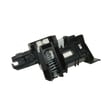
Can I replace dishwasher parts myself?
Yes, for Whirlpool model WDTA50SAHZ0, many common dishwasher repairs are DIY-friendly if you shut off power and water first and follow the step-by-step procedures in the WDTA50SAHZ0 installation guide and WDTA50SAHZ0 owner's manual. For electrical diagnostics or leak-related repairs, we recommend extra caution and careful testing.
Good DIY repairs vs. better left to a pro
Many customers successfully replace mechanical and rack-related parts; wiring, controls, and water connections take more skill.
- Usually DIY-friendly: rack hardware, wheels, rail stops, door latch
- DIY with care: drain hose, water inlet valve, drain pump (watch for leaks)
- Often best for a technician: control board troubleshooting, complex wiring issues
Common DIY parts for this model
| Symptom | Likely area | Example part for WDTA50SAHZ0 |
|---|---|---|
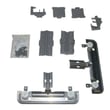
| Upper rack won’t stay level or adjust | Rack adjusters | Dishwasher rack adjuster W10712395 |
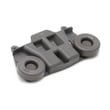
| Lower rack falls off track or rolls poorly | Rack wheels | Whirlpool dishwasher dishrack wheel W10195416V |
| Door won’t latch or won’t start cycle | Door latch | Dishwasher door latch WPW10653840 |
| Not draining | Drain system | Dishwasher drain pump W10876537 |
Safety and prep checklist (do this every time)
- Turn off power at the breaker (dishwashers are often hardwired)
- Shut off the water supply valve under the sink
- Protect the floor; keep towels ready for residual water
- Avoid touching the heating element during or right after a cycle
- Keep sharp items secured when unloading and working around the tub
Installation details that matter during DIY repairs
When you disconnect or reconnect water lines, follow these key practices from the install guidance:
- Use proper supply line fittings (a 90° elbow with a rubber washer is commonly used)
- Do not solder within 6 inches of the water inlet valve
- Flush house water supply lines in new construction before connecting
- When replacing a dishwasher, installing a new water line and a new drain hose is a smart reliability upgrade
Why it matters
A correct DIY repair saves time and prevents repeat failures. Most “after repair” problems come from small issues like a loose clamp, a pinched hose, or a door that is not closing and latching consistently.
Last updated: February 2026
Does the WDTA50SAHZ0 have a stainless steel tub?
Yes. The Whirlpool WDTA50SAHZ0 is a stainless steel tub undercounter dishwasher; the installation instructions for this model explicitly identify it as a stainless steel tub unit. See the WDTA50SAHZ0 installation guide for the model-specific confirmation.
How we confirm it for this model
The model’s installation instructions are titled for an undercounter dishwasher, stainless steel tub, which is the clearest model-specific indicator.
Why stainless steel tubs matter
A stainless steel tub typically:
- Helps resist staining and odors compared with plastic tubs
- Handles higher wash and dry temperatures more effectively
- Can improve drying performance when paired with heated dry and rinse aid
- Holds up well to normal dishwasher detergents over time
Care tips to keep the tub looking its best
Even stainless steel can discolor from water chemistry or certain foods. We recommend:
- Scrape off heavy soils (especially tomato-based foods) before loading
- Use a dishwasher cleaner monthly to reduce white residue buildup
- Avoid abrasive cleaners inside the tub
- Keep filters properly installed and locked after cleaning
Quick comparison: stainless steel tub vs plastic tub
| Feature | Stainless steel tub | Plastic tub |
|---|---|---|
| Stain resistance | Better | More prone to staining |
| Heat tolerance | Higher | Lower |
| Drying potential | Typically better | Typically lower |
| Noise damping | Often quieter with insulation | Varies by design |
Related troubleshooting help
If you are checking tub type because of performance concerns (drying, spots, residue), use the WDTA50SAHZ0 owner’s manual for care and cleaning guidance.
Last updated: February 2026
How to replace the bottom door seal on a Whirlpool dishwasher?
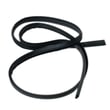
On a Whirlpool WDTA50SAHZ0 dishwasher, replacing the bottom door seal starts with shutting off power, opening the door, removing the worn seal from the lower edge, then pressing the new seal fully into the channel so it sits flat and continuous across the bottom.
Before you start (safety and prep)
- Turn off power at the breaker (dishwashers can energize components even with the door open).
- Let the unit cool if it recently ran a heated dry cycle.
- Pull the lower rack out for working room.
- Wipe the bottom edge of the inner door and tub lip clean so the new seal can seat.
- Use the correct seal for WDTA50SAHZ0; confirm the part using the WDTA50SAHZ0 owner’s manual.
Replacement steps (typical Whirlpool bottom door seal)
- Open the door fully and locate the bottom door seal along the lower edge.
- Starting at one end, pull the old seal straight out of its channel (avoid tearing pieces off in the groove).
- Clean the channel with a damp cloth; remove detergent film and grit.
- Press the new seal into the channel from one end to the other, keeping it centered and not stretched.
- Close the door and reopen it once to confirm the seal did not roll or pop out.
- Run a short cycle and check for drips at the bottom corners.
Common leak causes to rule out
- Seal not fully seated in the channel (most common)
- Seal twisted, stretched, or installed off-center
- Food soil or mineral buildup preventing a tight seal
- Door not closing firmly due to a latch issue (inspect the dishwasher door latch WPW10653840)
- Dishwasher not level, causing water to pool toward the front
Quick checks after installation
| What to check | What “good” looks like | What to do if not |
|---|---|---|
| Seal alignment | Even, flat, continuous | Reseat and press firmly end-to-end |
| Bottom corners | No gaps or curls | Reinstall without stretching |
| Door closure | Latches smoothly | Inspect latch and door alignment |
Why it matters
A properly installed bottom door seal keeps wash water inside the tub, prevents cabinet and floor moisture damage, and helps the dishwasher maintain correct wash pressure for better cleaning.
Last updated: February 2026
Is the Whirlpool WDTA50SAHZ0 a good dishwasher?
Yes. The Whirlpool WDTA50SAHZ0 is a strong choice for most households because it is designed for consistent cleaning and efficient water use; it performs best when it is loaded correctly and the filtration system and interior are maintained per the WDTA50SAHZ0 owner’s manual.
What “good” looks like in daily use
Use these practical checkpoints to judge whether this dishwasher fits your priorities:
- Cleans well without pre-rinsing when spray arms are not blocked
- Dries better with rinse aid and a dry option suited to your load (plastics dry last)
- Runs reliably when the filter area is kept clear of food debris
- Starts and resumes only when the door is firmly closed and Start/Resume is pressed
- Stays fresher with periodic interior cleaning
Quick performance check (fixes that make the biggest difference)
These steps solve most “not cleaning” or “not drying” complaints on Whirlpool dishwashers:
- Clean the filter and sump area on the schedule in the WDTA50SAHZ0 owner’s manual
- Load so tall items do not stop the spray arms from turning
- Use high-quality detergent packs or tablets; add rinse aid for drying
- Run an empty cleaning cycle periodically (vinegar method or dishwasher cleaner)
- If draining is slow, check and clean the drain air gap (if installed) and confirm the drain hose is not kinked
Symptoms and first actions
| Symptom | Most common cause | What to do first |
|---|---|---|
| Dishes still dirty | Overloading or blocked spray | Reload; clear spray arm path; clean filter |
| Water left in tub | Drain restriction | Check air gap and hose routing |
| Won’t start/resume | Door not closed in time | Close firmly; press Start/Resume |
| Poor drying | No rinse aid or low-heat dry | Add rinse aid; choose a stronger dry option |
When a part is the difference
If maintenance and loading are correct but performance is still poor, these parts are commonly involved:
- Not draining: dishwasher drain pump W10876537
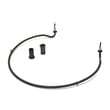
- Not heating or poor drying: element assembly W10703867
Why it matters
A “good” dishwasher is one that cleans consistently while protecting dishes and controlling odors; on the WDTA50SAHZ0, routine filter care and proper loading are the biggest drivers of long-term results.
Last updated: February 2026
What are common problems with the WDTA50SAHZ0?
Common WDTA50SAHZ0 Whirlpool dishwasher problems include not filling, not draining, poor cleaning, poor drying, leaks, and door issues (won’t close or won’t latch). Many of these start with simple checks in the WDTA50SAHZ0 owner's manual before replacing parts.
Most common symptoms and what they usually point to
- Will not fill with water: water supply shut off, float stuck, or excess suds/foam
- Not draining: drain path restriction, drain hose routing issue, or a weak drain pump
- Not cleaning well: loading issues, wash system restriction, or spray coverage problems
- Not drying well: low rinse aid, interrupted final rinse, or heating performance issues
- Door won’t close or start: latch not engaging, door alignment, or interrupted cycle behavior
- Leaks: door seal area, hose connections, or sump-related sealing
Quick checks we recommend first (fast, no parts)
- Confirm the water supply valve is fully open.
- Lift and release the overfill protection float; it must move freely.
- If you see foam, switch to dishwasher detergent only and run a rinse to clear suds.
- For a paused cycle, press Start/Resume and close the door within a few seconds.
- Add rinse aid and use the correct detergent amount for your water hardness.
Parts that commonly solve these problems
If troubleshooting points to a failed component, these model-matched parts are common fixes:
| Symptom | Part to check | What it does |
|---|---|---|
| Not draining | Dishwasher drain pump W10876537 | Pumps water out through the drain hose |
| Will not fill | Dishwasher water inlet valve WPW10327249 | Opens to let water into the tub |
| Not drying | Element assembly W10703867 | Heats water and supports drying performance |
| Won’t start/door won’t close | Dishwasher door latch WPW10653840 | Confirms the door is closed so the cycle can run |
Error codes and indicator lights
If you have blinking lights or an error code, use the Whirlpool dishwasher error codes guide to match the pattern to the most likely cause and next step.
Why it matters
Fill, drain, heat, and door-latch problems can stop the cycle early, leave dirty water behind, or prevent proper final-rinse temperatures. Fixing the root cause protects the pump, heater, and control system from repeat interruptions.
Last updated: February 2026
What is the thing at the bottom of my dishwasher?
In our Whirlpool WDTA50SAHZ0 dishwasher, the most common “thing” you notice at the bottom is the filter area (and sometimes the heating element loop). The filter sits in the sump area and twists/locks in place; it is designed to catch food soil so the wash system can circulate water effectively.
What you might be seeing (quick ID)
- Filter assembly: Round or oval piece you can remove for cleaning; it locks by turning.
- Heating element: A metal loop near the base that helps heat water and improve drying.
- Sump area: The low spot where water collects and drains; it surrounds the filter.
- Lower spray arm hub: The center mount where the spray arm attaches.
How to check and clean the filter (safe, no tools)
Follow the steps in the WDTA50SAHZ0 owner's manual for your exact filter style and lock direction.
- Turn the filter assembly to unlock, then lift it out.
- Rinse under running water until soils are removed.
- Use a soft brush for stuck-on residue or hard-water deposits.
- Reinstall by rotating until it drops and locks (it should not spin freely).
What’s normal vs. a problem
| What you see | Usually normal | When it needs attention |
|---|---|---|
| Light debris around the filter | Yes | Heavy buildup, gritty sludge, or odor |
| Standing water in the sump | Small amount | Water covering the filter area after a cycle |
| Metal loop (element) | Yes | Broken, warped, or dishes not drying well |
Why it matters
A clean, properly seated filter helps prevent poor cleaning, odors, and drain issues. If the filter is loose or clogged, the dishwasher can recirculate soil and leave residue on dishes.
Last updated: February 2026