 Installation guide
 Owner’s manual
 Error Codes




What is the average lifespan of a Frigidaire dishwasher?
A Frigidaire dishwasher typically lasts 7 to 10 years on average. For your Frigidaire LFID2426TF2A, consistent cleaning, correct detergent use, and fixing small issues early (drain, fill, heat, or spray problems) are what most often push service life toward the high end.
| Usage and care level | Typical lifespan | What usually ends it |
|---|---|---|
| Light use, good maintenance | 10 to 13 years | Wear in pump/motor, leaks |
| Average household use | 7 to 10 years | Drain/fill faults, heating issues |
| Heavy use, hard water, minimal upkeep | 6 to 8 years | Mineral buildup, premature pump wear |
- Clean the filter regularly and keep the sump area clear (food debris is a top cause of drain issues).
- Use the right detergent amount; too much can cause residue and poor rinsing.
- Run hot water at the sink before starting a cycle to improve wash performance.
- Check spray arms for clogs and spinning clearance; replace if cracked or warped.
- Address slow draining quickly; a struggling drain system can overwork the pump.
If performance drops, these are frequent wear items on many Frigidaire dishwashers:
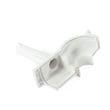
- Dishwasher filter 5304532206 (helps prevent debris from reaching the pump)
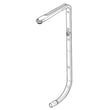
- Dishwasher spray arm 5304507158 (clogged jets reduce cleaning and strain circulation)
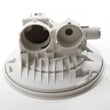
- Drain pump a A00126401 (weak draining can shorten overall system life)
A dishwasher that is not draining, not heating, or not spraying correctly often runs longer cycles, leaves soil behind, and puts extra load on the pump and motor. Keeping water flow and filtration healthy is the simplest way to protect the most expensive components.
For model-specific care steps and cycle guidance, follow the maintenance and operating recommendations in the LFID2426TF2A owner's manual.
Last updated: February 2026
What is the most common problem with a Frigidaire dishwasher?
The most common Frigidaire dishwasher problems (including model LFID2426TF2A) are poor cleaning or poor draining caused by a dirty filter, a blocked spray arm, or a partial drain restriction. These issues usually show up as gritty dishes, standing water, or weak spray.
- Dishes still dirty or film left behind: filter clogged, spray arm holes blocked, or low water fill
- Water left in the bottom: restricted drain path, kinked hose, or a weak drain pump
- Detergent not dissolving: spray arm not turning, overloaded racks, or dispenser issue
- Leaks at the door: loading interference, door not closing squarely, or worn sealing surfaces
- Won’t start or stops mid-cycle: door not latching fully, control issue, or cycle option confusion
- Clean the filter and sump area; re-seat the filter tightly after cleaning. See the cleaning steps in the LFID2426TF2A owner’s manual.
- Inspect and rinse the spray arm holes; clear debris so water jets are strong and even.
- Confirm the drain path is open: check the sink/disposer connection and look for kinks in the hose.
- Run hot water at the sink for 30 to 60 seconds before starting a cycle to improve wash performance.
| Problem you see | Most likely area | Example part for this model |
|---|---|---|
| Not draining, water remains | Drain system | Drain pump a A00126401, dishwasher drain hose 807117001 |
| Not cleaning well | Wash spray | Dishwasher spray arm 5304507158, dishwasher filter 5304532206 |
| Not drying well | Heating circuit | Frigidaire dishwasher heating element 154825001 |
A clogged filter or restricted spray arm reduces water flow, which lowers cleaning performance and can leave detergent undissolved. A restricted drain can also cause odors and re-deposit soil back onto dishes.
If you’re seeing standing water or slow draining, follow the step-by-step checks in dishwasher not draining video.
Last updated: February 2026
Can I replace dishwasher parts myself?
Yes, for the Frigidaire LFID2426TF2A dishwasher, we recommend DIY replacement for many common wear parts (filters, spray arms, rack rollers, and some hoses) as long as you shut off power and water first and follow the steps in the LFID2426TF2A owner's manual. For electrical controls or leak-related repairs, use extra caution and consider professional service.
Many dishwasher repairs are straightforward, but some involve wiring, tight seals, or water connections.
- Good DIY candidates: filter cleaning/replacement, spray arm replacement, rack hardware, some drain hose work
- Often pro-level: control board diagnosis, wiring harness repairs, persistent leaks from internal seals, motor/pump replacement
- Always stop and reassess: if you see burnt wiring, standing water near electrical parts, or repeated tripping of the breaker
These are examples of LFID2426TF2A parts that many customers replace successfully:
- Dishwasher filter 5304532206 (helps with poor cleaning and debris)
- Dishwasher spray arm 5304507158 (helps with weak wash action)
- Dishwasher drain hose 807117001 (helps with draining issues and some leaks)
- Dishwasher dishrack roller, lower 5304532229 (fixes rack that binds or falls off track)
- Turn off power at the breaker (do not rely only on the door switch).
- Shut off the water supply valve under the sink.
- Protect the floor; keep towels ready for residual water.
- Take photos of wire and hose routing before disconnecting anything.
- Run a short test cycle and check for leaks after reassembly.
| Repair type | Typical difficulty | Main risk |
|---|---|---|
| Filter or spray arm | Easy | Poor cleaning if installed wrong |
| Drain hose | Medium | Leaks from loose clamps or routing |
| Water inlet valve | Medium | Leaks, fill problems |
| Control board or UI | Medium to hard | Miswiring, no-start issues |
| Pump/motor assembly | Hard | Leaks, noise, repeat failure |
DIY repairs can restore cleaning, draining, and drying performance while saving service costs, but dishwashers combine water and electricity. Using the correct procedure from the manual reduces leak risk and prevents damage to components like the pump, heater, and control board.
Last updated: February 2026
What are the commonly replaced parts in a dishwasher?
In a Frigidaire dishwasher like model LFID2426TF2A, the most commonly replaced parts are the wash and drain components (spray arm, pump, drain pump, drain hose), the heating and fill parts (heating element, water inlet valve), and wear items (filter, rack rollers). These parts typically fail from clogs, leaks, heat stress, or normal wear.
- Cleaning performance: spray arm, filter, pump and motor assembly
- Draining: drain pump, drain hose
- Drying and water temperature: heating element
- Filling: water inlet valve, float switch
- Daily wear and tear: dishrack roller, racks, door spring
- Controls: user interface buttons, electronic control board
| Symptom | Likely part to check first | What it does |
|---|---|---|
| Dishes not getting clean | Dishwasher spray arm 5304507158 | Spins and distributes wash water |
| Standing water in tub | Drain pump a A00126401 | Pumps water out during drain |
| Not drying or water not heating | Frigidaire dishwasher heating element 154825001 | Heats water and supports drying |
| Not filling or fills slowly | Dishwasher water inlet valve 807047901 | Opens to let water into the tub |
| Poor circulation, loud hum, weak wash | Dishwasher pump and motor assembly 154844301 | Circulates water through spray arms |
- Clean the filter and sump area; debris can mimic a bad pump.
- Confirm the spray arm holes are clear and the arm spins freely.
- Make sure the drain hose is not kinked and the sink/disposer inlet is clear.
- Use the correct detergent and rinse aid; poor chemistry looks like a wash failure.
- Verify the float moves freely; a stuck float can stop filling.
Replacing the right part first saves time and prevents repeat problems. For example, a clogged filter can cause “not cleaning” symptoms that look like a failing pump, and a restricted drain path can look like a bad drain pump.
For part locations and access steps specific to LFID2426TF2A, use the LFID2426TF2A owner’s manual.
Last updated: February 2026





