Owner’s manual


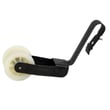
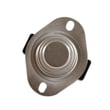
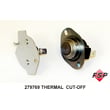
How to tell if a dryer thermal fuse is blown?
On Kenmore dryer model 11096273100, a blown thermal fuse is typically confirmed with a continuity test: the fuse reads open (OL or no beep) on a multimeter. Common symptoms include a dryer that won’t start or runs but won’t heat, depending on the circuit design.
Quick checks before testing
- Unplug the dryer (or switch off the breaker) before opening any panels.
- Clean the lint screen and check the exhaust vent for restrictions.
- Make sure the door closes firmly and the door switch clicks.
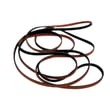
- If the drum will not turn, check for a broken belt symptom.
How we test a thermal fuse (continuity)
- Disconnect power.
- Access the thermal fuse area (often on the blower housing or heater housing, depending on design).
- Pull at least one wire off the fuse terminal so you are not reading through the circuit.
- Set the meter to continuity or lowest ohms.
- Touch probes to the fuse terminals.
Typical readings
| Meter result | What it means | Next step |
|---|---|---|
| Beep or ~0 to 1 ohm | Fuse is good | Keep troubleshooting airflow, thermostat, heater circuit |
| No beep, OL, or very high resistance | Fuse is blown | Replace the fuse and correct the overheating cause |
What usually causes the fuse to blow
A thermal fuse opens because the dryer overheated. Fixing airflow is just as important as replacing the fuse.
- Crushed or long vent run
- Clogged vent hood or lint buildup in ducting
- Blocked lint chute or blower housing
- Failed cycling thermostat
- Weak airflow from a damaged blower wheel
If airflow is poor, inspect the blower wheel; on this model, the dryer blower wheel WP694089 is a common airflow-related part.
Why it matters
The thermal fuse is a safety device. Replacing it without correcting the overheating cause often leads to another blown fuse and continued no-heat or no-start problems.
For panel access and component locations specific to this dryer, use the 11096273100 manual.
Last updated: January 2026
What is the average life of a Kenmore dryer?
Most Kenmore dryers average 10 to 13 years of service life with normal household use. Your Kenmore model 11096273100 is a durable, simpler-era design; keeping airflow clear and wear parts maintained is what most often pushes a dryer past the average.
What affects dryer lifespan the most
- Vent restriction (long runs, crushed flex duct, lint buildup) that overheats the heater and thermostats
- Overloading that strains the drum support system and belt
- Skipped lint maintenance (screen, lint chute, blower housing)
- Worn drive components (belt, idler pulley, motor) that cause slipping, squealing, or no-tumble
- Heat cycling issues from failed thermostats or thermal cutoffs
Typical lifespan ranges (what we see most often)
| Usage pattern | Typical lifespan | Notes |
|---|---|---|
| Light (few loads/week) | 13 to 18 years | Best results with clean venting |
| Average (most households) | 10 to 13 years | Most common range |
| Heavy (daily loads) | 7 to 10 years | Wear parts and heat components fail sooner |
Maintenance that extends life (high impact)
- Clean the lint screen every load and wash it periodically to remove residue
- Inspect and clean the full vent path (dryer outlet to exterior hood) regularly
- Keep loads balanced; avoid packing the drum tight
- Listen for early warning sounds (squeal, thump, grinding) and address them quickly
- Follow the care and operating guidance in the 11096273100 owner's manual
Common “wear parts” that decide whether a dryer keeps going
| Symptom | Likely wear item | Example part for this model |
|---|---|---|
| Drum won’t tumble, motor runs | Belt or idler issue | Drum belt 341241 |
| Squealing or chirping | Idler pulley or drum support wear | WP691366 (idler pulley) |
| Long dry times, hot cabinet | Airflow restriction or blower issue | WP694089 (blower wheel) |
Why it matters
A dryer usually “dies early” from heat stress and airflow problems, not age alone. Good venting protects the heating system, thermostats, and motor, which are the most expensive failures.
Last updated: January 2026
How do I know if my dryer thermostat is bad?
On Kenmore dryer model 11096273100, a bad operating thermostat usually shows up as overheating, no heat, or long dry times because it is not regulating heater temperature correctly. We confirm it by testing the thermostat for proper continuity behavior and by checking airflow and venting first using the 11096273100 manual.
Common symptoms of a bad dryer thermostat
- Dryer gets too hot (cabinet very warm, clothes feel overly hot)
- Dryer shuts off mid-cycle and may restart after cooling
- No heat even though the drum tumbles
- Long dry times with normal tumbling
- Heat seems to cycle incorrectly (too much heat or not enough)
How we test it (basic DIY checks)
- Unplug the dryer (and shut off gas if you have a gas model).
- Access the thermostat location shown in the 11096273100 manual.
- Use a multimeter to check continuity at room temperature (many operating thermostats read closed at room temp).
- If you can safely warm the thermostat (controlled heat source), it should open near its rated temperature and close again as it cools.
Quick decision table
| What you observe | Most likely meaning | What to check next |
|---|---|---|
| No continuity at room temp | Thermostat may be stuck open | Wiring, connectors, thermostat replacement |
| Continuity never opens when warmed | Thermostat may be stuck closed | Overheating risk; verify airflow and replace thermostat |
| Thermostat tests OK but dryer still overheats | Problem may be elsewhere | Vent restriction, blower wheel, cycling control |
Airflow checks that matter (do these before replacing parts)
Poor airflow can mimic thermostat failure and can also cause overheating.
- Clean the lint screen and lint housing
- Inspect the vent hose for kinks or crushing
- Check the outside vent hood for a stuck flap or blockage
- Listen for strong airflow; a weak flow can point to a blower issue
- If airflow is weak, inspect the blower wheel; a stripped or loose wheel can reduce airflow (see dryer blower wheel WP694089)
Why it matters
The thermostat is a key safety and performance control. When it fails, the dryer can run too hot (damaging fabrics and stressing components) or not heat enough (wasting time and energy). On this model, the spec information indicates an electric version can be rated up to 5400 watts at 240V, so correct temperature control and airflow are critical.
Last updated: January 2026
How do I know if my dryer thermistor is bad?
On Kenmore model 11096273100, temperature control is handled by thermostats and safety cutoffs, not a modern electronic thermistor. When you have “thermistor-like” symptoms (no heat, overheating, or stopping mid-cycle), we diagnose the operating thermostat, thermal cut-off, and airflow using the 11096273100 owner’s manual.
What you’ll notice when temperature control is failing
- No heat, or heat that cuts in and out
- Dryer overheats; clothes feel excessively hot
- Dryer stops mid-cycle after getting too hot
- Long dry times even on timed dry
- Burning smell caused by restricted airflow or overheating
What to test first (safe, practical order)
- Unplug the dryer (and shut off gas if applicable).
- Check and clean the lint screen, lint chute, vent hose, and outside vent hood.
- Inspect the blower area for lint buildup or a loose/damaged wheel.
- Test heat-control and safety parts for continuity with a multimeter.
- Reassemble and run a timed cycle to confirm stable heat.
Use a multimeter in continuity/ohms mode; thermostats and cutoffs are typically checked for open vs. closed at room temperature (not a resistance chart like a thermistor).
Common parts involved on this model
| Symptom | Most likely part to check | Example part for this model |
|---|---|---|
| Overheating | Operating thermostat | Dryer operating thermostat WP3387134 |
| No heat after overheating event | Thermal cut-off | Cut-off kit 279769 |
| Long dry times, heat seems “weird” | Airflow or blower issue | Dryer blower wheel WP694089 |
Why it matters
Incorrect temperature control can trigger repeated safety shutdowns, cause long dry times, and overheat the heater circuit. Fixing airflow and the correct thermostat or cut-off restores normal cycling and protects the heating system.
Last updated: January 2026