Owner’s manual


What are common problems with Kenmore dryers?
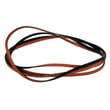
Common problems on the Kenmore Elite 11095081402 dryer include no heat, long dry times, the dryer not starting, the drum not turning, and unusual noises. Most of these issues trace back to airflow restrictions (lint buildup), power supply problems, or normal wear on drive and support parts; see the 11095081402 owner's manual troubleshooting section for model-specific checks.
Quick checks we recommend first
- Clean the lint screen before or after every load; a blocked screen increases drying time.
- Confirm strong airflow at the outside exhaust hood while the dryer runs.
- Check the door is fully closed and the Start button is pressed firmly (large loads may require holding Start 2 to 5 seconds).
- Verify both house fuses or breakers are on (many dryers use two).
- Avoid overloading; it causes uneven drying and wrinkling.
Symptom-to-cause guide (most common)
| Symptom | Most common cause | What to do next |
|---|---|---|
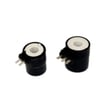
| Dryer runs but no heat | Tripped breaker or blown fuse; gas ignition parts on gas models | Reset/check both breakers or fuses; then inspect ignition system |
| Long drying times | Lint screen residue or vent restriction | Clean screen and vent path; remove accumulated lint |
| Dryer will not run | Power issue, door not shut, Start not held long enough | Check power, door switch engagement, Start procedure |
| Drum not turning | Worn belt/idler/rollers, motor issue | Inspect drum support and drive system |
| Loud thumping/squealing | Worn rollers or idler pulley | Replace worn support/drive components |
Parts that commonly fix noise or no-tumble complaints
If the drum is hard to turn by hand (with power off) or you hear squealing, these are frequent wear items for this style of dryer:
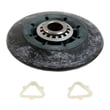
- Support WPW10314173 (drum support roller)
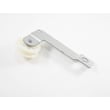
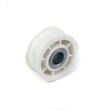
- Dryer idler pulley 279640 (keeps belt tension)
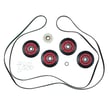
- Dryer repair kit 4392067 (common wear-item bundle for drum support and drive)
Why it matters
Airflow and lint control protect the heater and fabrics. The manual notes that running with a loose, damaged, blocked, or missing lint screen can cause overheating and damage, and residue buildup on the screen can make loads take longer or stop before fully dry.
Last updated: February 2026
Where is the model number on the Kenmore Elite dryer?
On the Kenmore Elite dryer model 11095081402, the model number is printed on the model and serial number label attached to the dryer cabinet; you’ll typically see it when you open the door and look around the door opening area.
Where to look first (fastest checks)
- Open the dryer door and inspect the cabinet frame around the opening.
- Check the top edge of the door opening (cabinet lip).
- Check the left and right sides of the door opening (cabinet jambs).
- Look on the inside surface of the door itself.
- Use a flashlight; the label is often small and easy to miss.
What the label looks like and what to write down
The label lists both the model number and serial number. We recommend recording these details exactly as shown so you can match Kenmore parts correctly.
| Item on label | Why it matters | Example format |
|---|---|---|
| Model number | Ensures correct part fit and diagrams | 11095081402 |
| Serial number | Helps identify production run details | Letters and numbers |
| Purchase date (your record) | Useful for service history | Month/day/year |
For the official wording and the product record section, use the 11095081402 owner’s manual.
Why it matters
Kenmore Elite dryers often share similar styling across multiple model numbers. Using the exact model number prevents ordering the wrong drum support roller, idler pulley, thermistor, or other common replacement parts.
Last updated: February 2026
What is the average lifespan of 11095081402?
A Kenmore Elite dryer like model 11095081402 typically lasts 13 years with normal household use and proper venting and maintenance. Keeping airflow strong and replacing common wear parts on time helps the dryer heat correctly and reduces strain on the motor and drum system.
What affects lifespan the most
- Vent restriction (long runs, crushed flex duct, clogged hood) that causes overheating and long dry times
- Overloading that stresses the drive motor, belt, and drum support components
- Skipped lint cleaning (lint screen and internal ducting)
- Worn drum support and belt system that leads to squealing, thumping, or poor tumbling
- Heat system wear on gas models (ignition and flame sensing components)
Maintenance that adds years
Use these habits to keep your 11095081402 running at its expected service life:
- Clean the lint screen every load; inspect the lint screen area for buildup
- Check airflow at the outside vent; strong, steady exhaust means the vent path is clear
- Keep the vent path as straight and short as possible; use the fewest elbows
- Do not overload; loads should tumble freely to dry evenly
- Review venting and care guidance in the owner's manual
Common wear parts to watch (and why)
| Symptom | Likely wear area | Example part for this model |
|---|---|---|
| Squealing or chirping | Idler and belt path | Dryer idler pulley 279640 |
| Thumping, poor seal, lint leaks | Drum sealing surfaces | Dryer drum seal 280114 |
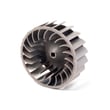
| Long dry times with good heat | Air movement | Dryer blower wheel WP697772 |
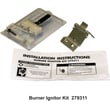
| No heat or intermittent heat (gas) | Ignition/flame sensing | Igniter 279311 or dryer radiant sensor WP338906 |
Why it matters
Most “dryer failures” are really airflow or wear-and-tear issues. When venting is correct and the drum drive system stays smooth, the dryer runs cooler, cycles properly, and reaches its normal 13-year lifespan.
Last updated: March 2026