 Owner’s manual


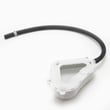
How to force a Kenmore Elite washer to drain?
To force-drain the Kenmore Elite washer model 79629272001, use the Drain & Spin cycle; if the washer is paused or powered off with water in the tub, it can also auto-drain after about 4 minutes as a built-in safety feature. For exact button steps, follow the 79629272001 owner's manual.
Fast ways to drain the tub
- Use Drain & Spin: Select Drain & Spin, choose a spin speed if available, then press START/PAUSE.
- Let the safety auto-drain work: If the washer is paused or shut off with water inside, it drains automatically after about 4 minutes.
- Check Control Lock first: If the display shows CL, press and hold DRAIN & SPIN for 5 seconds to toggle Control Lock off, then start Drain & Spin.
- Verify the drain path: Make sure the drain hose is not kinked, crushed, or pushed too far down the standpipe.
- If draining is slow or stops: A restriction in the drain hose or a drain component issue is likely.
What to check if it will not drain
| Symptom | Most common cause | What we recommend |
|---|---|---|
| Hums but no draining | Drain path restriction | Inspect the standpipe and the washer drain hose routing |
| Drains sometimes, not always | Intermittent drain restriction | Check for kinks, pinches, or partial clogs |
| Won’t start Drain & Spin and shows CL | Control Lock enabled | Hold DRAIN & SPIN 5 seconds, then retry |
| Drains but leaves water behind | Low spin or load imbalance | Re-run Drain & Spin with a higher spin speed |
Parts that can be involved (when draining problems persist)
If the washer will not drain even with correct settings, we typically focus on the drain path first, then move to components that affect water level sensing and draining behavior.
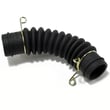
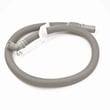
- Washer drain hose AEM73732901 (kinks, internal blockage, poor routing)
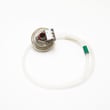
- Lg washer water-level pressure switch 6501EA1001R (incorrect water level sensing can affect cycle behavior)
- Washer water-level pressure switch hose 5210FA3427J (air leaks or blockage can cause sensing issues)
Why it matters
A forced drain is the quickest way to protect floors and get the cycle back under control. On the 79629272001, the automatic drain safety feature also helps reduce the chance of water being left in the tub when the washer is paused or shut off.
Last updated: February 2026
Is Kenmore Elite high end?
Yes. Kenmore Elite is Kenmore’s higher-end line, and the 79629272001 Elite washer is built with premium performance features and longer-term component coverage compared to many standard models. You typically get stronger cleaning, higher spin performance, and more advanced controls than entry-level washers.
What “high end” means for the 79629272001
We judge “high end” by performance, feature set, and long-term design choices. For this model, the Use & Care information and warranty language point to a more premium tier.
- Designed for high-efficiency (HE) washing with low-sudsing detergent
- More advanced sensing and control compared to basic top-loaders
- Direct-drive motor system components are treated as major, long-life parts
- Maintenance guidance is more detailed (for example, inlet filter care)
For operating tips and cycle guidance, use the 79629272001 owner's manual.
Quick comparison: Kenmore tiers (typical)
| Kenmore line | Typical positioning | What you usually notice |
|---|---|---|
| Kenmore | Value to mid-range | Fewer cycles, simpler controls |
| Kenmore Elite | Mid-to-high end | More cycles/options, stronger performance |
| Kenmore PRO | Pro-style premium | Pro styling, top-tier features (varies by product) |
Why it matters
A higher-end washer like the Kenmore Elite 79629272001 is worth maintaining correctly because performance depends on proper water fill, correct detergent type, and reliable drive components.
Maintenance that protects performance
- Use only HE, low-sudsing detergent; overdosing can cause wash issues
- If fill is slow, clean the inlet filters (hard water can clog them)
- Turn off water taps before removing hoses
- Reinstall inlet filters before running the washer
- If filters are damaged or cannot be cleaned, replace the fill valve rather than operating the washer
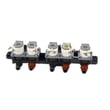
If you are troubleshooting fill or no-fill symptoms, the water inlet valve assembly is a common related part: lg washer water inlet valve AJU75152601.
Last updated: February 2026
What does F21 mean on a Kenmore Elite washer?
On the Kenmore Elite washer model 79629272001, the F21 code means Long Drain: the washer is taking too long to pump water out (commonly due to a clog, excessive suds, or a drain pump or hose issue). Check the drain path first, then test components.
What to check first (fast fixes)
- Press Pause/Cancel and let the washer try to drain again.
- Reduce detergent going forward; too much detergent can cause excessive sudsing and slow draining.
- Inspect the drain hose for kinks, crushing, or a blocked standpipe.
- Make sure the drain hose is not shoved too far down the standpipe (it can siphon or restrict flow).
- If the tub is full of water, unplug the washer before accessing any internal parts.
Likely causes and what they look like
| Likely cause | What you may notice | What to do |
|---|---|---|
| Drain hose restriction | Slow drain, gurgling, intermittent drain | Straighten/clear hose; verify standpipe flow |
| Excess suds | “SUDS” message, long cycle times | Use HE detergent and correct dose (less is often better) |
| Drain pump problem | Hums but won’t drain, drains very slowly | Check for debris; replace pump if it won’t move water |
| Pressure sensing issue | Drains but still errors, odd fill/drain behavior | Check air hose and pressure switch connections |
Parts that commonly relate to long-drain symptoms
If you confirm the hose is clear and the washer still drains slowly, these model-matched parts are often involved:
- Washer drain hose AEM73732901 (check for internal blockage, splits, or poor routing)
- Lg washer water-level pressure switch 6501EA1001R (helps the control “know” water level)
- Washer water-level pressure switch hose 5210FA3427J (a pinhole or blockage can confuse sensing)
Why it matters
A long-drain condition can leave clothes soaking wet, trigger repeated refills to rebalance loads, and strain the pump and control system. Fixing the restriction or suds issue early prevents repeat error codes and incomplete cycles.
Helpful model-specific references
- Use the troubleshooting and error code section in the 79629272001 owner's manual.
- For additional Kenmore guidance, see Kenmore 796 top load washer error codes.
Last updated: February 2026
What is the average lifespan of a Kenmore washer?
Most Kenmore washers last 10 to 15 years with normal household use and basic maintenance; your Kenmore Elite washer model 79629272001 fits that typical range. Keeping water supply hoses fresh, using HE detergent correctly, and addressing leaks or error codes early helps you reach the high end of that lifespan.
What affects washer lifespan the most
- Load size and frequency: frequent heavy loads shorten life faster than mixed, moderate loads.
- Water quality: hard water can clog inlet filters and stress the fill system.
- Detergent habits: too much detergent can cause oversudsing and residue buildup.
- Hose condition and leaks: worn hoses can leak and cause damage.
- Vibration and balance: chronic out-of-balance operation increases wear on suspension and basket components.
Maintenance that extends life (model 79629272001)
We recommend following the care steps in the 79629272001 owner's manual. Key items called out for this washer include:
| Maintenance item | Practical interval | Why it helps |
|---|---|---|
| Replace inlet hoses | Every 5 years | Reduces leak risk and water damage |
| Check hoses for cracks/leaks | Periodically | Catches failures early |
| Clean water inlet filters | As needed (especially with hard water) | Restores proper fill and prevents valve issues |
| Use HE detergent (low-sudsing) | Every load | Prevents oversudsing and buildup |
Signs it is nearing end of life
- Repeated no-fill or slow-fill symptoms even after cleaning inlet filters
- Persistent drain problems or standing water (often tied to the drain path)
- Loud grinding, banging, or frequent out-of-balance spinning
- Intermittent operation tied to motor sensing or shifting issues
- Multiple repairs needed within a short period
Why it matters
A washer that is maintained well usually costs less to own over time because it avoids leak damage, reduces strain on the motor and valves, and keeps cycles running efficiently.
Last updated: February 2026
What model is my Kenmore Elite washer?
Your Kenmore Elite washer’s model number is printed on the appliance identification plate. For model 79629272001, the Use & Care Guide notes the ID plate is located inside the washer lid, and it lists both the model and serial number for service and parts matching.
Where to look for the model number
Check these common label locations on Kenmore top-load washers like 79629272001:
- Inside the washer lid (identification plate)
- Along the lid opening rim (near the top edge)
- On the back of the control panel area
- On the cabinet frame near the top opening
- On a side panel near the rear corner
If you find multiple numbers, use the one labeled Model No.
How to read the label (what to write down)
Record the key fields exactly as shown so we can match the correct Kenmore parts and diagrams:
| Label field | What it’s used for | Example format |
|---|---|---|
| Model No. | Correct parts list and diagrams | 796.292796 (series) or 79629272001 (full model) |
| Serial No. | Production run details | Letters and numbers |
| Date of purchase | Warranty and service reference | Month/day/year |
For the most accurate parts match, use the full model number (for example, 79629272001, not just “796”).
Why it matters
Kenmore Elite washers often share similar styling across multiple 796-series models, but parts like the lid lock, water inlet valve, and control components can vary by revision. Using the exact model number prevents ordering the wrong replacement part.
For label location details and model/serial recording, use the 79629272001 owner’s manual.
Last updated: February 2026
What size is a Kenmore Elite washer?
For the Kenmore Elite washer model 79629272001, the cabinet size is 27 in. wide x 28 3/8 in. deep x 45 3/8 in. high; with the lid open, height is 55 3/4 in. These are the key dimensions you need for fit, hookups, and airflow (see the 79629272001 owner's manual).
Dimensions and space you should plan for
Here are the model-specific measurements from the manual:
| Measurement | Size |
|---|---|
| Width | 27 in. |
| Depth | 28 3/8 in. |
| Height (lid closed) | 45 3/8 in. |
| Height (lid open) | 55 3/4 in. |
Recommended clearances (so it installs and runs correctly)
Even if the washer fits by cabinet size, we recommend leaving room for hoses, airflow, and vibration control:
- At least 1 in. clearance on each side
- At least 4 in. clearance behind the washer
- At least 56 in. vertical space to shelves or cabinets above
- Install on a firm, level floor to reduce vibration during spin
- Keep the washer indoors and away from freezing temperatures
Quick fit check before you buy parts or move the washer
Use this checklist to avoid common installation surprises:
- Measure the doorway and any tight turns; 27 in. width is the cabinet, not the moving clearance
- Confirm the drain standpipe and water hookups are reachable with the included hoses
- Plan for the lid swing; you need 55 3/4 in. height when the lid is open
- Leave rear clearance so the drain hose does not kink (a kink can cause drain problems)
Why it matters
Correct sizing and clearances help prevent vibration, noise, hose kinks, and installation damage. It also makes service easier if you ever need to access components like the water inlet valve or drain hose.
Last updated: February 2026
When was Kenmore Elite made?
Kenmore Elite is a premium Kenmore product line that has been produced across multiple years and generations, not a single one-time release. For your Kenmore Elite washer model 79629272001, the most accurate way to pin down when your specific unit was made is to use the model and serial number on the washer’s identification plate and the details in the 79629272001 owner's manual.
How to identify the manufacture timeframe for model 79629272001
We use the washer’s identification plate information to narrow down the production timeframe for a specific unit.
- Open the washer lid and locate the identification plate inside the lid area.
- Write down the model number (79629272001) and the serial number.
- Compare the serial number format to the identification guidance in the 79629272001 owner's manual.
- If you still need help, use the serial number when contacting service so the unit date can be decoded.
What “Kenmore Elite” means (and why dates vary)
“Kenmore Elite” is a higher-end tier within the Kenmore brand. Kenmore has used the Elite label on different washer designs over time, so the year depends on the exact model and serial number, not the Elite name alone.
Quick comparison
| Item | What it tells you | Where to find it |
|---|---|---|
| Model number 79629272001 | The design family and parts match | ID plate; parts list |
| Serial number | The specific unit’s build date code | ID plate inside lid |
| Purchase date | When it was bought (not built) | Receipt; warranty page |
Why it matters
Knowing the build timeframe helps us match the correct Kenmore washer parts (like a lid lock, water inlet valve, or pressure switch) and avoid ordering a look-alike part that does not fit your exact production run.
Last updated: February 2026
Where is the filter located on a Kenmore Elite washing machine?
On the Kenmore Elite washer model 79629272001, the “filter” most owners mean is the water inlet screen filters. They are located inside the hot and cold water inlet ports on the back of the washer, right where the fill hoses screw on (not inside the tub).
What you will see on this model
This washer uses small screen filters to catch sediment before it reaches the water inlet valve.
- The filters sit in the washer’s inlet fittings, not in the supply hoses
- You access them by removing the hot and cold fill hoses from the back
- If they clog, the washer can fill slowly or trigger a fill-related error
- We reinstall the screens after cleaning; the washer should not run without them
For the exact maintenance steps and illustrations, follow the 79629272001 owner's manual.
How to access and clean the inlet filters
- Turn off both water taps completely.
- Unscrew the hot and cold fill hoses from the back of the washer.
- Carefully pull the screen filters out of the inlet ports.
- Soak screens in white vinegar (or a lime scale remover), then rinse.
- Press screens back in, then reconnect hoses and check for leaks.
Quick location guide
| “Filter” type people ask about | Where it is on 79629272001 | What it affects |
|---|---|---|
| Water inlet screen filters | Back of washer, inside hot/cold inlet ports | Slow fill, no fill, sediment in valve |
| Drain pump coin trap (common on some front-loaders) | Not a typical feature on this top-load design | Drain issues, debris removal |
Why it matters
Clogged inlet screens restrict water flow, which can cause long fill times, poor wash performance, and error conditions. Keeping the inlet filters clean also helps protect the washer’s water inlet valve.
Last updated: February 2026


