 Installation guide
 Owner’s manual




How to figure out a Frigidaire dishwasher model?
On your Frigidaire dishwasher, the model number is printed on the rating label located just inside the door opening. For model FDB750RCC1, open the door and check along the inside edge (commonly the left side) for a label that lists both the model and serial number.
Where to look on FDB750RCC1
- Open the dishwasher door fully.
- Look along the inner door frame and tub opening.
- Check the left side first (most common location).
- If you do not see it, scan the right side and the top edge of the opening.
- Wipe the area with a damp cloth; labels can be hard to read when coated with residue.
What the label typically shows
| Label item | What it’s used for |
|---|---|
| Model number (example: FDB750RCC1) | Matching the correct parts and diagrams |
| Serial number | Identifying production details for service |
| Electrical rating | Confirming power requirements during service |
Why it matters
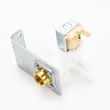
We use the exact model number to match the correct Frigidaire dishwasher parts (like a door seal, drain hose, or water inlet valve) because similar-looking dishwashers can use different components.
Helpful reference
For additional identification and service details, use the FDB750RCC1 owner's manual.
Last updated: January 2026
What does pf error mean on dishwasher?
On the Frigidaire dishwasher model FDB750RCC1, a PF code commonly points to a power interruption or unstable/low voltage event that paused the cycle; once power is steady again, the dishwasher may resume or need the cycle restarted. For model-specific display behavior, use the FDB750RCC1 owner's manual.
What to do when you see PF
- Press Cancel/Drain (if available) and restart the cycle.
- Check the dishwasher door is fully closed and latched.
- Check your home electrical supply: reset a tripped breaker or replace a blown fuse.
- Avoid running the dishwasher while heavy loads (space heater, microwave, hair dryer) are on the same circuit.
- If PF repeats, inspect the junction box wiring and power cord connection (disconnect power first).
Quick checks that often fix it
The manual’s basic “won’t run” checks are the same ones that help after a PF event.
| Check | What you’re looking for | Why it helps |
|---|---|---|
| Breaker/fuse | Tripped breaker or blown fuse | Restores stable power to the control |
| Door latch | Door not fully latched | Prevents the cycle from starting/resuming |
| Cycle selection | Cycle paused or not set | Ensures the control is actually commanded to run |
| Supply power | Loose connection at junction box | Prevents repeat PF events |
Why it matters
A PF event can stop the wash program mid-cycle, which can leave detergent undissolved, dishes dirty, or water sitting in the tub. Restoring steady power and restarting the cycle helps protect the control and gets normal washing and draining back on track.
Related troubleshooting
If the dishwasher has power but still will not run after clearing PF, follow the steps in dishwasher wont start video.
Last updated: January 2026
How to reset error code on Frigidaire dishwasher?
To clear an error condition on your Frigidaire FDB750RCC1 dishwasher, cancel the current cycle and restore the controls to a known starting point. If the dishwasher still will not run, confirm the door is fully closed and latched, then restart a normal cycle using the dial.
Quick reset steps (most common)
- Press and hold Cancel (or Start/Cancel, if your control panel has it) for about 3 to 5 seconds to cancel the cycle.
- Wait about 1 minute, then set the dial to NORMAL WASH and close the door to latch.
- Run the hot water at the nearest sink until it is hot, then turn it off before starting the cycle.
- If the control does not respond, turn the dishwasher power OFF at the breaker for 5 to 10 minutes, then restore power.
For model-specific operating steps and cycle selection details, use the FDB750RCC1 owner's manual.
If the code comes back, fix the cause (common checks)
Many “error code” situations are triggered by a real problem such as no fill, no drain, or a door that is not latching. Check these items first:
- Door latch: make sure the door closes firmly and latches.
- Power: check the breaker or fuse.
- Water supply: confirm the shutoff valve is fully open.
- Drain path: check for a kinked drain hose and make sure the disposer inlet knockout plug (if used) is removed.
- Overfill protector/float: verify it moves up and down freely.
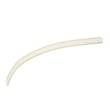
If you find a drain issue, the dishwasher drain hose 807117001 is a common replacement when the hose is damaged or won’t seal correctly.
What to expect after a reset
| What you do | What it tells us |
|---|---|
| Cancel cycle, then restart | Clears a paused or stuck cycle state |
| Breaker reset (5 to 10 minutes) | Clears a non-responsive control state |
| Restart and it fills and washes | The issue was likely temporary |
| Restart and it still will not run | A latch, fill, drain, or electrical issue is likely |
Why it matters
Resetting clears the symptom, but correcting the underlying cause prevents repeat shutdowns, protects the pump and heater, and helps the dishwasher complete the full wash and drain sequence.
Last updated: January 2026
What is the most common problem with Frigidaire dishwashers?
The most common problem we see with Frigidaire dishwashers like model FDB750RCC1 is draining trouble, meaning water is left in the bottom of the tub after the cycle. The next most common issues are poor cleaning from blocked spray action and door latch/door seal problems that can lead to leaks or a no-start condition (see the FDB750RCC1 owner's manual).
Quick checks for the most common issue (won’t drain)
- Confirm there is standing water in the tub after the cycle ends (that is not normal).
- If the dishwasher drains into a food disposer, make sure the disposer is completely empty before starting a cycle.
- Check the drain path for kinks or clogs (sink connection, disposer inlet, drain hose routing).
- Look for suds/foam from the wrong detergent or too much detergent; foam can cause overflow and performance problems.
- If the unit is not draining and you suspect a failed pump, the drain pump is a common repair part.
Common “symptom to likely cause” map
| Symptom | Most common cause | What to check first |
|---|---|---|
| Water left in bottom of tub | Drain restriction or drain pump issue | Drain hose routing and sink/disposer connection |
| Food soils left on dishes | Loading or spray blockage, low temp/pressure | Tower/spray arm not blocked; water temp at least 120°F |
| Leaks at the door | Door seal wear or tub gasket area buildup | Inspect and clean sealing surfaces; check level |
| Detergent left in cup | Dispenser blocked by dishes or weak water action | Make sure items don’t block the dispenser door |
Parts that often solve these problems on FDB750RCC1
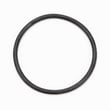
- For leaks at the bottom of the door: inspect the gasket 809006501 for tears, flattening, or gaps.
- For drain complaints: check the hose 807117001 for kinks, clogs, or a bad connection.
- If the dishwasher will not evacuate water and the drain path is clear: consider the dishwasher drain pump A00126501.
Why it matters
Drain and wash-performance issues can look like “the dishwasher is bad,” but they are often caused by a simple restriction, poor loading that blocks spray action, or a worn seal. Fixing the root cause prevents repeat clogs, leaks, and poor cleaning.
Last updated: January 2026





