 Installation guide
 Owner’s manual





What is the average lifespan of a GE dishwasher?
A GE dishwasher like model CDT835SSJ0SS typically lasts 10 to 12 years. With consistent cleaning, correct detergent use, and prompt repair of leaks or draining issues, it commonly reaches the upper end of that range.
Typical lifespan and what changes it
Most modern residential dishwashers fall into a similar life range, but day-to-day conditions make the difference.
- Usage frequency: 1 load per day generally wears parts slower than 2 to 3 loads per day
- Water quality: hard water speeds up mineral buildup on the heating system and spray paths
- Maintenance: regular filter and tub cleaning reduces pump strain
- Installation quality: proper leveling and secure mounting reduce vibration and leaks (see the installation guide)
- Small issues fixed early: a minor leak or weak wash can turn into pump, heater, or control problems
What to maintain to reach 10 to 12 years
We recommend focusing on the parts and areas that most affect wash performance, drying, and leak prevention.
| Area | What to do | Why it helps lifespan |
|---|---|---|
| Wash system | Clean filters and check spray paths | Reduces load on the circulation pump |
| Heating and drying | Use the right cycle options and keep the tub clean | Helps the heater work efficiently |
| Door sealing | Wipe the door edges and inspect the gasket | Prevents slow leaks and moisture damage |
| Drain path | Keep the drain hose routing correct and clear | Prevents standing water and pump strain |
Signs it is nearing end-of-life
If you see these repeatedly, it usually means multiple components are wearing at once.
- Dishes stay gritty or cloudy even after cleaning and correct loading
- Water remains in the bottom after cycles
- The door will not latch consistently
- Burning smell, poor drying, or cycles that stop mid-run
- Frequent error codes (use the GE dishwasher error codes reference to interpret them)
Why it matters
A dishwasher that is maintained tends to fail in smaller, cheaper-to-fix ways (seals, latches, hoses). Neglected units more often develop expensive failures like circulation pump or heating problems.
Last updated: February 2026
What is the most common problem with GE dishwashers?
The most common GE dishwasher problems (including model CDT835SSJ0SS) are not draining, not starting, and leaking. In many cases, the root cause is simple: a blocked filter or drain path, a door that is not fully latched, or a leak-detection shutdown that cancels the cycle.
Most common issues and what they usually mean
- Not draining: clogged filter, drain hose restriction, or a drain pump issue
- Won’t start or stops mid-cycle: door not closed/latched, cycle interrupted, or control-related fault
- Leaking or “LEAK DETECTED”: leak detection cancels the cycle on some models
- Poor cleaning: spray arm blockage, loading issues, or low-performing detergent
- Poor drying: rinse aid empty or heat/dry system issue
Quick checks we recommend first (fast, no parts)
- Press Start and close the door promptly; if the door was opened or the cycle was interrupted, the Start light can flash and the unit may not run normally.
- Listen for reminder beeps; some models beep once per minute when the door is left open during operation.
- Clean the filters (fine and ultra-fine) and remove debris that can restrict wash and drain flow.
- Check for suds; using the wrong detergent can create suds and cause performance problems.
- Confirm incoming water is not excessively hot; very hot water can contribute to glass etching and poor results.
When a part is commonly involved
If the dishwasher won’t start because the door is not latching consistently, the latch system is a frequent fix.
| Symptom | Most likely area | Example part for this model |
|---|---|---|
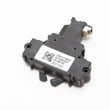
| Won’t start, door feels loose | Door latch/strike alignment | GE dishwasher door latch lock WD21X10490 |
| Water left in tub | Drain path, drain pump, drain hose | (inspect hose routing and pump area) |
| “LEAK DETECTED” and cycle cancels | Leak detection triggered by water in base | (find and correct leak source) |
Why it matters
Drain and latch problems can look like “dead” electronics, but they often have straightforward causes. Starting with filters, door closure, and error-code guidance prevents unnecessary part replacement and gets your GE dishwasher back to normal operation faster.
For model-specific operating steps, cleaning guidance, and troubleshooting charts, use the CDT835SSJ0SS owner’s manual. For code definitions and what to check next, use GE electronic dishwasher error codes.
Last updated: February 2026
Can a clogged drain cause an FTD error?
Yes. On a GE dishwasher like model CDT835SSJ0SS, a clogged drain (or a clogged air gap/disposer) can leave water standing in the tub; that leftover water can prevent the dishwasher from starting the next fill properly and trigger an FTD-style drain/fill fault.
What to check first (fast, no parts)
- Cancel the cycle and see whether the unit pumps out completely.
- Check for standing water in the bottom of the tub after cancel/drain.
- Clean the air gap (if your sink setup has one); it is designed to prevent drain backup.
- If the dishwasher drains into a garbage disposer, run the disposer to clear it.
- Confirm the kitchen sink drains normally; a slow sink often points to a plumbing restriction.
For model-specific guidance on cleaning the air gap and troubleshooting standing water, use the CDT835SSJ0SS owner’s manual.
Drain-path trouble spots that commonly cause FTD
| Area | What happens | What you’ll notice |
|---|---|---|
| Air gap | Debris blocks the vented drain break | Water remains in tub, slow drain |
| Disposer inlet | Food buildup restricts outlet | Gurgling, slow drain |
| Drain hose | Kink, clog, or improper routing | Intermittent drain, water left behind |
| Drain pump | Pump can’t move water | Hums, no/weak drain flow |
When a part is likely involved
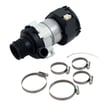
If the drain path is clear but the dishwasher still will not pump out, the drain pump can be the failure point. For this model, the correct replacement is the dishwasher drain pump WD19X25187.
Why it matters
The dishwasher needs to empty correctly between steps. When water cannot leave the tub, the control can interpret that as a drain or fill problem, which stops the cycle to prevent poor washing and potential overflow.
If you’re seeing a code on the display, match it to the symptom list in GE electronic dishwasher error codes to narrow the cause faster.
Last updated: February 2026
What are the commonly replaced parts in a dishwasher?
In a GE dishwasher like model CDT835SSJ0SS, the most commonly replaced parts are the door-latch components, heating and wash parts, and leak or drain items. These parts wear from normal use, mineral buildup, and clogs; replacing the right component restores cleaning, drying, and safe operation.
Most common dishwasher parts people replace
- Door latch and strike (won’t start, won’t stay closed)
- Heating element (poor drying, cool water, long cycles)
- Circulation pump (weak wash, noisy operation)
- Drain pump and drain hose (standing water, slow drain)
- Tub gasket and door vent parts (leaks, moisture issues)
- Rack hardware (rack falling off rails, rough rolling)
Model-specific examples for GE CDT835SSJ0SS
These are common replacements we see for this model family:
| Symptom | Likely part area | Example part for this model |
|---|---|---|
| Dishwasher won’t start or stops when door moves | Door latch/strike | GE dishwasher door latch lock WD21X10490 |
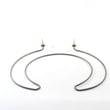
| Dishes not drying well | Heating circuit | Dishwasher heating element WD05X30818 |
| Not draining or water left in tub | Drain system | Dishwasher drain hose WD24X10062 |
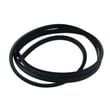
| Leaking at the tub/door area | Seals | Dishwasher tub gasket WD08X23477 |
Quick checks before you buy a part
These steps often pinpoint the failed component faster:
- Confirm the door closes firmly and the latch engages; a loose latch can prevent filling and running.
- Check the water valve under the sink is fully on (a common “won’t fill” cause).
- Inspect the drain hose routing for kinks or pinches behind the unit.
- Clean the filters and check for debris that can restrict wash or drain flow.
- If the control panel responds but the unit does not run, check the breaker and any wall switch feeding the dishwasher.
Why it matters
Replacing the correct part prevents repeat failures and protects the dishwasher from issues like overheating (heating circuit problems), flooding (seal leaks), or tip hazards during service. For safe handling, follow the leveling and installation checks in the CDT835SSJ0SS installation guide.
Last updated: February 2026
Can I replace dishwasher parts myself?
Yes, for a GE CDT835SSJ0SS dishwasher, we can often replace many common parts ourselves if we shut off power and water first and follow the correct steps. Simple mechanical items (like latches, springs, hoses, and gaskets) are usually DIY-friendly; electrical and leak-related issues require extra care.
What we can safely DIY most often
- Disconnect power at the breaker (turning the dishwasher off does not remove power).
- Shut off the water supply before opening any water path.
- Replace straightforward door and rack hardware.
- Reinstall the toekick correctly so it stays against the floor (helps reduce noise).
- Keep small removed parts away from children (choking hazard).
Parts on this model that are typically DIY-friendly
These are common replacements that usually do not require advanced diagnostics:
| Repair type | Example part for CDT835SSJ0SS | Typical difficulty |
|---|---|---|
| Door won’t latch or start | GE dishwasher door latch lock WD21X10490 | Easy to moderate |
| Door drops open or won’t stay up | Dishwasher door spring WD03X20316 | Moderate |
| Leaks at the door/tub edge | Dishwasher tub gasket WD08X23477 | Moderate |
| Not draining due to a damaged hose | Dishwasher drain hose WD24X10062 | Moderate |
When we recommend a technician
Some situations raise the risk of shock, leaks, or repeat failures:
- The display shows a leak-related message or the cycle cancels due to leak detection
- You suspect wiring, grounding, or control problems
- You need to access the control box area or internal electrical connections
- The dishwasher is not properly installed, level, or secured in the cabinet
For installation and safety requirements (grounding, enclosure panels, and power disconnect), follow the CDT835SSJ0SS installation guide and the CDT835SSJ0SS owner’s manual.
Why it matters
Dishwashers combine electricity, hot water, and moving parts. Using the correct shutdown steps and reinstalling panels and the toekick properly helps prevent shocks, leaks, and noise issues after the repair.
Last updated: February 2026





