Owner’s manual


How do I tell what model my Kenmore dryer is?
Your Kenmore dryer’s model number is printed on the appliance ID label; once you find it, match that exact number (for example, 11097274100) when ordering parts or checking specifications in the 11097274100 owner's manual.
Where to find the model number label
Check these common locations on Kenmore dryers:
- Inside the dryer door opening (on the door frame or front panel)
- On the back panel of the dryer cabinet
- Near the lint screen housing (depending on design)
- On the lower front area behind a small access panel (some versions)
What the model number looks like (and why it matters)
Kenmore model numbers are typically a long string of digits. Many Kenmore dryers start with a prefix such as 110 or 796; that prefix helps identify the manufacturer family, while the full model number is what we use to ensure correct fit.
Why it matters
Using the exact model number helps us:
- Show the correct Kenmore dryer parts diagrams and part lists
- Match the right electrical and gas components (if applicable)
- Confirm size and feature details (capacity, cycles, options)
- Avoid ordering look-alike parts that do not fit
Quick check: model number vs. serial number
| Item | What it’s used for | Example format |
|---|---|---|
| Model number | Identifies the exact dryer design for parts and specs | 11097274100 |
| Serial number | Identifies your specific unit’s production run | Letters and numbers |
If the label is hard to read
Try these steps to make the characters clearer:
- Wipe the label gently with a damp cloth and mild soap
- Use a flashlight at an angle to reduce glare
- Take a close-up photo and zoom in
- Write down the full number exactly as shown (no spaces)
Last updated: February 2026
What are the most common issues with 11097274100?
The most common problems we see with Kenmore dryer model 11097274100 are no heat or weak heat, long dry times from poor airflow, drum not turning, and squealing or rumbling noises. These issues usually trace to venting, the drive belt system, or gas ignition and temperature controls.
Most common symptoms and likely causes
- Dryer runs but no heat (gas model): failed igniter, radiant sensor, or gas valve coils
- Long dry times / overheating: clogged lint screen housing, restricted vent duct, weak blower wheel
- Drum will not tumble: broken belt, worn idler pulley, or a drive-related issue
- Squealing / thumping / rumbling: idler pulley wear, blower wheel damage, drum support wear
- Will not start: door switch/strike alignment, motor switch, timer or wiring issue
Model-matched parts that often fix these problems
| Problem | Part to check | What you’ll notice |
|---|---|---|
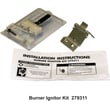
| No heat | Dryer igniter 279311 | Igniter does not glow, burner never lights |
| No heat or short cycling | Dryer radiant sensor WP338906 | Igniter glows but flame does not sustain |
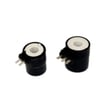
| No heat (intermittent) | Dryer gas valve coil kit 279834 | Heats at first, then stops heating |
| Long dry times/noise | Dryer blower wheel WP694089 | Weak airflow, rattling or vibration |
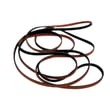
| Drum not turning | Drum belt 341241 | Motor runs but drum stays still |
Checks we recommend before replacing parts
- Clean the lint screen and confirm strong airflow at the outside vent hood
- Inspect the vent duct for kinks, crushing, or heavy lint buildup
- Listen during a heat cycle: igniter glow, burner ignition, and normal cycling
- Unplug the dryer before opening panels; shut off gas if servicing burner components
- Use the wiring diagram and troubleshooting steps in the owner's manual
Why it matters
Airflow and heat problems can mimic failed parts. Verifying venting first prevents repeat failures and restores drying performance faster, especially on gas dryers where restricted airflow can cause overheating and shutdowns.
Last updated: March 2026
What is the average lifespan of 11097274100?
A Kenmore dryer like model 11097274100 typically lasts 13 years with normal household use and proper venting. Regular lint removal, correct airflow, and replacing wear items (belt, rollers, idler) on time are what most often determine whether it reaches that lifespan.
What affects lifespan the most
- Vent restriction (long runs, crushed flex duct, clogged hood) increases heat and wear
- Overloading strains the drum support system and drive belt
- Skipped lint cleaning reduces airflow and raises operating temperatures
- Worn drum drive parts (belt, idler pulley) cause slipping and motor stress
- Heat system cycling issues (thermostat, gas ignition parts) can overheat components
Quick maintenance schedule we recommend
| Task | How often | Why it matters |
|---|---|---|
| Clean lint screen | Every load | Maintains airflow and drying performance |
| Check/clean vent duct and outside hood | Every 6 to 12 months | Prevents overheating and long dry times |
| Inspect belt and idler for wear/noise | Yearly | Avoids sudden no-start or squealing |
| Vacuum lint inside cabinet (if accessible) | Yearly | Reduces heat buildup around motor and burner |
Parts that commonly wear before the dryer does
If the drum stops turning or you hear squealing, the drive system is the first place we look. For this model, common wear parts include:
- Drum belt 341241 (broken belt, drum will not tumble)
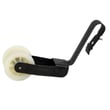
- Dryer idler pulley WP691366 (squeal, belt slipping)
- Dryer blower wheel WP694089 (rumbling, poor airflow)
Why it matters
Most “end of life” dryers are actually dealing with airflow problems or a few worn mechanical parts. Keeping airflow strong and replacing inexpensive wear items on time is the simplest way to get the full expected service life.
For model-specific operating and care guidance, use the owner's manual.
Last updated: March 2026