Owner’s manual


What are the most common issues with 11020907990?
The most common problems we see with the Kenmore 11020907990 washer are no spin or no agitation, not draining, leaking, and excessive vibration or banging. These symptoms usually trace back to a few high-wear parts and simple checks outlined in the 11020907990 owner's manual.
Most common symptoms and what typically causes them
- Won’t spin or agitate: worn drive coupling, worn clutch, or a lid switch that isn’t closing
- Won’t drain: clogged or failing drain pump, kinked drain hose, or a restriction at the standpipe
- Leaks: tub gasket wear, hose cracks, loose clamps, or center post seal seepage
- Loud noise during spin: drive block wear, basket drive issues, or gear case wear
- Out-of-balance shaking: weak suspension springs, uneven load, or an unlevel washer
Quick checks we recommend first
- Confirm the lid closes firmly; a bad lid switch can stop spin and agitation.
- Check the drain hose for kinks and verify the standpipe is not blocked.
- Level the washer and redistribute bulky loads (towels, blankets) before assuming a part failure.
- Listen for the motor running with no movement; that often points to a drive coupling.
Parts that commonly fix these issues (when symptoms match)
| Symptom | Common part to inspect | Example part on this model |
|---|---|---|
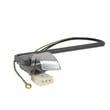
| No spin/no agitate | Lid switch | Washer lid switch WP3949238 |
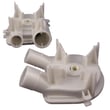
| No drain/slow drain | Drain pump | Washer drain pump WP3363394 |
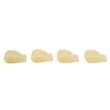
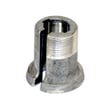
| Agitates poorly | Agitator dogs | Agitator dog 80040 |
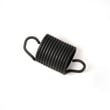
| Shaking/banging | Suspension spring | Washer suspension spring WP63907 |
| Leaking at tub | Tub gasket | Washer tub gasket W10814296 |
Why it matters
Catching the right failure early prevents secondary damage. For example, a restricted drain can lead to repeated no-spin complaints, and a worn coupling can mimic a motor problem even when the drive motor is fine.
Last updated: March 2026
What is the capacity of a Kenmore Model 11020907990 washer?
The Kenmore washer model 11020907990 is a traditional top-load design marketed as Super Capacity Plus, which is intended for larger loads; the exact cubic-foot capacity is listed in the 11020907990 owner's manual.
What “Super Capacity Plus” means in real use
This style of Kenmore top-load washer is built to handle bulky items and larger mixed loads when you match the water level to the load size.
- Wash full-size bath towels and jeans in balanced loads (mix items to reduce tangling)
- Use the correct water level setting for the load size to prevent poor cleaning
- Avoid overfilling above the top row of basket holes to maintain proper agitation
- For bulky items, add items loosely so water can circulate
Typical capacity range (helpful benchmark)
When a manual describes a washer as “super capacity” or “super capacity plus,” most top-load washers in this class are commonly in the about 3.2 to 3.6 cu. ft. range.
| What you need | Best source | What you’ll get |
|---|---|---|
| Exact capacity for 11020907990 | 11020907990 owner's manual | Model-specific specification |
| Practical load guidance | Basket fill level + water level selection | Better cleaning and fewer out-of-balance spins |
Why it matters
Capacity affects how much you can wash per load, but it also impacts cleaning performance. Loading within the washer’s intended range helps the agitator move items through the wash water, reduces vibration, and improves spin-out.
Last updated: January 2026
What is the life expectancy of a Kenmore washer?
For a Kenmore washer like model 11020907990, the typical life expectancy is 10 to 15 years with normal household use. Consistent maintenance (proper loading, correct water level, and prompt repair of wear items) is what most often determines whether it lands closer to 10 or 15.
What affects washer lifespan the most
- Load size and balance: Overloading and repeated out-of-balance spins shorten the life of the drive system and suspension.
- Water quality: Hard water can increase residue and wear on valves and moving parts.
- Drain performance: Slow draining strains the pump and can leave standing water.
- Lid switch operation: A failing lid switch can stop cycles and lead to repeated restarts.
- Routine cleaning: Keeping the basket and dispensers clean reduces odor and buildup.
Common wear parts that can extend service life
If the washer still fills and drains but agitation or spinning is weak, these are frequent, repairable items on many Kenmore top-load designs:
| Symptom | Often involved part | What you’ll notice |
|---|---|---|
| Agitator moves poorly | Agitator dog 80040 | Clicking, slipping, or weak agitation |
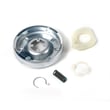
| Won’t spin or agitates poorly | Coupling 285753A | Motor runs but tub does not move normally |
| Won’t drain or drains slowly | Washer drain pump WP3363394 | Water left in tub, humming, slow drain |
| Stops mid-cycle | Washer lid switch WP3949238 | No spin/drain with lid closed |
Why it matters
A washer that is maintained and repaired early usually costs less to keep running than one that is pushed until a major failure. Replacing smaller parts (like a coupling or lid switch) can prevent secondary damage to the gear case, basket drive, or motor.
Best practices we recommend for longer life
- Use the lowest water level that still allows clothes to move freely.
- Avoid packing the basket tight; load loosely for better agitation.
- Level the washer and keep it from rocking to reduce vibration.
- Check pockets and remove heavy items that can throw loads off balance.
- Follow cycle and feature guidance in the 11020907990 owner's manual.
Last updated: January 2026