 Owner’s manual
 Error Codes



Are bottom mount fridges better?
Yes, bottom-mount refrigerators are better for many households because the fresh-food section sits at eye level, so we reach everyday items with less bending. On the Amana ARB2557CSR-PARB2557CS1, this layout also supports efficient organization of refrigerator shelves and freezer drawers (setup details are in the owner's manual).
When a bottom-mount refrigerator is the better choice
- You use the refrigerator compartment more often than the freezer
- You want fresh food (produce, dairy, leftovers) easier to see and grab
- You prefer freezer drawers that help separate frozen foods by type
- You want less daily bending compared with a top-freezer design
- You like having wide refrigerator shelves for meal prep items and platters
When it might not be “better” for your kitchen
- You access frozen foods more than fresh foods (a top-freezer can feel more convenient)
- You want the lightest freezer access (bottom freezers require bending)
- You have limited floor space for pulling out freezer drawers fully
Quick comparison
| Feature | Bottom-mount refrigerator | Top-freezer refrigerator |
|---|---|---|
| Fresh food access | Easier (eye level) | Requires more bending |
| Freezer access | Requires bending | Easier (higher) |
| Organization | Strong (drawers/bins) | Simpler shelves |
| Daily ergonomics | Better for most | Depends on habits |
Why it matters
We see fewer “door open too long” moments when fresh food is easier to find; that helps temperature stability and can reduce run time. Your manual also includes energy-saving habits like avoiding overcrowding shelves and keeping door gaskets clean for a good seal.
Last updated: February 2026
What is the best refrigerator under $1000?
If you’re shopping under $1000, the best choice is usually a simple, full-size top-freezer refrigerator from a major brand because it delivers the most reliable cooling per dollar and avoids complex ice and water features that commonly drive repairs. Use the sizing and installation checks in the owner's manual to make sure the new refrigerator fits and levels correctly.
What to prioritize (best value and reliability)
- Top-freezer layout: typically the lowest cost and easiest to service.
- No in-door dispenser: fewer leak and ice-maker issues over time.
- Basic controls: steady temperatures with fewer electronics.
- Standard width: most budget-friendly models are around 28 to 33 inches wide.
- Good door seal: efficient operation depends on tight gaskets and proper leveling.
Quick comparison: common budget styles
| Style | Typical price under $1000 | Reliability outlook | Best for |
|---|---|---|---|
| Top-freezer | Often yes | Strong | Most households, best value |
| Bottom-freezer | Sometimes | Good | Easier fresh-food access |
| Side-by-side | Sometimes | Mixed | Narrow kitchens, more freezer space |
| French door | Rare (full-size) | Mixed | Features and layout, higher complexity |
Fit and setup checks that prevent problems
We recommend doing these before you buy:
- Measure the opening (width, height, depth) and allow airflow clearance.
- Confirm the floor is solid and the unit can be leveled with a slight tilt back for door closure.
- Avoid placing the refrigerator next to heat sources (oven, radiator) when possible.
- Plan the delivery path; some installs require door removal.
Why it matters
In the under-$1000 range, you get the best long-term results by paying for cooling performance and a solid cabinet rather than extra features. A simpler refrigerator is less likely to develop water leaks, ice-maker failures, or control issues.
Last updated: February 2026
Why is my bottom freezer not making ice?
If your Amana ARB2557CSR-PARB2557CS1 bottom-mount refrigerator is not making ice, the most common causes are the ice maker being turned off (arm up), the freezer not reaching 0°F to 2°F, or a water supply issue such as low water pressure. Use the steps in the owner's manual to confirm correct ice maker setup and operating conditions.
Quick checks that fix most “no ice” problems
- Make sure the ice bin is installed correctly and fully seated.
- Confirm the ice maker shutoff arm is down (arm up turns ice making off).
- Wait for temperature: the ice maker starts after the freezer reaches 0°F to 2°F.
- Allow time: plan on about 24 hours to get the first batch after setup.
- Discard the first ice made in the first 12 hours to flush the system.
Water supply checks (especially if the ice maker is dry)
Your refrigerator’s ice maker needs steady water flow.
- Confirm the household water supply valve is fully open.
- Check for a kinked or pinched water line behind the refrigerator.
- Verify water pressure is in the typical working range of 20 to 100 psi (35 psi minimum is recommended when a water filter is used).
- Avoid self-piercing or 3/16-inch saddle valves because they commonly restrict flow and clog over time.
Related parts that can help
If you have no fill water, slow fill, or intermittent ice production, these model-matched parts are commonly involved:
| Symptom | What it often points to | Model-matched part to consider |
|---|---|---|
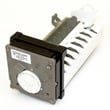
| Ice maker never cycles or won’t harvest | Ice maker assembly issue | Refrigerator ice maker D7824706Q |
| No water entering ice maker | Water inlet valve not opening or restricted | Refrigerator valve WP12544002 |
Why it matters
Ice makers are temperature and water-pressure sensitive. If the freezer is even a few degrees warm, or if water pressure is restricted, the ice maker can stop filling, freeze the inlet tube, or produce little to no ice.
Last updated: February 2026
Why is my Amana refrigerator leaking water on the floor?
Water on the floor around your Amana ARB2557CSR-PARB2557CS1 refrigerator is usually caused by a clogged defrost drain (water overflows inside and runs out), a leaking or misrouted water supply line, or a problem at the water inlet connection. We use the troubleshooting steps in the owner's manual to pinpoint the source quickly.
Quick checks that solve most leaks
- Look for a sheet of ice or standing water on the freezer floor; that points to a clogged defrost drain.
- Check the water line and fittings behind the refrigerator for drips (especially right after the ice maker fills).
- Inspect the drain pan underneath for cracks, overflow, or being out of position.
- Make sure the refrigerator is level; poor leveling can cause water to miss the drain pan.
- If you recently installed a water line, avoid plastic tubing and avoid self-piercing saddle valves; both commonly leak or restrict flow.
Most common causes and what to do
| Where you see water | Most likely cause | What to do next |
|---|---|---|
| Under the freezer door area | Defrost drain clogged/frozen | Thaw the drain area, then flush the drain with warm water until it flows freely to the pan |
| Behind the refrigerator | Water supply line or fitting leak | Tighten fittings, replace damaged tubing, and recheck for seepage during an ice maker fill |
| Under the front center | Drain pan shifted or cracked | Re-seat the pan; replace it if cracked |
| Near the left wall (fresh food section) | Water dispenser/filter area leak (if equipped) | Check the filter seating and housing for seepage; wipe dry and recheck after dispensing |
Parts that can be involved (when the leak is water-supply related)
If the leak happens during ice maker fill cycles or you see dripping at the back, these model-matched parts are common suspects:
- Refrigerator valve WP12544002 (controls water flow to the ice maker and dispenser, if equipped)
- Refrigerator tube WP2300868 (water line/tube routing inside the unit)
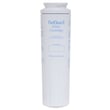
- Refrigerator water filter housing WP12568001 (if your model uses a filter housing)
Why it matters
Leaks are not just messy; they can lead to ice buildup in the freezer, poor cooling airflow, and floor damage. Fixing the root cause (drain vs. water supply) prevents repeat puddles and protects the refrigerator’s cooling performance.
Last updated: February 2026
What are the most commonly replaced parts in a refrigerator?
In an Amana ARB2557CSR-PARB2557CS1 bottom-mount refrigerator, the parts we see replaced most often are wear items (door gaskets, light bulbs, switches), water and ice components (ice maker, water valve, tubing), and storage parts (bins and drawers). These parts commonly fail from normal use, leaks, or temperature and door-seal issues.
Common parts that get replaced most often
- Door gaskets (fresh food and freezer) when the seal is torn, warped, or leaking air
- Light bulb and door/light switch when the interior light fails or stays on
- Ice maker components when ice production stops or cubes jam
- Water inlet valve and water tubing when you have no water flow, slow fill, or leaks
- Door bins, crispers, and other storage parts when cracked or broken
Examples of common replacements for this model
Here are a few frequently ordered items that match the ARB2557CSR-PARB2557CS1 parts list:
| Symptom | Likely part category | Example part for this model |
|---|---|---|
| No ice or irregular ice harvest | Ice maker assembly | Refrigerator ice maker D7824706Q |
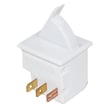
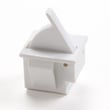
| Light does not turn on or stays on | Light bulb or door switch | Refrigerator switch W11396033 and bulb replcmt W11447232 |
| Water leak behind fridge or no fill to ice maker | Water supply components | Refrigerator valve WP12544002 and refrigerator tube WP2300868 |
| Warm temps, long run time, frost, or sweating | Air leaks and airflow related parts | Door gaskets, fan-related parts (varies by symptom) |
Quick checks before you buy a part
- Confirm the doors close and seal evenly; clean gaskets so they seat properly.
- If the light is out, let the bulb cool and replace it safely; wear gloves.
- For ice and water issues, verify the household shutoff valve is fully open and the supply line is not kinked.
- Unplug the refrigerator before servicing; our owner's manual covers key safety steps.
- If you see water pooling, check for a clogged drain path and inspect tubing connections.
Why it matters
Replacing the right “high-wear” part first often restores cooling efficiency, prevents food spoilage, and stops small leaks from turning into bigger problems. A good door seal and reliable ice and water flow also reduce compressor run time and energy use.
Last updated: February 2026





