Owner’s manual
 Error Codes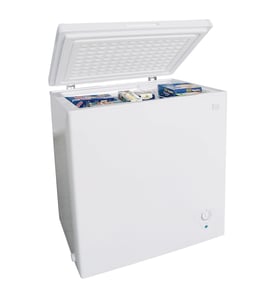



How long will a chest freezer last?
A Kenmore chest freezer like model 25316342101 typically lasts 15 to 20 years. Chest freezers often outlast uprights because they hold cold air better and usually run fewer door-opening cycles; basic care like cleaning and good door sealing helps it reach that lifespan.
What affects lifespan the most
- Room conditions: Hot garages and tight clearances make the compressor run longer.
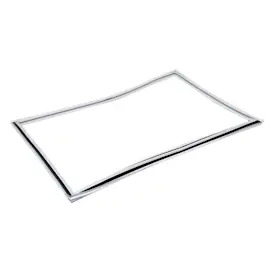
- Door seal condition: A leaking gasket forces longer run times and faster wear.
- Temperature setting and use: Frequent opening and warm food loads increase run time.
- Cleaning and care: Keeping the cabinet clean and dry helps prevent corrosion and odors.
- Power events: Long outages and repeated warm-ups add stress to the sealed system.
Quick care checklist to help it reach 15 to 20 years
Use these habits along with the guidance in the 25316342101 owner's manual.
- Keep the lid closed as much as possible; warm air makes the freezer run longer.
- If the freezer is off for several hours, keep the door closed; food can stay frozen at least 24 hours if kept closed.
- For long storage or moving, remove food, defrost, clean, dry, and leave the lid slightly open to prevent odor and mold.
- Watch for temperature alarms; if the red temp alarm light blinks and the buzzer sounds, use the ALARM OFF button and address the cause.
- If you notice poor sealing, inspect and clean the gasket area; replace worn sealing parts when needed.
Common “end-of-life” symptoms vs. fixable issues
| What you notice | Often means | What we recommend |
|---|---|---|
| Runs almost constantly | Warm room, frequent opening, or door leak | Reduce openings; check lid seal and temperature setting |
| Interior too warm | Control set too warm, door not seating, warm food load | Adjust colder; allow several hours to stabilize |
| Interior too cold | Control set too low | Adjust warmer; allow several hours to stabilize |
| Cabinet feels warm outside | Normal heat transfer | No repair needed if temps are stable |
Why it matters
A freezer that runs longer than normal uses more electricity and puts extra hours on the compressor. Catching door-seal leaks and temperature-control problems early is one of the best ways to extend the life of a chest freezer.
Last updated: January 2026
How to find serial number on chest freezer?
On Kenmore chest freezer model 25316342101, the model and serial number plate is typically on the left exterior wall of the cabinet. Use the plate to record the full model and serial numbers for parts lookup, service, and electrical ratings; see the 25316342101 owner's manual.
Where to look on this model
For chest freezers like Kenmore 25316342101, check these common spots first:
- Left exterior wall of the freezer cabinet (most common for chest models)
- Near the back-left area of the cabinet exterior
- Along the lower side panel where the metal cabinet meets the trim
- If the freezer is in a tight space, use a flashlight and mirror to read the plate
What the serial plate tells you
The serial plate is more than an ID tag; it is also the reference for correct electrical information.
| Item on plate | Why it matters |
|---|---|
| Model number | Ensures you get the correct Kenmore parts list and diagrams |
| Serial number | Helps match production run details for service and part revisions |
| Electrical rating | Confirms proper circuit requirements and safe power setup |
Tips to read and record it correctly
- Write the numbers exactly as shown (include all digits and letters)
- Take a clear photo before the label gets scratched or dirty
- If the label is hard to read, wipe gently with a damp cloth, then dry
- Keep the information with your freezer paperwork for future repairs
Why it matters
We use the model number and serial number to match the right replacement parts (like a temperature control thermostat, door switch, or compressor) and to confirm the correct electrical rating for safe operation.
Last updated: January 2026
How much does a deep freeze typically cost?
A deep freezer (including chest freezers like Kenmore model 25316342101) typically costs $200 to $1,300+, with most standard chest freezers landing around $350 to $800 depending on capacity (cubic feet), features, and efficiency. For model-specific operating and setup details, use the 25316342101 owner's manual.
Typical price ranges (what most shoppers see)
- Compact deep freezer (3 to 7 cu. ft.): about $150 to $350
- Mid-size chest freezer (7 to 14 cu. ft.): about $300 to $700
- Large chest freezer (14+ cu. ft.): about $500 to $1,000+
- Upright freezer (similar capacity): often $450 to $1,100+
What drives the price up or down
- Capacity (cubic feet): bigger costs more
- Style: chest models usually cost less than uprights at the same size
- Energy efficiency: higher-efficiency models can cost more upfront
- Temperature control and features: alarms, interior lighting, locks, baskets, and defrost features add cost
- Delivery and haul-away: can add a noticeable amount to the total
Quick comparison table
| Freezer type | Typical upfront cost | Typical strengths |
|---|---|---|
| Chest freezer | $350 to $800 | Best value per cubic foot, strong cold retention |
| Upright freezer | $450 to $1,100+ | Easier organization, smaller footprint |
Why it matters
The purchase price is only part of the cost. A properly installed freezer can run more efficiently and last longer. For example, Kenmore’s guidance for units like model 25316342101 includes leaving 3 inches of space on all sides for airflow and placing the freezer near a grounded outlet (no extension cord). Those basics help control operating cost over time.
Last updated: January 2026
What are common problems with mini deep freezers?
Common problems with mini deep freezers include temperature that runs too warm or too cold, heavy frost buildup, and longer run times. On a Kenmore chest freezer like model 25316342101, these issues are often tied to door sealing, frequent lid openings, hot room conditions, or an incorrect temperature control setting; see the 25316342101 owner's manual for model-specific checks.
Most common symptoms and what they usually mean
- Temperature inconsistency (too warm or too cold): temperature control setting, warm food load, or frequent openings
- Frost buildup inside the cabinet: humid conditions, lid not sealing, or lid opened too often
- Freezer runs too much or too long: hot room, recent restock, lid slightly open, or dirty/worn gasket
- Moisture on walls or outside surfaces: warm humid air leaking past the seal
- Warm exterior walls: normal during operation; the cabinet can feel noticeably warm as heat is moved out
Quick troubleshooting steps we recommend
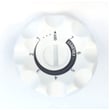
- Confirm the temperature control is not set to OFF and adjust in small increments; allow several hours to stabilize.
- Check the lid seal all the way around for gaps, folds, or debris; wipe the gasket clean with mild detergent and warm water.
- Reduce lid openings and avoid holding the lid open while loading.
- Give it time after a power outage or unplugging; many freezers need several hours to pull down to temperature.
- Verify the freezer is level; an unlevel cabinet can prevent proper sealing and cause frost or moisture problems.
Common causes and best next action
| Problem you notice | Most likely cause | Best next action |
|---|---|---|
| Too warm | Lid not sealing, frequent openings, warm food load | Check seal, open less, let temps stabilize |
| Too cold | Control set too cold | Turn control warmer, wait several hours |
| Heavy frost | Humid air entering, lid not seating | Inspect seal and leveling |
| Runs constantly | Hot room, lid slightly open, seal leak | Improve airflow, confirm lid closes fully |
Why it matters
Temperature swings and air leaks make the compressor run longer, increase frost and moisture, and can lead to freezer burn and higher energy use.
When a part is the likely fix
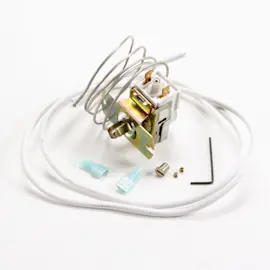
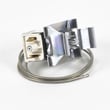
If the temperature won’t regulate even after leveling and seal checks, the temperature control system can be the cause. For this model, a common related part is the freezer temperature control thermostat 216714601.
Last updated: January 2026