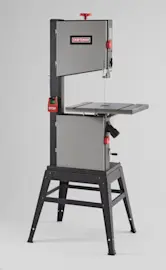
Owner’s manual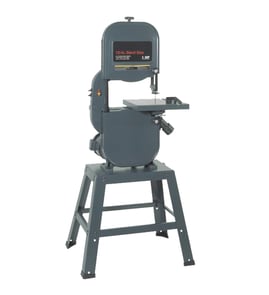


How do I know the size of my bandsaw blade?
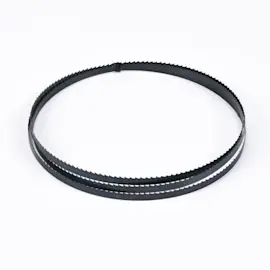
For the Craftsman 113243310 12-inch band saw sander, blade size means length, width, and TPI (teeth per inch). You can measure your current blade to match it, and the manual also confirms this saw accepts 1/8 inch to 1/2 inch blade widths (a 1/4 inch blade was included). See the 113243310 owner's manual.
- Blade length: the total loop length of the blade.
- Blade width: from the tooth tip to the back edge of the blade.
- TPI (teeth per inch): count how many teeth fall in 1 inch.
| Spec | How to measure | Why it matters |
|---|---|---|
| Length | Measure the full loop | Must match your saw’s wheel spacing |
| Width | Tooth tip to back | Controls curve radius and stability |
| TPI | Teeth in 1 inch | Affects cut speed and finish |
- Unplug the saw and open the wheel covers.
- Remove the blade and carefully uncoil it at arm’s length (wear safety goggles and gloves).
- Lay the blade loop flat on the floor.
- Mark a starting point (often the weld).
- Use a tape measure along the blade edge, rolling the blade as needed until you return to the mark.
The manual notes this band saw can use blades from 1/8 inch to 1/2 inch wide, and it references setting tension by width (for example, the pointer set to 1/4 for a 1/4-inch blade). Matching width helps you set blade tension and guide adjustments correctly.
Using the correct blade length prevents tracking problems and cover interference; choosing the right width and TPI improves cut quality and reduces issues like blade breakage or dulling too quickly.
Last updated: February 2026
What is the 4 inch rule for bandsaw?
The 4-inch rule for a band saw means we keep our hands and fingers at least 4 inches away from the moving blade during every cut. On the Craftsman 113243310 12-inch band saw/sander, that usually means using a push stick, holding jigs, or clamps anytime the work gets small or your grip would drift toward the blade.
Use the rule as a simple go or no-go check before you start the cut:
- If your hands would come within 4 inches of the blade, switch to a push stick or a jig.
- Keep the work supported on the table; do not “pinch” tiny offcuts near the blade.
- Adjust the upper blade guides so they just clear the workpiece before cutting; this helps control the cut while keeping hands farther away.
- Do not cut material that is too small to hold safely by hand.
- Wear ANSI Z87.1 safety goggles; add hearing protection for longer sessions.
For the model-specific safety and setup steps (including guide adjustments), follow the 113243310 owner's manual.
| Cutting situation | Safe approach that follows the 4-inch rule | Why it helps |
|---|---|---|
| Narrow rip or short piece | Push stick or push block | Keeps hands out of the danger zone |
| Small parts or repetitive cuts | Sled, jig, or clamp-down fixture | Controls the work without finger pressure near the blade |
| Curves in thin stock | Larger blank plus a handle/jig | Prevents “steering” with fingertips |
| Long, heavy boards | Add outfeed support; secure the saw | Reduces tipping and sudden shifts |
A band saw blade can pull material unexpectedly, and a brief lapse is enough to cause severe injury. Keeping a consistent 4-inch buffer forces us to use safer work-holding methods and better guide setup, which improves both safety and cut accuracy.
Last updated: February 2026
What is the 3-tooth rule for bandsaws?
The 3-tooth rule means you choose a band saw blade so at least three teeth are cutting in the material at all times. On the Craftsman 113243310 12-inch band saw sander, this helps prevent tooth snagging, rough cuts, and premature blade wear by keeping the cut stable and the gullets clearing chips.
- Measure the material thickness (the direction the blade teeth travel through).
- Pick a blade TPI so that 3 or more teeth span that thickness.
- If the cut burns, chatters, or loads up with dust, adjust TPI and feed rate.
- Thicker stock: use lower TPI (bigger gullets clear chips better).
- Thin stock: use higher TPI (more teeth support the cut).
- Softwood: typically tolerates lower TPI than hardwood.
- Curves: use a narrower blade; this model supports blade widths from 1/8 inch to 1/2 inch.
- Before cutting: set blade tracking, tension, and guides correctly per the 113243310 owner's manual.
| Material thickness | Common blade choice (typical) | Why it works |
|---|---|---|
| 1/8 inch to 1/4 inch | 14 to 24 TPI | Keeps 3+ teeth engaged on thin stock |
| 3/8 inch to 1 inch | 6 to 10 TPI | Balanced cut speed and finish |
| Over 1 inch | 3 to 6 TPI | Clears chips, reduces heat and wandering |
A bandsaw cuts best when the blade is stable and properly adjusted. Your manual emphasizes safe setup and correct blade installation, including teeth pointing downward toward the table, proper tension, and guide adjustment before turning the saw on. Following the 3-tooth rule supports that setup by matching the blade to the work so the saw feeds smoothly.
- Wear ANSI Z87.1 eye protection; add hearing protection for longer sessions.
- Keep the upper blade guides just above the workpiece and lock the guide bar.
- Unplug power before changing blades or making adjustments.
- Bolt the saw securely to a stand or bench to prevent tipping or movement.
Last updated: February 2026
What is the blade length on a Craftsman 12 inch bandsaw?
For the Craftsman 12-inch band saw/sander model 113243310, the blade length is the standard size used on most Craftsman 12-inch saws of this style: 80 inches. Confirm the exact blade spec (length, width, and tooth pitch) in the 113243310 owner's manual.
When you buy a replacement band saw blade, match more than just length so the blade tracks correctly and cuts cleanly.
- Length: 80 inches
- Width: Match what your guides and wheels support (common range is 1/8 to 1/2 inch)
- Tooth pitch (TPI): Choose based on material thickness (higher TPI for thinner stock)
- Blade type: Wood-cutting, metal-cutting, or general-purpose
- Kerf and set: Impacts cut quality and drift
| What you cut most | Recommended blade width | Typical TPI range |
|---|---|---|
| Tight curves (scroll work) | 1/8 to 3/16 inch | 10 to 18 TPI |
| General woodworking | 1/4 to 3/8 inch | 6 to 10 TPI |
| Resawing thicker boards | 1/2 inch | 3 to 4 TPI |
A correct-length blade can still perform poorly if setup is off. After installing an 80-inch blade:
- Set blade tension to the blade width you’re using
- Center the blade on the upper wheel (tracking adjustment)
- Adjust blade guides and thrust bearings close to, but not rubbing, the blade
- Verify the table is square to the blade for straight cuts
- Run the saw briefly and recheck tracking before cutting
Using the correct blade length for model 113243310 keeps the tensioning system in its proper range, helps the blade track on the wheels, and reduces vibration, drift, and premature blade wear.
Last updated: February 2026
How to change blade on Craftsman 113243310 table saw?
The Craftsman 113243310 is a 12-inch band saw sander (not a table saw), and blade changes follow the band saw procedure: back off blade tension, move the thrust bearings and guides out of the way, install the blade with teeth pointing down toward the table, then re-tension and re-adjust the guides.
- Unplug the saw and open/remove the covers as shown in the 113243310 owner's manual.
- Loosen blade tension using the tension knob so the blade can come off the wheels.
- Back off the thrust bearings (upper and lower) so they are out of the way.
- Move the blade guides away from the blade path (upper and lower guides).
- Remove the old blade carefully; uncoil it at arm’s length and wear eye protection.
- Install the new blade over the wheels with the teeth pointing downward toward the table; keep the blade between the guides and centered on the rubber tires.
- Set tension for blade width, then hand-rotate the upper wheel several turns to confirm tracking before closing covers.
The manual notes this saw accepts 1/8 inch to 1/2 inch wide blades, and a 1/4 inch blade is the common baseline.
| What you’re setting | What to aim for | Why it matters |
|---|---|---|
| Blade direction | Teeth down toward the table | Prevents poor cutting and grabbing |
| Blade tracking | Blade stays near center of tire | Reduces derailment and vibration |
| Guide clearance | About 1/32 inch from the deepest part of the tooth gullet | Supports the blade without overheating |
| Side guides | Touch evenly, but do not pinch | Prevents drift and premature wear |
- Saw is unplugged during the change and adjustments
- Blade is fully seated on both wheels and centered on tires
- Thrust bearings are set so they do not constantly force the blade
- Upper and lower guides are aligned evenly side-to-side
- Covers and blade guard are reinstalled before powering on
On the 113243310 band saw, blade tension, tracking, and guide spacing work together. If any one is off, the blade can wander, cut crooked, or come off the wheels, especially when switching blade widths for different materials.
Last updated: February 2026
What is the specs of the Craftsman 12 inch bandsaw 113243310?
The Craftsman 113243310 is a 12-inch band saw/sander in the 113.2433XX family. Key specs to confirm for your exact setup are the 12-inch cutting capacity class, the band saw plus sanding function, and the motor and blade setup shown in the parts and wiring sections of the 113243310 owner's manual.
Use these as your checklist when comparing blades, belts, and shop space needs:
- Saw type: 12-inch band saw/sander (vertical band saw with sanding attachment)
- Power: corded electric motor (motor wiring and connections are covered in the manual)
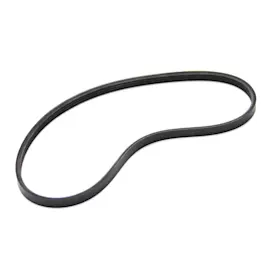
- Drive system: belt and pulley drive (V-belt and pulleys are listed in the parts list)
- Wear items: band saw tires, bearings, V-belt, sanding belt
- Electrical protection: correct fuse or circuit breaker sizing matters for startup and load
The manual for this platform calls out these common consumables and drive items:
| Item type | What it does | What to match when buying |
|---|---|---|
| V-belt | Transfers motor power to the saw | Belt type and length (listed as a V-belt in the parts list) |
| Sanding belt | Drives the sander function | Belt width and length (listed as a sanding belt in the parts list) |
| Tires and bearings | Keep the blade tracking smoothly | Wheel size and bearing type |
If your saw struggles to start, trips breakers, or bogs down, the manual’s troubleshooting guidance points to power and motor-circuit checks:
- Use the proper size fuses or circuit breakers for the tool
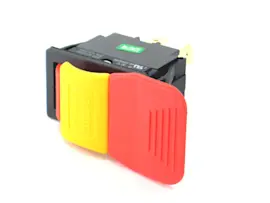
- Have the switch replaced if it is faulty
- Test and replace a capacitor if defective (if equipped)
- Check and repair wiring issues
- Feed the work slower into the blade to reduce load
On a 12-inch band saw/sander like the Craftsman 113243310, the “specs” that most impact results are the blade and drive setup (belt/pulleys), electrical supply, and how well the wheels, tires, and guides keep the blade tracking. Confirming those details prevents wrong blade or belt purchases and reduces nuisance breaker trips.
Last updated: February 2026