Owner’s manual
 Error Codes


How many cubic feet is the Kenmore Elite?
Kenmore Elite is a product line, not a single refrigerator size. For your Kenmore side-by-side refrigerator model 10651799413, the exact cubic-foot capacity is listed on the model’s rating label and in the 10651799413 owner's manual; we use those two sources to match the correct capacity for your specific unit.
Check these two places; both are reliable for your exact configuration:
- Owner’s manual: look in the “Product specifications” or “Features and specifications” section in the 10651799413 owner's manual
- Rating label: typically inside the fresh food compartment on a side wall, near the crisper area, or along the door frame
- Model tag confirmation: verify the full model number is 10651799413 (not a similar 106-series model)
- Measure for fit (optional): use cabinet width, height, and depth to confirm it matches your kitchen opening
“Kenmore Elite” covers multiple refrigerator styles (side-by-side, French door, bottom freezer) and multiple capacities. Two Kenmore Elite models can differ by several cubic feet even if they look similar.
| Term | What it describes | Why it matters |
|---|---|---|
| Total capacity (cu. ft.) | Fresh food + freezer combined | Helps compare overall storage space |
| Refrigerator capacity | Fresh food section only | Impacts everyday food storage |
| Freezer capacity | Freezer section only | Impacts frozen food and ice storage |
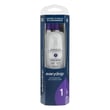
If you are comparing your 10651799413 to another Kenmore Elite model, match by model number first, then compare capacity. When you are maintaining performance (ice and water quality), replacing the water filter on schedule also helps; the Kenmore refrigerator water filter 9081 is a common maintenance item for this model family.
Capacity affects how you organize airflow around shelves and bins, and it can influence cooling consistency if the refrigerator is overpacked.
Last updated: February 2026
How wide is a Kenmore side by side refrigerator?
Most Kenmore side-by-side refrigerators are about 32 to 36 inches wide; for the exact cabinet width of model 10651799413, we list the official dimensions in the 10651799413 owner's manual.
Side-by-side refrigerator width depends on capacity, door style, and whether it’s standard-depth or counter-depth.
- 32 to 33 inches: narrower cabinets, tighter kitchens
- 35 to 36 inches: most common full-size side-by-side width
- 36 inches+: larger capacity or premium configurations
- Add clearance for door swing and airflow (width is not the same as required opening)
We recommend measuring both the refrigerator and the opening so you avoid door and installation issues.
- Measure the cabinet width (box only, not handles)
- Measure overall width including handles (often adds about 1 to 2 inches)
- Check door swing clearance so doors open past 90 degrees if needed
- Confirm rear and top ventilation clearance
- Measure pathways (doorways, hallways) for delivery
| What you’re checking | Why it matters | What to use |
|---|---|---|
| Cabinet width | Determines basic fit in the cutout | Manual spec and tape measure |
| Width with handles | Prevents surprises with protruding handles | Tape measure |
| Required opening | Ensures doors open and unit can breathe | Manual clearance guidance |
Even a 1-inch mismatch can prevent installation or limit door opening, which affects access to shelves, the ice bin, and the water dispenser area.
If you’re moving the refrigerator or shutting off water during install, it’s a good time to replace the water filter; model 10651799413 uses the refrigerator water filter 9081. You can also search parts by model on Sears PartsDirect.
Last updated: February 2026
How do I troubleshoot my 10651799413?
For Kenmore model 10651799413, start troubleshooting by identifying the symptom (not cooling, ice maker not working, water not dispensing, noise, or leaks), then check the simplest causes first: power, temperature settings, airflow, and frost buildup. Use the owner's manual for model-specific control settings and diagnostic steps.
- Confirm the refrigerator has power; interior lights and fans should run when doors are closed.
- Verify temperature settings; set fresh food to about 37°F and freezer to about 0°F.
- Make sure vents are not blocked by food packages; restricted airflow causes warm temps.
- Clean the condenser area; dust buildup raises temperatures and run time.
- Check door seals for gaps and make sure doors close fully.
- Listen for the evaporator fan in the freezer; if it is not running, airflow stops.
- Look for heavy frost on the freezer back panel; that points to a defrost problem.
- If the compressor runs constantly and temps stay warm, the sealed system may need service.
Helpful parts to consider when symptoms match:
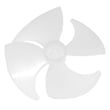
- Refrigerator evaporator fan WPW10236142 (no/weak airflow)
- Refrigerator defrost heater WPW10495967 (frost buildup)
- Refrigerator defrost bi-metal thermostat WPW10225581 (defrost not cycling)
- Confirm the freezer is at 0°F; warmer temps stop ice production.
- Make sure the ice bin is seated and the ice door is closing.
- If water supply is good but no ice cycles, the ice maker assembly is a common fix.
Parts often involved:
| Symptom | Most likely area | Example part on this model |
|---|---|---|
| No ice, no harvest cycle | Ice maker module | Refrigerator ice maker assembly WPW10300022 |
| Ice clumps, dispensing issues | Ice bin/door | Refrigerator ice container WPW10558424 |
- Replace the water filter on schedule; a clogged filter reduces flow.
- After replacing, flush several gallons to clear air and carbon fines.
Part for this model:
Troubleshooting in a simple-to-advanced order prevents unnecessary part replacement and helps you pinpoint whether the issue is airflow (fans/defrost), water supply (filter/tubing), or controls (electronic board).
Last updated: March 2026