

What are common dryer part failures?
On the Kirkland SGDX600HQ0 dryer, the most common part failures fall into four buckets: heat problems, drum not turning, poor airflow, and start or shutoff issues. These failures typically show up as no heat, long dry times, squealing or thumping, or a dryer that will not start.
Most common failures and what you notice
- No heat or weak heat (gas models): burner system parts such as the igniter, radiant sensor, or gas valve coils
- Dryer runs but takes too long: restricted venting, lint buildup, or a damaged blower wheel
- Drum will not tumble: broken belt, worn idler pulley, or a failed drive motor
- Will not start or stops when you press Start: door switch or push-to-start switch problems
- Shuts off mid-cycle: overheating from airflow restriction or a thermostat/high-limit issue
Parts that commonly fix these symptoms (SGDX600HQ0)
| Symptom | Common suspect parts | Example part for this model |
|---|---|---|
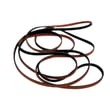
| Drum not turning | Belt, idler pulley, motor | Drum belt 341241 |
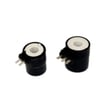
| No heat (gas) | Igniter, valve coils, radiant sensor | Dryer valve coil kit 279834 |
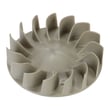
| Long dry times | Blower wheel, lint chute, venting | Dryer blower wheel WP694089 |
| Overheating/shutoff | Operating thermostat, high-limit thermostat | Dryer operating thermostat WP3387134 |
| Will not start | Door switch, push-to-start switch | Door switch WP3406105 |
Quick checks we recommend before replacing parts
- Clean the lint screen and confirm strong airflow at the outside vent hood.
- Run a timed cycle and listen: squeal often points to the idler; thump can point to drum support wear.
- If it tumbles but will not heat, focus on the gas ignition sequence parts first.
- If it will not start, verify the door closes firmly and the latch engages.
- If it overheats, correct vent restrictions before installing thermostats.
Why it matters
Catching the right failure early prevents repeat breakdowns. For example, replacing a thermostat without fixing a clogged vent often leads to another overheat shutdown and more part damage.
Last updated: February 2026
What are the parts of the dryer?
For the Kirkland SGDX600HQ0 dryer, the main parts fall into a few systems: the drum and drive (belt, motor, idler), the airflow path (blower wheel, lint chute), and the heat and safety controls (thermostats, igniter, gas valve components). Knowing these groups helps you pinpoint noises, no-heat, or long-dry-time problems faster.
Core dryer systems and what they do
- Drum and drive system: tumbles clothes using the drum, belt, idler pulley, and motor.
- Airflow system: pulls air through the drum and pushes it out the vent to remove moisture.
- Heating system (gas models): ignites and controls the burner to heat the airflow.
- Temperature and safety controls: cycle heat on/off and shut down heat if overheating occurs.
- Door and start circuit: confirms the door is closed and allows the dryer to start.
Common SGDX600HQ0 parts you may replace
Here are examples of parts available for this model and what they typically affect:
| System | Example part | What you’ll notice when it fails |
|---|---|---|
| Drum and drive | Drum belt 341241 | Drum will not tumble; motor may run but drum stays still |
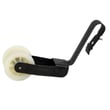
| Drum and drive | Dryer idler pulley WP691366 | Squealing, thumping, or belt slipping |
| Airflow | Dryer blower wheel WP694089 | Poor airflow, long dry times, rattling or vibration |
| Heat and safety | Dryer operating thermostat WP3387134 | Overheating, underheating, or inconsistent temperatures |
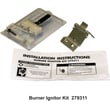
| Heat and ignition | Igniter 279311 | No heat; burner does not ignite |
Why it matters
Dryer symptoms usually map to one system. For example, long dry times often point to airflow (lint buildup, blower wheel issues), while no heat on a gas dryer often points to ignition or gas valve components. Grouping parts by system helps you troubleshoot efficiently and avoid replacing the wrong component.
Helpful next step
If you’re trying to identify what a specific component does or where it sits in the dryer, use our overview guide: what are the main parts of a clothes dryer.
Last updated: February 2026
Is it worth repairing a dryer drum?
For the Kirkland SGDX600HQ0 dryer, repairing the drum is worth it when the drum itself is the only major failure and the rest of the drive system is in good shape. If the repair also requires multiple wear parts (belt, idler, motor), replacement usually makes more sense.
Quick decision checklist
- The drum is cracked, badly dented, or has a broken seam: replacement is usually the only real fix.
- The drum is fine but the dryer thumps/squeals: focus on wear parts first.
- The dryer is otherwise reliable and you want to avoid replacing the whole unit: repair is often worthwhile.
- You see heavy rust-through or repeated failures: replacement is usually the better long-term choice.
- You can do the labor yourself: repair value improves significantly.
Common “drum problem” symptoms and what they often are
Many drum complaints are actually belt or support issues, not a damaged drum.
| Symptom | Most common cause | Parts that often fix it |
|---|---|---|
| Drum will not turn, motor runs | Broken/slipped belt | Drum belt 341241 |
| Loud squeal or intermittent scraping | Worn idler pulley | Dryer idler pulley WP691366 |
| Humming, no start, or weak rotation | Failing drive motor | Motor 279827 |
| Thumping that changes as drum turns | Flat-spotted rollers or drum out-of-round | Inspect drum and support components |
Cost and value rule we use
A practical rule is: if the total drum repair (parts plus labor) approaches about half the cost of a comparable new dryer, replacement is usually the better value. Drum jobs can also uncover additional worn items once the cabinet is opened, which increases the final cost.
Why it matters
The drum is the core moving component; if it is truly damaged, it can quickly wear out the belt, idler, and seals, and it can create airflow restrictions that increase dry times. Addressing the real root cause helps prevent repeat breakdowns and protects other SGDX600HQ0 dryer parts.
Helpful DIY guidance
If you are troubleshooting noise, long dry times, or poor performance before committing to a drum repair, use our dryer takes a long time to dry guide to rule out venting and airflow issues that can mimic mechanical problems.
Last updated: February 2026