Installation guide
 Owner’s manual


How to force a Kenmore Elite washer to drain?
To force-drain a Kenmore Elite washer model 11026962501, we recommend canceling the cycle and switching to a drain/spin option first; if the tub is still full, remove water manually and then clear the most common drain restrictions (hose, standpipe, pump) before restarting.
- Turn the cycle control to Drain/Spin (or Spin) and start the washer.
- If it will not drain, unplug the washer.
- Bail water into a bucket, or siphon through the drain hose into a shallow pan.
- Check the standpipe or laundry tub for a clog and confirm there is an air gap.
- Inspect the drain hose for kinks; the installation instructions note not to force excess hose into the standpipe.
Most “won’t drain” problems come from a restriction or a failed drain component.
- Drain hose routing: not kinked, not crushed behind the cabinet, not shoved too far down the standpipe
- Standpipe/laundry tub: water should flow freely; hose should be secure but loose enough to allow air
- Pump blockage or failure: coins, socks, or debris can jam the impeller
- Lid switch issue: if the washer thinks the lid is open, it may not drain/spin
| Symptom | Most likely area | Example part for 11026962501 |
|---|---|---|
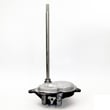
| Hums but does not move water | Pump jammed or failed | Washer drain pump WP3363394 |
| Drains sometimes, then stops | Hose restriction or partial clog | Drain hose and standpipe routing (see installation guide) |
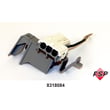
| Will not drain/spin with lid closed | Lid switch not closing electrically | Washer lid switch assembly WP8318084 |
A washer that cannot drain can leave clothes soaking wet, trigger out-of-balance shaking during spin, and increase the chance of water spilling if the drain hose is routed incorrectly.
Last updated: February 2026
How to do a hard reset on a Kenmore washer?
To hard reset a Kenmore Elite washer model 11026962501, unplug the power cord for 1 minute, then plug it back in. This clears the control’s temporary memory and often restores normal operation after a glitch.
- Press Power to turn the washer off (if it has a Power button).
- Unplug the washer from the wall outlet.
- Wait 60 seconds.
- Plug the washer back in.
- Select any cycle and start the washer (many Kenmore top-load models use a cycle control knob you pull out to start).
These checks solve the most common “dead” or “won’t run” symptoms on this style of Kenmore washer:
- Confirm the outlet has power (test with a lamp or small appliance).
- Make sure the lid is fully closed; a lid switch problem can stop agitation and spin.
- If the timer knob will not advance or the cycle will not run, the timer or selector switch can be involved.
- If the motor runs but the washer will not agitate or spin, the motor coupling is a common failure item.
- If the washer will not drain, check for a clog or a failing drain pump.
| Symptom | Common suspect | Example part for this model |
|---|---|---|
| Won’t spin or agitate | Lid switch not closing electrically | Washer lid switch assembly WP8318084 |
| Motor runs, no agitation/spin | Broken drive connection | Washer motor coupling 285753A |
| Won’t drain | Pump jammed or failed | Washer drain pump WP3363394 |
A hard reset is fast and safe; it clears a stuck control state without changing your cycle selections. If the problem returns, the washer is usually reacting to a real condition (lid switch, drain issue, or drive problem) that needs correction.
For model-specific operating steps (including how to start and stop a cycle using the cycle control knob), follow the 11026962501 owner's manual.
Last updated: February 2026
When was Kenmore Elite made?
Kenmore Elite is a premium Kenmore product line that has been sold across multiple years, not a single one-time model release. For your Kenmore Elite washer model 11026962501, the most accurate way to confirm its production era is to use the model and serial information and compare it to the identification guidance in the 11026962501 owner's manual.
Kenmore Elite is a series name used on higher-end Kenmore appliances; it does not point to one specific manufacturing year.
Common ways “Kenmore Elite” gets used:
- A product tier (features, materials, warranty coverage)
- A label across multiple model generations
- A marketing line that spans different washer designs (top load, front load, HE)
Use the washer’s model and serial tag, then match the serial format to the date coding guidance.
Check these locations first:
- Under the lid or around the lid opening
- On the cabinet rim near the tub opening
- On the rear panel (less common on top-load designs)
- Model number: 11026962501
- Full serial number (letters and numbers)
- Purchase date (if available)
| Item | What it tells you | Best source |
|---|---|---|
| “Kenmore Elite” name | Product tier/series | Product labeling |
| Model number 11026962501 | Exact design family | 11026962501 owner's manual |
| Serial number | Approximate build date | Serial/date code chart |
Knowing the build date helps us match the correct parts and revisions for your washer, especially for common wear items like the washer lid switch assembly WP8318084 or the washer drain pump WP3363394.
Last updated: February 2026
Why is my Kenmore Elite washer shaking violently on the spin cycle?
Violent shaking during spin on a Kenmore Elite 11026962501 is almost always caused by an unbalanced load, an installation issue (leveling or drain hose setup), or worn suspension components. Start with load size and leveling checks, then inspect the suspension springs if the problem continues. See the 11026962501 installation guide for leveling and drain setup basics.
- Stop the cycle, redistribute items evenly, then restart spin.
- Wash smaller loads; overloaded baskets shake more easily.
- Avoid mixing one heavy item (blanket, rug) with light items.
- Confirm the washer sits solidly on the floor and does not rock.
- Make sure the lid is fully closed during operation.
Even when the washer is mechanically fine, setup problems can make it shake hard.
| What to check | What “good” looks like | Why it matters |
|---|---|---|
| Leveling/stance | Cabinet is level, feet firmly on floor | Reduces out-of-balance movement |
| Drain hose height | Top of drain hose is at least 39 in. (99 cm) above the floor | Prevents drain and spin issues that can worsen shaking |
| Standpipe fit | Hose fits securely but is not sealed tight; air gap remains | Helps prevent siphoning and odd cycle behavior |
If loads are balanced and the washer is level but it still bangs or walks, a worn suspension system is a common cause.
- Check for stretched, broken, or unhooked suspension springs; replace any damaged spring.
- Inspect the tub support and basket area for looseness or rubbing.
- If the washer also struggles to reach full spin, drive system wear can contribute.
Helpful parts for this model:
Violent shaking is more than noise; it can damage the basket, tub, and drive components over time. Correcting balance and leveling first prevents unnecessary part replacement and helps the washer spin at full speed.
Last updated: February 2026
Is it worth repairing a Kenmore washing machine?
Yes; repairing a Kenmore washer is worth it when the fix restores reliable washing and costs less than replacing the machine. For Kenmore Elite washer model 11026962501, many common failures are repairable with standard parts and a straightforward diagnosis using the 11026962501 owner's manual.
Use these practical checkpoints before spending money:
- Total repair cost vs. replacement: if parts plus labor are clearly below a comparable new washer, repair wins.
- What failed: wear items (lid switch, drain pump, motor coupling) are usually cost-effective.
- Overall condition: excessive rust, repeated leaks, or multiple recent failures push toward replacement.
- Performance symptoms: no spin, no drain, or won’t start often trace to a single component.
- Downtime: if you need a fast fix, prioritize common in-stock parts.
These are frequent, high-impact fixes for this style of Kenmore top-load washer:
| Symptom | Likely area to check | Example part for this model |
|---|---|---|
| Won’t start or stops when lid opens | Lid safety circuit | Washer lid switch assembly WP8318084 |
| Won’t drain or drains slowly | Pump or blockage | Washer drain pump WP3363394 |
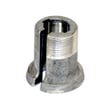
| Agitates poorly or makes clicking | Agitator drive wear | Agitator dog 80040 |
| Motor runs but washer won’t agitate/spin | Drive coupling | Washer motor coupling 285753A |
A targeted repair can extend the life of your washer for years and avoids replacing a machine that may only need one failed component. The manual also emphasizes avoiding overloading and keeping loads balanced, which reduces strain and prevents repeat issues.
- Confirm the symptom (won’t start, won’t drain, no spin, noisy agitation).
- Follow the diagnostic checks in the 11026962501 owner's manual.
- Inspect the most likely part first (lid switch, pump, coupling, agitator components).
- If the tub won’t spin freely or you see oil under the unit, consider drive system wear (higher-cost repair).
Last updated: February 2026
What model is my Kenmore Elite washer?
For Kenmore Elite washer model 11026962501, the model number is printed on the model and serial number label. On this washer, that label is located under the washer lid, so lifting the lid and checking the rim area is the fastest way to confirm your exact model.
Check these common label locations in this order:
- Under the washer lid (most common for this model)
- Along the top rim of the cabinet opening (near the lid opening)
- On the back of the control console (some versions)
- On the side of the main cabinet near the bottom edge
We recommend recording the full details exactly as shown on the label:
- Complete model number (example: 11026962501)
- Serial number
- Purchase date (if available)
- Inlet hose replacement date (helpful for maintenance tracking)
The model number and serial number ensure you get the correct Kenmore parts, diagrams, and repair instructions for your exact washer configuration. Even small model variations can change which lid switch assembly, drain pump, or agitator parts fit.
Use this checklist to avoid mix-ups:
- Match all digits in the model number (no missing or extra numbers)
- Copy letters and numbers exactly as printed
- Use the model number when ordering parts or looking up troubleshooting steps
| Washer type | Most common label location |
|---|---|
| Top-load (like 11026962501) | Under the lid or around the tub opening |
| Front-load | Inside the door opening or on the door jamb |
For diagrams and the exact label reference for this washer, use the 11026962501 owner's manual.
Last updated: February 2026
Why is my Kenmore Elite washer leaking from the bottom?
A bottom leak on Kenmore Elite model 11026962501 usually comes from the drain path (drain hose, pump, or hose connections) or from water splashing/overflowing due to an installation or loading issue. We start by checking the drain hose setup and pump area, then confirm the washer is level.
- Unplug the washer; turn off both water supply valves.
- Confirm the drain hose is secured to the standpipe or laundry tub as shown in the installation guide.
- Check the standpipe or laundry tub for a slow/clogged drain; a backup can look like a washer leak.
- Make sure the washer is level and the front feet are set with the nuts tightened.
- Rebalance the load; overfilling above the top row of basket holes can cause splash-out.
Bottom leaks typically show up during drain or spin. Focus on these areas:
- Drain pump housing or pump seal (cracks, seepage, or a loose mounting)
- Hose connections at the pump (loose clamps, split hose)
- Drain hose damage or poor routing (kinks, pinholes, rubbing)
- Tub-to-pump hose issues (soft spots, splits)
If you suspect the pump, the correct replacement for this model is the washer drain pump WP3363394.
| When you see water | Most likely cause | What to check |
|---|---|---|
| During fill only | Supply hose or valve area | Inlet hoses, faucet connections, valve body |
| During wash/agitate | Splash-out or tub ring area | Load height, off-balance load, levelness |
| During drain/spin | Pump or drain hose path | Pump body, pump hoses, drain hose routing |
A small leak can damage flooring and can also lead to poor draining or spin performance if water is backing up. Getting the drain hose installed and secured correctly is the fastest way to prevent repeat leaks.
Last updated: February 2026
Where is the drain pump filter on a Kenmore Elite washer?
On the Kenmore Elite washer model 11026962501, there is no customer-access drain pump filter access door like many front-load washers. Drain clogs are typically handled by checking the drain hose routing and, when needed, servicing the pump itself (not a removable front filter). See the 11026962501 owner's manual for model-specific draining and “won’t drain” checks.
- Confirm the lid is fully closed; this model will not drain or spin with the lid open.
- Make sure the drain hose is not kinked, crushed, or clogged.
- Verify the drain hose height is correct: the top of the drain hose should be at least 39 in. above the floor and no higher than 96 in. above the floor.
- Ensure the drain hose is not sealed tightly in the standpipe; it needs an air gap.
- Reduce suds if you see oversudsing; too many suds can slow draining.
Use these installation targets from the 11026962501 installation guide to avoid siphoning and slow drain issues.
| Item to verify | Target for this model | Why it matters |
|---|---|---|
| Standpipe diameter | 2 in. minimum | Prevents backup and overflow |
| Standpipe or laundry tub height | 39 to 96 in. | Prevents siphoning and drain errors |
| Standpipe carry-away capacity | 17 gal/min minimum | Helps the washer keep up during pump-out |
If the washer hums but will not drain, or drains very slowly after you have verified the hose setup, the obstruction is often in the pump inlet or pump impeller area. On this model, that usually means removing the pump and clearing debris, or replacing the pump.
- Use the correct replacement part: washer drain pump WP3363394
- Expect water to spill when hoses are removed; have towels and a shallow pan ready.
- Unplug the washer before servicing any internal parts.
Looking for a “pump filter door” on a top-load Kenmore Elite like 11026962501 can waste time. Correct drain hose height and a clear pump path are the two biggest factors in restoring normal drain and spin performance.
Last updated: February 2026
What is the life expectancy of a Kenmore washing machine?
A Kenmore washer typically lasts 10 to 15 years. For the Kenmore Elite 11026962501, consistent preventive care (balanced loads, avoiding overloading, and following fabric care guidance) helps you reach the upper end of that range; see the 11026962501 owner's manual for model-specific care details.
- Load size and balance: loads should move freely; chronic overloading strains the drive system and suspension.
- Laundry prep: tie strings and sashes to prevent tangling and seam strain.
- Bleach use: don’t pour chlorine bleach directly on fabrics; wipe spills promptly.
- Installation basics: correct leveling and drain setup reduce vibration and premature wear (see the 11026962501 installation guide).
- Wear items: couplers, lid switches, pumps, and clutch components wear faster with heavy use.
- Run a hot wash cycle (empty) to help reduce residue and odors.
- Keep loads evenly distributed; mix large and small items.
- Check hoses for bulges or leaks; replace at the first sign of damage.
- If the washer won’t spin or stops mid-cycle, test the lid switch circuit and related wiring.
- Address draining issues early; a struggling pump can shorten overall machine life.
| Symptom | What it often points to | Example part for this model |
|---|---|---|
| Won’t drain or drains slowly | Drain pump restriction or failure | Washer drain pump WP3363394 |
| Won’t spin, intermittent operation | Lid switch not sensing closed lid | Washer lid switch assembly WP8318084 |
| Agitates poorly or makes grinding noises | Drive coupling or gearcase wear | Washer motor coupling 285753A |
A washer that’s overloaded or out of balance wears out the drive train, suspension, and tub components faster. Simple habits (balanced loads, correct bleach use, and proper installation) reduce stress and extend the service life of your Kenmore Elite washer.
Last updated: February 2026