 Owner’s manual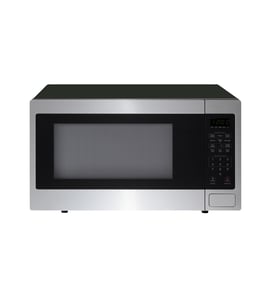

Is there a reset on a Kenmore microwave?
Yes. On many Kenmore countertop microwaves, including model 20479393610, the practical “reset” is a power reset: unplug the microwave (or switch off the breaker), wait about 1 minute, then restore power and re-set the clock. For model-specific control settings, use the owner's manual.
Quick reset options (what to try first)
- Power reset: Unplug for 60 seconds, then plug back in.
- Breaker reset: If it is hardwired to a dedicated circuit, switch the breaker off for 60 seconds, then back on.
- Clear a stuck cooking cycle: Press STOP/CANCEL once; press again to clear the display.
- Re-set the clock: After power is restored, set the time so timed features work correctly.
When a reset helps (and when it will not)
A reset is most useful for a frozen keypad, a display glitch, or after a brief power outage. It will not fix a true heating or power problem such as a blown fuse, door-switch issue, or high-voltage component failure.
| Symptom | Reset likely to help? | What to do next |
|---|---|---|
| Display is blank after outage | Yes | Power reset; then set clock in the owner's manual |
| Keypad not responding | Sometimes | Power reset; check for stuck keys or moisture |
| Runs but does not heat | No | Follow why is my microwave not heating troubleshooting |
| Dead, no lights, no fan | Sometimes | Power reset; then check fuse and power supply path |
Why it matters
Resetting clears temporary control-board errors and restores normal operation after power interruptions. If the microwave still will not run or will not heat after a reset, troubleshooting the power path (cord, outlet, fuse, door switches) and heating system is the next step.
Last updated: February 2026
What size fuse for Kenmore microwave?
For the Kenmore countertop microwave model 20479393610, the internal line fuse is typically a ceramic 20-amp, 250-volt microwave fuse. Use the exact fuse type and rating listed in the 20479393610 owner's manual to match the original safety design.
What to use (and what not to use)
Microwaves use a ceramic fuse because it handles high inrush current and contains arc energy better than glass fuses.
- Use a ceramic microwave fuse (not glass)
- Match the amperage (20A) and voltage rating (commonly 250V)
- Match the physical size (length and diameter) to the original fuse
- Replace a blown fuse only after checking for the cause (door switch, shorted component, wiring)
- Never bypass the fuse or install a higher-amp fuse
Common symptoms of a blown microwave fuse
A blown fuse often shows up as a total power loss, but it can also fail after a door-slam or a short.
- Microwave is completely dead (no display, no interior light)
- Unit goes dead when you press Start
- Unit goes dead when opening or closing the door
- Intermittent power, especially after moving the microwave
Quick troubleshooting path (before replacing the fuse)
- Confirm the outlet has power (try a lamp or small appliance).
- Reset the kitchen circuit breaker or GFCI if tripped.
- If the microwave is dead but the outlet is good, inspect and test the fuse and door interlock switches.
For step-by-step guidance, use how to replace a microwave fuse.
Fuse sizing and selection checklist
| What must match | Target for this model | Why it matters |
|---|---|---|
| Fuse type | Ceramic microwave fuse | Prevents arcing and overheating |
| Amperage | 20A | Protects wiring and high-voltage components |
| Voltage rating | 250V (typical) | Ensures safe interruption under load |
| Physical size | Match original | Ensures proper fit in the holder |
Why it matters
The fuse is the microwave’s primary overcurrent safety device. Using the wrong fuse type or rating can cause repeat failures, damage to the control circuit, or unsafe overheating.
Last updated: February 2026
Are Kenmore microwaves good?
Kenmore microwaves are a solid choice for everyday reheating and cooking when you match the features and size to how you actually use the microwave. For Kenmore model 20479393610, the owner's manual shows it is a 2.2 cu. ft., 1250-watt output countertop unit, which is a strong spec for fast, even heating.
What “good” means for a microwave
A microwave is “good” when it consistently heats, fits your space, and holds up to normal use without frequent issues.
Key things we look for:
- Heating performance: steady power and even results
- Capacity and fit: enough room for your dishes (this model is 2.2 cu. ft.)
- Ease of use: clear controls, sensible presets
- Reliability basics: door closes correctly, fan vents stay clear, turntable runs smoothly
- Safe operation habits: correct cookware and no metal in the cavity
Model 20479393610 quick specs (from the manual)
| Spec | What it means for you |
|---|---|
| 1250W rated output | Faster heating than many 900 to 1100W units |
| 2.2 cu. ft. capacity | Roomier interior for larger plates and bowls |
| 16.54 in turntable | Helps rotate food for more even heating |
| 14.17 x 24.72 x 20.71 in (H x W x D) | Check counter depth and clearance before buying |
How to keep a Kenmore microwave “good” over time
These habits prevent many common complaints (weak heating, uneven cooking, arcing, and nuisance shutdowns):
- Use microwave-safe cookware and avoid metal or foil contact
- Keep ventilation ports clear so heat can escape
- Wipe the door sealing surfaces with mild soap and a soft cloth
- Use the right power level (not always 100%) for delicate foods
- Stir or rotate food mid-cycle for more even results
Why it matters
Most “bad microwave” experiences come from a mismatch (too small, too low wattage) or from use and care issues (blocked vents, wrong cookware, overheated food). With 1250W output and a large cavity, model 20479393610 is built for strong day-to-day performance when used as directed.
Last updated: February 2026
How many cubic feet is a Kenmore Model 20479393610 microwave?
The Kenmore countertop microwave model 20479393610 has an oven capacity of 2.2 cubic feet. This is the usable cooking-space size inside the cavity (not the outside dimensions), and it helps you judge what dish sizes and cookware will fit.
Where to confirm the capacity for your exact model
We list the capacity and other key specifications in the 20479393610 use and care guide. Look for the Specifications section, where “Oven Capacity” is shown.
What 2.2 cu. ft. means in everyday use
A 2.2 cu. ft. countertop microwave is considered a larger-capacity unit. In most kitchens, that capacity is a good fit for family-size reheating and larger microwave-safe containers.
Common fit and use expectations:
- Handles larger dinner plates and many casserole-style dishes
- Gives more clearance for taller microwave-safe bowls
- Works well for batch reheating (multiple portions)
- Still needs proper airflow clearance around the cabinet for venting
Quick spec snapshot (from the manual)
| Spec | What to expect for model 20479393610 |
|---|---|
| Oven capacity | 2.2 cu. ft. |
| Rated output power | 1250 W |
| Turntable diameter | 16.54 in. |
| External dimensions | 14.17 x 24.72 x 20.71 in. |
Why it matters
Capacity affects more than “how much fits.” It also impacts countertop space planning, turntable size, and which cookware shapes rotate without hitting the walls. If you are troubleshooting uneven heating, cookware size and placement can be part of the cause.
If your microwave runs but does not warm food, use our troubleshooting steps in why is my microwave not heating.
Last updated: February 2026
Why did my Kenmore microwave stop working?
If your Kenmore microwave model 20479393610 suddenly stopped working, the most common causes are a loss of power to the unit, the control being locked, or a safety device (like a fuse or thermal cutoff) opening after an overheat or electrical surge. Start with the quick checks below before moving to electrical testing.
Quick checks we recommend first
- Confirm the outlet works by plugging in a lamp or small appliance.
- Reset the kitchen circuit breaker or replace the blown house fuse.
- Make sure the door closes fully and latches firmly (a mislatched door can prevent operation).
- Check for Control Lock: press and hold the lock pad for 3 seconds until “LOCK” disappears. See the owner's manual.
- If the display shows an error like E-5 during sensor cooking, press the stop/clear pad to reset, then try again (opening the door during sensor cooking can stop the cycle). See the owner's manual.
If it has power but will not run or heat
Microwaves can appear “dead” or run without heating when a protective fuse opens or a high-voltage component fails. Because internal microwave components can store dangerous voltage even when unplugged, we recommend having a qualified technician handle internal diagnosis.
Common symptoms and likely areas to check:
| What you notice | What it often points to | What to do next |
|---|---|---|
| No display, no response | No power, blown internal fuse, thermal cutoff open | Verify outlet and breaker; then schedule service for internal checks |
| Runs (light/turntable/fan) but no heat | High-voltage circuit issue (diode, capacitor, magnetron) or related fuse | Use our troubleshooting guide: why is my microwave not heating |
| Stops mid-cycle, beeps, returns to standby | Sensor-cook interruption or door opened | Avoid opening door during sensor cooking; vent covers properly |
Why it matters
A microwave that “stops working” is often protecting itself. Restricted ventilation, repeated overheating, or a power surge can open a fuse or thermal cutoff; continuing to reset and retry can lead to repeat failures.
Prevention tips for this model
- Keep ventilation ports clear; do not block airflow around the cabinet.
- Use microwave-safe cookware and keep the cavity and tray dry.
- During sensor cooking, use a vented cover and avoid opening the door early (it can stop the sensor cycle).
Last updated: February 2026


