Owner’s manual
 Error Codes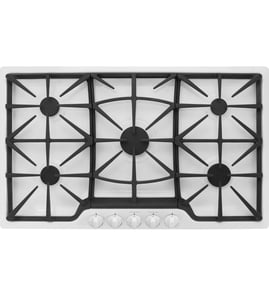





Can I replace a gas cooktop myself?
Yes, you can replace a GE gas built-in cooktop like model JGP641EM1WG yourself if you follow the installation steps exactly and you are comfortable working with gas and 120-volt power. For safety, we recommend having a qualified installer handle the gas connection, adjustments, and any gas-type conversion; see the JGP641EM1WG owner's manual.
What you must do before you start
- Shut off gas at the gas cut-off valve and confirm it is fully off.
- Turn power off at the service panel (the cooktop uses a 120-volt grounded outlet).
- Remove all packing materials before operating the new cooktop.
- Make sure the cooktop is set up for the correct gas type (natural gas vs. LP).
- Use proper sealing materials rated for gas connections (LP-rated sealant if converting to LP).
DIY vs. pro install: what’s realistic
| Task | DIY-friendly | Better for a qualified installer |
|---|---|---|
| Removing the old cooktop from the countertop cutout | Yes | No |
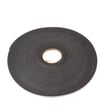
| Seating the new cooktop and applying gasket strips for a watertight seal | Yes | No |
| Connecting gas supply and leak-testing | Sometimes | Yes |
| Burner adjustment (proper blue flame) and regulator setup | No | Yes |
| Converting natural gas to LP (or back) | No | Yes |
Key model-specific installation details (JGP641EM1WG)
The manual instructions for this cooktop include positioning the unit over the countertop cutout, dropping the power cord into the cabinet, and pressing gently and evenly to seat the cooktop. The gasket strips are applied to the underside so the cooktop’s weight forms a watertight seal with the countertop.
Why it matters
A correctly installed gas cooktop helps prevent gas leaks and reduces incomplete combustion (yellow flames, soot, and fumes). Proper grounding and correct gas setup also protect the ignition system and help the burners operate safely and consistently.
Last updated: February 2026
How to replace GE spark module?
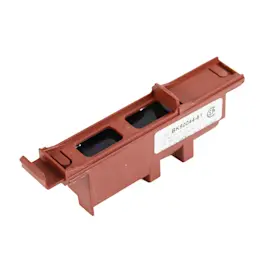
To replace the spark module on your GE JGP641EM1WG gas built-in cooktop, we shut off power, access the module under the cooktop, move the igniter wires one at a time to the new module, then reassemble and verify each burner sparks and lights correctly using the steps in the owner's manual.
Safety first (do this before touching anything)
- Turn all burner knobs to OFF.
- Shut off electrical power to the cooktop at the breaker (spark ignition can shock you).
- Let the cooktop cool completely.
- Do not operate any burner with parts removed; burner caps and grates must be in place.
Replacement steps (typical GE cooktop spark module)
- Remove grates and burner caps so you can lift the cooktop top as needed.
- Access the underside of the cooktop (often from below the counter) and locate the spark module (small box with multiple igniter wire terminals).
- Take a clear photo of wire locations.
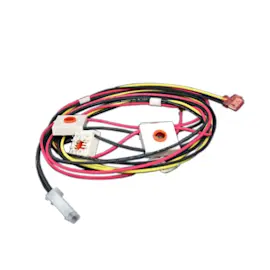
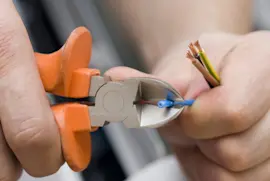
- Move wires one at a time from the old module to the matching terminal on the new module (use needle-nose pliers on the connector, not the wire).
- Release the module from its mounting tabs or bracket and install the new one.
- Reassemble burners and grates.
How to confirm the repair worked
Use the ignition check method:
| What you do | What should happen | If it does not happen |
|---|---|---|
| Push in a knob and turn to HIGH | Igniter sparks and burner lights | Recheck power, wiring connections, and burner assembly seating |
| Burner lights | Sparking stops after ignition | Clean/dry burner parts; verify cap is seated correctly |
| Turn knob to OFF | Flame goes out | If flame stays on, stop and have the valve checked |
Why it matters
A failing spark module can cause weak or inconsistent sparking, delayed ignition, or constant clicking. Replacing it restores reliable ignition and helps prevent unburned gas from accumulating during lighting attempts.
Last updated: February 2026
What is the difference between a gas range and a gas cooktop?
A gas cooktop (like the GE JGP641EM1WG) is a built-in, countertop-mounted cooking surface with burners only; a gas range combines a cooktop and an oven in one freestanding appliance. If you already have a wall oven or want a custom layout, a cooktop is usually the better fit. See the owner's manual for model-specific safety and operation details.
Quick comparison
| Feature | Gas cooktop | Gas range |
|---|---|---|
| Oven included | No | Yes |
| Installation | Built into countertop | Freestanding slide-in or freestanding unit |
| Best for | Kitchens with a separate wall oven | One-piece cooking and baking setup |
| Service access | From below/through cabinet (varies) | Typically from front/back panels |
What you will notice in day-to-day cooking
Gas burners heat pans directly and respond immediately when you change the knob setting. When you turn a burner off, cooking stops right away (unlike many electric surfaces that stay hot after shutoff). This is a key practical difference when switching from radiant glass, coil, or induction cooking.
Choosing between them (what matters most)
- Kitchen layout: cooktops pair well with a separate wall oven; ranges save space by combining both.
- Ventilation: gas cooking produces combustion byproducts; using a vent hood or ventilation fan and good airflow helps.
- Fuel type: many cooktops ship set for natural gas; LP conversion requires a qualified technician.
- Electrical needs: even gas cooktops typically need a 120-volt grounded outlet for ignition and controls.
- Safety shutoff: know where your gas cut-off valve is and how to shut it off.
Why it matters
Picking the right format affects installation complexity, ventilation planning, and how quickly you can control heat. For the GE JGP641EM1WG gas built-in cooktop, the biggest difference is simple: you get responsive gas burner cooking without an integrated oven.
Last updated: February 2026
Why is my GE gas stove not igniting?
If your GE JGP641EM1WG gas built-in cooktop won’t ignite, the most common causes are no power to the igniters, clogged burner ports/cap openings near the igniter, or burner parts that are not seated correctly. We use the checks below to restore spark and gas flow safely.
Quick checks (most fixes)
- Confirm the cooktop is plugged into a working outlet; this model uses electric ignition (no standing pilot).
- Listen for clicking: on this cooktop, all igniters can click and spark even when you turn on only one burner.
- Remove the grate and burner pieces; re-seat them so the cap sits flat and centered.
- Clear clogs: clean the slot in the burner base and the hole/opening in the burner cap behind the igniter.
- Dry everything thoroughly if there was a boilover or recent cleaning; moisture can prevent ignition.
- Make sure the gas supply valve is fully open.
What the symptoms usually mean
| What you notice | Likely cause | What to do |
|---|---|---|
| No clicking on any burner | No electrical power | Check outlet, breaker, and plug connection |
| Clicking but no flame | Burner ports/cap opening clogged, wet burner, or misaligned parts | Clean, dry, and re-seat burner parts |
| One burner won’t light but others do | That burner’s cap/base is clogged or not seated | Clean that burner and reassemble carefully |
| Works during outage only with a match | Normal for electric ignition | Use match-lighting only as a temporary method |
Safe match-lighting during a power outage
Our manual allows lighting a surface burner with a match if power is out:
- Hold a lit match at the burner.
- Turn the knob to HIGH.
- Use extreme caution and keep hands and sleeves clear of the burner.
Why it matters
When burner parts are misaligned or clogged, gas may not ignite promptly. Fixing alignment and cleaning the burner base/cap openings helps the igniter spark reach the gas quickly, reducing delayed ignition and uneven flames.
For model-specific burner and ignition details, follow the guidance in the owner's manual.
Last updated: February 2026