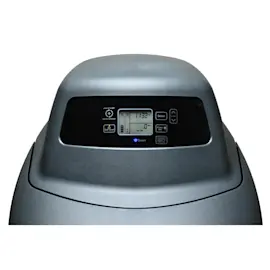
Installation guide
 Owner’s manual
 Error Codes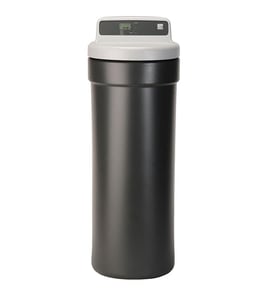





How much does it cost to replace resin beads in a water softener?
For the Kenmore water softener model 625383000, the installation and owner documentation does not provide a set price for resin replacement; total cost is determined by the amount of resin needed and whether you hire labor. For model-specific safety and setup steps (bypass, depressurizing, drain routing), use the 625383000 installation guide.
These are common residential price ranges; your actual total varies by resin volume, local labor rates, and whether additional internal parts are replaced.
| Option | What you pay for | Typical total cost |
|---|---|---|
| DIY resin replacement | Resin plus basic supplies | $150 to $400 |
| Pro resin replacement | Resin plus service call and labor | $400 to $1,000 |
| Pro “media rebuild” | Resin plus additional teardown and parts | $800 to $1,500+ |
- Resin quantity (softener size and tank capacity)
- Water conditions (iron, chlorine, sediment can shorten resin life)
- Labor time (access, plumbing layout, cleanup)
- Extra parts replaced during service (seals, venturi, o-rings)
- Diagnosis (resin failure vs. a valve or brine-draw problem)
If you are replacing resin because of hard water, poor regeneration, or resin beads showing up at faucets, these compatible parts are often inspected or replaced on this model:
- Water softener resin 0502272 (ion-exchange media)
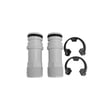
- Kenmore water softener seal kit 7129716 (valve seals that help prevent internal bypassing)
- Water softener nozzle and venturi with gasket 7187772 (supports proper brine draw during regeneration)
Resin is considered an expendable item; replacing it can restore softening performance, but it will not fix issues caused by a worn valve seal, clogged venturi, or incorrect programming. A quick diagnosis helps you avoid paying for resin when another repair is needed.
Last updated: January 2026
Is it worth repairing a water softener?
Yes, it’s usually worth repairing a Kenmore water softener model 625383000 when the problem is a maintenance issue (salt bridging, clogged venturi, minor leaks) or a single replaceable component. Replacement makes more sense when the resin bed is exhausted and multiple valve or control parts are failing.
Use these checkpoints first; they fit how the 625383000 is designed and installed per the 625383000 installation guide.
- Repair if the unit still regenerates but performance is inconsistent (often cleaning, settings, or one part).
- Repair if the issue is isolated to the valve drive or seals (common wear items).
- Repair if you see an error code or the unit stops mid-cycle (often electrical or motor related).
- Replace if you’re seeing repeated failures across multiple systems (control, motor, valve seals, resin).
- Replace if the cabinet, tank, or plumbing connections have chronic leak damage.
These are frequent, targeted fixes on softeners like the Kenmore 625383000:
- Clean the nozzle/venturi and screen (brining problems, not using salt)
- Replace worn valve seals (leaks, poor regeneration)
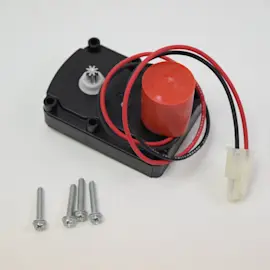
- Replace a failed drive motor (stuck in regen, grinding, no movement)
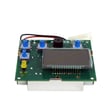
- Replace the electronic control if the display or programming fails
- Fix drain/overflow routing issues (kinks, no air gap, improper height)
If brining is the issue, we often start with the venturi assembly; the water softener nozzle and venturi with gasket 7187772 is the correct matched part listing for this model.
| Situation | Usually best choice | Why |
|---|---|---|
| Salt bridge, settings, dirty venturi | Repair | Low cost, fast restore of soft water |
| One failed motor or control | Repair | Single-part fix, predictable outcome |
| Multiple recurring failures | Replace | Repair costs stack up quickly |
| Resin bed exhausted plus valve wear | Replace (often) | Major rebuild, more downtime |
A working softener protects plumbing, water heater efficiency, and fixtures from scale. When the fix is a cleaning or a single component, repairing keeps those benefits without the disruption of a full replacement.
Last updated: January 2026
What is the life expectancy of a Kenmore water softener?
A Kenmore water softener like model 625383000 typically lasts 8 to 10 years. Lifespan depends most on incoming water quality (iron, sediment, chlorine), correct programming, and routine maintenance such as keeping the brine tank clean and using the right salt.
Even when the tanks are still fine, performance often drops because internal wear parts and the resin bed age.
- Resin media can break down and lose softening capacity
- Valve seals can wear and cause leaking or poor regeneration
- The drive motor can fail and stop the valve from cycling
- Nozzle/venturi can clog and prevent proper brine draw
- Electrical controls can develop intermittent issues
If you are seeing resin beads in fixtures or a sudden drop in soft water, the resin is a common culprit; the compatible replacement is water softener resin 0502272.
- Water feels hard again shortly after regeneration
- Soap does not lather well, spotting on dishes and glass
- Frequent need to increase hardness setting to keep up
- Low flow or pressure changes during regeneration cycles
- Resin beads showing up in faucets or toilet tanks
| Task | Typical frequency | Why it matters |
|---|---|---|
| Keep salt above water line | Monthly | Prevents loss of brine strength |
| Clean out salt tank | Every 2 to 3 years | Reduces salt bridging and sludge |
| Sanitize brinewell (bleach method) | At install, then as needed | Helps control odor and biofilm |
| Check for nozzle/venturi clogging | When not using salt or no soft water | Restores brine draw |
For model-specific setup and sanitation steps, follow the 625383000 installation guide.
Once the resin and valve components wear, the softener can waste salt and water while still delivering hard water. Catching the early symptoms helps you decide whether a cleaning, a repair, or a resin replacement makes the most sense.
Last updated: January 2026