Installation guide
 Owner’s manual
 Error Codes



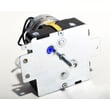

How to figure out dryer model number?
For Kenmore gas dryer model 11072822101, the model number is printed on the model and serial label located at the top inside the dryer door well. We use that exact number to match the correct parts, manual, and installation requirements.
Where to look on the dryer
Check these common label locations (start with the first one):
- Top inside the dryer door well (most common on this Kenmore model)
- Inside the door opening on the cabinet frame
- Rear panel near the top
- Side panel near the door opening (less common)
What the label looks like and what to write down
On the label, record these items exactly as shown:
- Model number (example: 11072822101)
- Serial number (helps date the unit and match revisions)
- Gas or electric type (your model is a gas dryer)
- Any suffixes or additional digits/letters printed with the model
Use the 11072822101 owner's manual to see the “Product Record” section and the exact label location description.
Why the model number matters
The model number controls which Kenmore parts fit your dryer, including wear items like the belt, door switch, and thermostats. Ordering by “Kenmore gas dryer” alone often pulls the wrong drum size, burner setup, or timer style.
Quick reference table
| What you need | Where you’ll use it | Why it helps |
|---|---|---|
| Model number | Parts lookup and diagrams | Ensures correct fit |
| Serial number | Service and warranty records | Identifies production run |
| Fuel type (gas/electric) | Installation and troubleshooting | Prevents wrong repair path |
Last updated: February 2026
How to hard reset a Kenmore dryer?
To hard reset your Kenmore gas dryer model 11072822101, disconnect power for 1 to 5 minutes, then restore power and start a new cycle. This clears a stuck control state and is the fastest first step when the dryer will not start.
Hard reset steps (safe and effective)
- Turn the cycle selector to OFF.
- Unplug the dryer from the grounded 3-prong outlet (or switch OFF the dryer breaker).
- Wait 1 to 5 minutes.
- Restore power.
- Close the door firmly.
- Select a cycle and temperature.
- Press PUSH TO START.
If it still will not start after the reset
These checks come straight from the startup and troubleshooting guidance in the documentation.
- Confirm the dryer is plugged into a grounded 3-prong outlet.
- Verify the electrical supply is on.
- Check house fuses or breakers; many dryers use 2 fuses or 2 breakers, so check both.
- Make sure the door is fully closed.
- If the door feels closed but the dryer acts like it is open, inspect the door switch and latch alignment.
Quick symptom guide
| What you see | Most likely cause | What to do next |
|---|---|---|
| No lights, no response | No power | Check both breakers/fuses, outlet, cord |
| Light works but will not start | Door not sensed closed | Re-close door; check latch alignment; test door switch |
| Starts then stops quickly | Power issue or control/timer issue | Recheck power; try a different cycle |
Why it matters
A hard reset fixes many “won’t start” complaints caused by a temporary control glitch, but it will not correct a real power problem or a door-safety circuit issue. Doing the power and door checks right after the reset prevents unnecessary parts replacement.
Helpful references
- Use the 11072822101 owner’s manual for the exact stop/restart procedure and operating steps.
- If the door is not being detected as closed, the dryer door switch WP3406107 is a common no-start component to test and replace.
Last updated: February 2026
What does E1 mean on a Kenmore Elite dryer?
On Kenmore gas dryers like model 11072822101, an E1 code points to an exhaust temperature problem (temperature reading out of the normal range). In most cases, the fix is improving airflow through the lint screen and venting, then checking the temperature sensor circuit per the 11072822101 owner's manual.
What to check first (fast airflow fixes)
- Clean the lint screen completely (wash off fabric softener residue if present).
- Inspect the vent hose for kinks, crushing, or long runs.
- Make sure the dryer exhausts outdoors (gas dryers must vent outside).
- Check the outside vent hood for a stuck flap, lint buildup, or a bird nest.
- Run a timed dry cycle with the vent disconnected briefly (only to test airflow); reconnect before normal use.
Sensor and heat system checks (when airflow is good)
If airflow is strong and E1 returns, the temperature sensing or heating control circuit is the next likely cause.
- Unplug the dryer before testing.
- Check wiring connections at the exhaust thermistor/temperature sensor and control.
- Test the thermistor with a meter (typical thermistors change resistance with temperature; an open or shorted reading indicates failure).
- If the dryer heats inconsistently (ignites then shuts off), gas burner components can be involved; common suspects include the dryer valve coil kit 279834 and the radiant sensor.
Quick symptom-to-cause guide
| What you notice | Most common cause | What we recommend |
|---|---|---|
| E1 after long dry times | Restricted venting | Clean venting and confirm strong exhaust airflow |
| E1 soon after start | Sensor circuit issue | Check thermistor resistance and wiring |
| Heat starts then stops | Gas burner control issue | Inspect coils, sensor, and burner operation |
Why it matters
E1 is often triggered by poor exhaust airflow; restricted venting makes temperatures swing and can cause overheating, shutdowns, and longer dry times. Restoring proper venting protects the dryer and improves performance.
For additional code help on Kenmore electronic-control dryers, use the Kenmore 110 series electronic control model dryer error codes reference.
Last updated: February 2026
What size is a Kenmore model 11072822101 dryer?
The Kenmore gas dryer model 11072822101 is a 27-inch wide dryer. For installation planning, we recommend using the exact cabinet dimensions and required clearances shown in the 11072822101 installation guide so your venting, door swing, and closet spacing all fit correctly.
What “size” usually means for this dryer
Most customers mean one (or more) of these:
- Width class: 27 in. (confirmed in the manual content for 27 in. wide dryers)
- Overall cabinet dimensions: height, width, depth (varies by door style and venting setup)
- Space needed to install: rear clearance for vent elbow, side clearance, and closet ventilation
- Capacity: drum volume in cubic feet (not shown in the provided excerpts)
Installation clearances to plan for
The installation guide calls out spacing that affects the real-world footprint more than the cabinet alone:
- Plan for rear clearance for the exhaust vent and elbow (many installs need about 5-1/2 in. behind the dryer)
- Allow room for the door to open fully
- For closets, provide required ventilation openings in the door
- Consider 1 in. clearance on all sides to reduce noise transfer
- Keep the dryer level (a floor slope over 1 in. can affect tumbling and sensor cycles)
Quick sizing checklist (cabinet vs. installed)
| What you’re measuring | What to include | Why it changes |
|---|---|---|
| Cabinet width | Dryer body only | Model class is 27 in. wide |
| Installed depth | Dryer + vent elbow | Elbow and duct routing add depth |
| Closet fit | Cabinet + side/rear clearances + door swing | Venting and ventilation rules |
Why it matters
A gas dryer must be exhausted outdoors and typically needs extra space behind it for safe, proper venting. Using the correct clearances helps prevent long dry times, overheating, and installation headaches.
Last updated: February 2026