Installation guide
 Owner’s manual
 Error Codes


What model is my Kenmore Elite washer?
Your Kenmore Elite washer’s model number is printed on a rating label attached to the washer cabinet. On most Kenmore top-load washers like model 11026942503, you’ll find it under the lid opening, on the back of the control panel, or on the cabinet near the bottom edge.
Where to look first (fastest checks)
- Lift the lid and look around the lid opening rim (often near the hinge area)
- Check the back of the control console (rear panel behind the knobs)
- Look on the left or right side of the main cabinet near the bottom front edge
- If your washer is front-load, check inside the door opening (door jamb area)
What the model label looks like
The label usually includes:
- Model number (example: 11026942503)
- Serial number (unique to your washer)
- Electrical info (volts/amps)
- Sometimes a manufacturing date code
Use the model number exactly as shown when ordering parts or checking diagrams in the 11026942503 owner's manual.
Why the exact model number matters
Kenmore washers can look similar across multiple series, but parts like the lid switch, drain pump, timer, and agitator components can vary by model. Using the correct model number helps us match the right replacement part the first time.
Quick ID tips (model vs. serial)
| On the label | What it means | Use it for |
|---|---|---|
| Model number | Identifies the design/version | Parts lookup, manuals, diagrams |
| Serial number | Identifies your specific unit | Service history, warranty, manufacturing info |
Last updated: February 2026
What is the average lifespan of a Kenmore washer?
Most Kenmore washers average 10 to 15 years of service life with normal household use and basic maintenance. For the Kenmore Elite 11026942503, keeping the washer properly installed, not overloaded, and maintained per the 11026942503 owner's manual helps you reach the upper end of that range.
What affects washer lifespan the most
- Load size and frequency: frequent heavy loads shorten life.
- Overloading and imbalance: increases stress on the drive system and suspension.
- Water quality and detergent use: excess suds and mineral buildup accelerate wear.
- Drain performance: slow draining strains the pump and can leave residue.
- Installation conditions: a level, sturdy floor and correct hookups reduce vibration and component fatigue.
Typical lifespan by usage pattern
| Usage pattern | Typical lifespan | What usually wears first |
|---|---|---|
| Light (1 to 3 loads/week) | 12 to 15 years | Lid switch, pump, coupler |
| Average (4 to 7 loads/week) | 10 to 13 years | Coupler, clutch, suspension |
| Heavy (8+ loads/week) | 7 to 10 years | Drive components, pump, timer |
Maintenance steps that add years
- Run periodic cleaning cycles and wipe down the lid and tub ring area.
- Use the correct amount of HE detergent (too much causes oversudsing and residue).
- Keep the washer level and on a solid floor to limit vibration.
- Check fill hoses and drain hose routing during routine laundry area cleaning.
- Address small symptoms early (slow drain, burning smell, loud spin) before they cascade.
When a repair is worth it (quick rule)
If the washer is under 10 years old, replacing common wear parts is usually cost-effective. On older units, focus on repairs that restore core functions (agitate, drain, spin) without major drivetrain teardown.
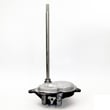
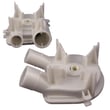
Common, fixable wear items on this model include the washer motor coupling 285753A and the washer drain pump WP3363394.
Why it matters
Knowing the expected lifespan helps you plan maintenance and decide whether a symptom points to a simple part replacement or a bigger end-of-life issue. A well-maintained Kenmore Elite washer often stays reliable longer because small wear parts can be replaced before they damage larger assemblies.
Last updated: February 2026
Where is the filter located on a Kenmore Elite washing machine?
On the Kenmore Elite washer model 11026942503, there is not a single, user-access “lint filter” like you see on some front-load washers. Most filtering happens through the drain pump and internal hoses; cleaning access is typically done at the pump or drain path as outlined in the 11026942503 owner's manual.
Where to check for clogs (the practical “filter” locations)
On this style of Kenmore top-load washer, we focus on the drain system components that trap debris.
- Check the drain hose for kinks, pinches, or a blockage near the standpipe or laundry tub
- Check the tub-to-pump hose area for socks, coins, or lint buildup
- Check the drain pump for obstructions (common cause of slow or no drain)
- Check the inlet screens at the water valves only if you have slow filling (not a drain issue)
- If the washer will not drain or spin, confirm the lid is closing and latching properly
Parts that commonly act like a “filter” when draining
If you are troubleshooting a drain problem on model 11026942503, these parts are the most common debris catch points.
| Symptom | Most likely debris catch point | Related part you may need |
|---|---|---|
| Won’t drain or drains slowly | Drain pump or pump inlet | Washer drain pump WP3363394 |
| Hums but won’t drain | Pump jammed by small item | Washer drain pump WP3363394 |
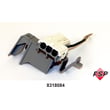
| Won’t spin after draining attempt | Lid switch not closing circuit | Washer lid switch assembly WP8318084 |
Quick safety and access tips
- Unplug the washer before inspecting any internal drain components
- Turn off both water faucets if you need to move the washer
- Expect water to spill when removing hoses; use a shallow pan and towels
- Keep the drain hose height and routing correct to prevent siphoning and drain issues
Why it matters
When customers ask about a “filter,” they are usually dealing with slow draining, standing water, or poor spin. On the Kenmore Elite 11026942503, clearing the drain path and pump area restores normal draining and helps prevent odor and rewash problems.
Last updated: February 2026
When was Kenmore Elite made?
Kenmore Elite is a premium Kenmore product line that has been sold across multiple years (not a single one-time model release). For your Kenmore Elite washer model 11026942503, the exact manufacture date is best confirmed by checking the serial number information in the 11026942503 owner's manual.
What “Kenmore Elite” means
Kenmore Elite is a series name used for higher-feature Kenmore appliances; the year depends on the specific appliance model number and its serial number.
- Kenmore Elite is a product tier, not one specific washer
- Different Kenmore Elite washers were produced in different years
- The model number (11026942503) identifies the design family
- The serial number identifies the production date range
- Documentation and parts lists are tied to the model number
How to find the manufacture date for model 11026942503
Use the washer’s model and serial tag (commonly under the lid or on the cabinet opening) and match the serial format to the date code guidance.
Quick checklist
- Unplug the washer before reaching around the cabinet opening
- Locate the model/serial tag and write down the full serial number
- Compare the serial format to the date-code section in the manual
- If the tag is worn, take a clear photo and zoom in for the characters
Why it matters
Knowing the build date helps us match the right Kenmore washer parts (for example, a lid switch, drain pump, or drive system components) and avoid ordering a similar-looking part that does not fit your production run.
Common “age-related” parts customers replace on this washer
These are frequently replaced items on many Kenmore 110-series top-load designs:
| Symptom | Common part to check | Example from this model’s parts list |
|---|---|---|
| Won’t spin or stops when lid opens | Lid switch | Washer lid switch assembly WP8318084 |
| Won’t drain or drains slowly | Drain pump | Washer drain pump WP3363394 |
| Agitator slips or won’t move clothes well | Agitator dogs | Agitator dog 80040 |
Last updated: February 2026
How many cubic feet is my Kenmore Elite washer?
For Kenmore Elite washer model 11026942503, the typical tub capacity for this style of full-size, top-load agitator washer is about 3.5 cubic feet. For the exact published spec for your unit, confirm it in the 11026942503 owner's manual.
What capacity to expect for this washer style
This model uses a traditional top-load wash system (agitator and drive components), which commonly falls into a narrow capacity band.
- Most full-size Kenmore top-load agitator washers are around 3.2 to 3.6 cu. ft.
- 3.5 cu. ft. is the typical target when matching like-for-like replacements
- Capacity affects load size, rinse performance, and out-of-balance risk
- If you are comparing to HE impeller top-loaders, those are often larger
Quick comparison table
| Washer type | Typical capacity range | What you notice in use |
|---|---|---|
| Top-load with agitator (like 11026942503) | 3.2 to 3.6 cu. ft. | Taller center agitator, smaller usable diameter |
| Top-load HE impeller | 4.0 to 5.3 cu. ft. | More open tub, larger comforters fit easier |
| Front-load | 4.0 to 5.0 cu. ft. | Larger drum, higher spin speeds |
How to estimate cubic feet from the basket (fast method)
If you need a practical estimate for moving, replacement planning, or laundry capacity, measure the inside of the wash basket.
- Measure inside diameter (inches) across the basket
- Measure inside depth (inches) from bottom to rim
- Use: (3.1416 × (D/2)² × depth) ÷ 1728 = cu. ft.
- Measure around the agitator as best you can; take two diameter readings and average them
Why it matters
Correct capacity helps you avoid chronic overloading, improves cleaning and rinsing, and makes it easier to choose a comparable replacement washer that fits your laundry needs.
For installation and space planning details (water pressure, drain setup, leveling), use the 11026942503 installation guide.
Last updated: February 2026
How to force a Kenmore Elite washer to drain?
To force a drain on Kenmore Elite washer model 11026942503, we use a Drain/Spin (or Cancel then Drain/Spin) to run the drain pump; if the washer will not pump out, we remove power and gravity-drain through the drain hose into a bucket to empty the tub safely.
Fastest way to force a drain (controls)
- Press Pause/Cancel to stop the cycle.
- Select Drain/Spin (or Spin Only if your console labels it that way).
- Press Start and listen for the pump running.
- If the lid will not lock or the cycle will not start, move to the manual drain steps below.
Manual drain (when it will not pump out)
- Unplug the washer (or switch off the breaker).
- Turn off both water taps.
- Pull the washer forward and lower the drain hose end into a shallow pan or bucket (keep the hose end below the tub water level).
- Drain in stages; swap buckets as needed.
- Check the hose for kinks, crushing, or a clog before reinstalling.
What usually prevents draining
| What you notice | Most common cause | What to do |
|---|---|---|
| Pump hums but little or no water | Pump jam or blockage | Check drain path; replace pump if seized |
| No pump sound during Drain/Spin | Lid switch not allowing drain | Check lid switch operation |
| Drains then refills or stops | Standpipe or hose routing causing siphon | Reposition hose; keep an air gap |
Parts that commonly fix a no-drain
- Washer drain pump WP3363394 (failed or jammed pump)
- Washer lid switch assembly WP8318084 (washer will not drain/spin if the switch does not close)
Why it matters
Draining the tub correctly prevents floor damage and helps us pinpoint whether the issue is a drain-hose setup problem, a clog, or a failed drain component.
Model-specific drain hose setup tip
For model 11026942503, the drain hose should be secure but not airtight in the standpipe; we keep an air gap to prevent siphoning and backflow. Use the routing and securing steps in the 11026942503 installation guide.
Last updated: February 2026
How to reset a Kenmore Elite washing machine?
To reset your Kenmore Elite washer model 11026942503, we use a basic power reset: stop the cycle, turn the control to Off, unplug the washer for 1 minute, then restore power and restart. This clears many temporary control or cycle glitches.
Reset steps (safe, no tools)
- Press the Cycle Control knob in to stop the washer.
- Turn the control to Off.
- Unplug the washer (or switch the breaker off) for 60 seconds.
- Plug back in (or turn breaker on).
- Select a cycle and settings.
- Close the lid and pull out the Cycle Control knob to start.
For model-specific stop/restart instructions and control details, use the 11026942503 owner's manual.
If a reset does not fix it
On this Kenmore 110-series washer, repeated stalling or no-start issues are usually caused by a safety switch, a drain problem, or a drive system fault.
- If it will not start or advance, check the lid is fully closed and the lid switch is working
- If it stops with water in the tub, check for a clog and confirm the drain path is clear
- If the motor runs but agitation or spin is weak, check the motor-to-drive connection
- If it shakes or walks, level the washer and tighten the leveling feet locknuts
Quick symptom-to-part check (common on this model)
| Symptom | What to check first | Related part |
|---|---|---|
| Won’t spin or won’t run with lid closed | Lid switch sensing | Washer lid switch assembly WP8318084 |
| Won’t drain or drains slowly | Pump and obstructions | Washer drain pump WP3363394 |
| Motor runs but tub/agitator won’t move | Motor coupling | Washer motor coupling 285753A |
Why it matters
A reset restores normal operation after a power flicker or a stuck cycle sequence. If the same symptom returns quickly, checking the lid switch, drain pump, and motor coupling pinpoints the real cause faster than repeated resets.
Last updated: February 2026
Is Kenmore Elite high end?
Yes. Kenmore Elite is Kenmore’s higher-end tier; it’s positioned above base Kenmore models with a stronger feature set and performance focus. For your Kenmore Elite washer model 11026942503, the exact cycles, water-level settings, and options are listed in the 11026942503 owner’s manual.
What “high end” means for Kenmore Elite washers
Kenmore Elite typically adds capability and convenience compared with standard Kenmore, especially in wash options and user controls.
Common Elite advantages include:
- More cycle choices and fabric-care options
- Better spin performance for improved water extraction
- Added convenience features (some models include dispensers and extra rinse options)
- More robust drive and suspension design on many models
- Strong long-term serviceability with replaceable wear parts
How model 11026942503 is set up (important)
This model uses a traditional top-load design with an agitator and mechanical-style controls (for example, water level and temperature selectors). It does not rely on front-load style automatic load sensing as the primary way you choose fill level.
Use the manual to confirm these model-specific details:
- Water level selector positions and when you can change them
- Temperature selector settings (including energy-saving warm/cool options)
- Dispenser use (varies by version, “on some models”)
Quick tier comparison
| Kenmore line | Positioning | What usually changes |
|---|---|---|
| Kenmore (base) | Value | Fewer cycles and options |
| Kenmore Elite | Mid-to-high end | More features and performance-focused options |
| Kenmore PRO | Premium | Pro-style features (varies by appliance type) |
Why it matters
Knowing the tier helps set expectations for cleaning performance and repair approach. Elite models often justify repair because key wear items are replaceable.
Common top-load repair parts that affect operation include:
- Lid switch (won’t start or stops mid-cycle)
- Drain pump (won’t drain)
- Agitator drive parts (poor agitation)
If the washer won’t drain, a common replacement is the washer drain pump WP3363394.
Last updated: February 2026