Owner’s manual
 View engine


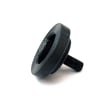
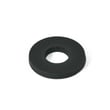
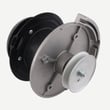
How to replace line on Craftsman gas trimmer?
To replace the cutting line on your Craftsman high wheel line trimmer model 917773706, install two new pieces of 0.155-inch trimmer line cut to 18-3/4 inches each, then seat each folded line under the retainer clip on the carrier plate. Follow the steps in the 917773706 owner’s manual for the exact routing and safety steps.
- Disconnect the spark plug wire and keep it away from the spark plug
- Let the engine and muffler cool completely
- Wear gloves and eye protection
- Tip the trimmer carefully so it cannot roll (high-wheel units can shift)
- Disconnect the spark plug wire.
- Remove the worn line from the carrier plate.
- Cut two new lines: 0.155-inch diameter, 18-3/4 inches long each.
- Fold one line in half.
- Push the folded end through the carrier plate opening to the back side of the retainer clip.
- Pull the line outward until it is fully seated under the retainer clip.
- Repeat for the other side.
- Confirm both lines are the same length (they should not vary by more than 1 inch).
- Reconnect the spark plug wire.
| What you need | Spec for Craftsman 917773706 | Why it matters |
|---|---|---|
| Line diameter | 0.155 inch | Correct fit and retention in the head |
| Line length (each piece) | 18-3/4 inches | Proper cutting reach and balance |
| Length match | Within 1 inch | Reduces vibration and uneven cutting |
- Reinstall the line and make sure it is fully seated under the retainer clip
- Use only 0.155-inch line (wrong diameter slips out)
- Replace line when it wears to half its original length
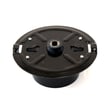
- If the retainer clip area is damaged, the carrier plate may need replacement; see line trimmer carrier plate 594935003
Correct line diameter and equal line length keep the trimmer head balanced, which improves trimming performance and helps prevent excessive vibration and premature wear on the trimmer head.
Last updated: January 2026
Why is my Craftsman Weedeater not starting?
If your Craftsman high wheel line trimmer model 917773706 will not start, the most common causes are stale fuel, a dirty air cleaner, or an ignition issue (spark plug). Start with basic fuel and air checks, then move to spark and throttle control.
- Fuel: Drain old gas and refill with fresh fuel; if it has been sitting more than 30 days, replace it.
- Choke and throttle: Set the throttle to FAST and use the choke for a cold start (then open choke as it warms).
- Air cleaner: A clogged air cleaner can flood the engine (too much fuel, not enough air); clean or replace it.
- Spark plug: Remove, inspect, and replace if fouled or worn; confirm the plug wire is firmly seated.
- Safety and controls: Make sure the control bar is held in the run position and the throttle linkage moves freely.
- Confirm fresh fuel and correct starting procedure using the 917773706 owner's manual.
- Check for spark (spark tester is best). No spark often points to a bad plug or ignition module.
- Check airflow by inspecting the air cleaner; replace if dirty.
- Check fuel delivery: look for a clogged fuel cap vent, dirty fuel line, or carburetor varnish.
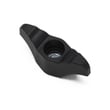
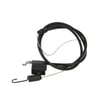
- Inspect the throttle control: a stuck or stretched cable can prevent proper starting and acceleration; replace the throttle 583084301 if it is damaged.
| Symptom | Most likely cause | What to do |
|---|---|---|
| Starts then dies | Dirty carburetor or clogged vent | Clean carburetor, check cap vent |
| Won’t fire at all | No spark or flooded engine | Check spark plug, dry plug, retry |
| Strong fuel smell | Air cleaner clogged or over-choked | Replace air cleaner, reduce choke |
| Only runs on choke | Lean fuel condition | Clean carburetor, check fuel flow |
A no-start is usually a simple maintenance issue. Fixing fuel, air, and spark early prevents hard starting, plug fouling, and carburetor damage that can turn into a bigger repair.
Last updated: January 2026
How to replace trimmer head on Craftsman Weedwacker?
On the Craftsman 917773706 high wheel line trimmer, “trimmer head” service usually means replacing the cutting line on the carrier plate (not swapping a bump head like a handheld Weedwacker). We recommend following the line replacement steps in the 917773706 owner's manual and disconnecting the spark plug wire first.
- Disconnect the spark plug wire and keep it away from the plug.
- Let the engine and muffler cool completely.
- Tip the trimmer only with the carburetor and fuel cap facing up.
- Wear gloves and eye protection; trimmer line can snap back.
- Clear grass and debris from the trimmer head area so you can see the retainer clips.
The manual procedure is straightforward: remove the worn line, cut new line to the correct length, fold it, and seat it under the retainer clips on the carrier plate.
Key steps:
- Pull out and remove the old line from the carrier plate.
- If you buy bulk line, cut each piece to 18-3/4 inches.
- Fold each piece in half and insert the folded end through the carrier plate opening to the back side of the retainer clip.
- Pull outward until the line is fully seated under the retainer clip.
- Repeat for the other side; confirm both lines match length.
| What you’re replacing | Where it goes | What to check after |
|---|---|---|
| Trimmer line | Carrier plate openings and retainer clips | Both lines same length; fully seated |
| Worn/short line | Removed from carrier plate | Replace when worn to less than half original length |
If you have poor trimming performance, vibration, or the line will not stay in place, inspect the carrier plate and retainer clips for damage. If the cutting head assembly is worn, replacing the spindle housing assembly is a common repair path on this style of trimmer: high-wheel line trimmer spindle housing assembly 532174543.
Correct line length and proper seating under the retainer clips prevents line ejection, reduces vibration, and helps the trimmer cut efficiently without premature wear on the bottom ball.
Last updated: January 2026
Do trimmer plus attachments work with Craftsman?
Some TrimmerPlus attachments can work with Craftsman equipment, but it depends on the Craftsman power head style. The Craftsman 917773706 is a high wheel line trimmer (walk-behind), and our manual specifies using only manufacturer-approved accessories for this model; it is not designed to accept handheld attachment systems like TrimmerPlus.
This model is built around a belt-driven trimmer head and chassis, not a detachable shaft coupler. Accessories for handheld string trimmers (edgers, cultivators, pole saws) typically require a compatible coupler on the power head, which this walk-behind trimmer does not use.
- Use only accessories approved by the manufacturer for the 917773706.
- Do not install blades, wire, or flailing devices; this unit is designed for line trimmer use only.
- Stop the trimmer head when crossing gravel, walks, or roads.
- Shut off the engine and let it cool before installing or servicing any accessory.
Check these items first so you do not end up with an attachment that cannot mount:
- Attachment type: TrimmerPlus is generally for handheld power heads with a coupler.
- Mounting method: This model uses a fixed trimmer head system, not a quick-connect shaft.
- Approved accessories list: Use the 917773706 owner's manual to verify what Craftsman lists as compatible.
- Cutting line spec: This model is designed around .155-inch trimmer line.
| What you want to do | Typical handheld solution | Best fit for 917773706 |
|---|---|---|
| Edge along sidewalks | Edger attachment | Use the trimmer head carefully; do not add a blade-type accessory |
| Cut heavy weeds | Brush blade attachment | Use correct .155 line and proper technique (no blades) |
| Improve cut quality | Different head/attachment | Replace worn line and inspect trimmer head drive components |
Using non-approved attachments can increase vibration, reduce control, and raise injury risk. It can also overload the belt and trimmer head drive system on a walk-behind unit.
Last updated: January 2026
What is the difference between a whipper, snipper, and a line trimmer?
A whipper snipper, snipper, and line trimmer are usually the same tool with different regional names; they all cut grass and weeds using a fast-spinning nylon line. For the Craftsman 917773706 high wheel line trimmer, our manual specifies line trimmer use only (no blades or wire). See the Craftsman 917773706 owner's manual.
- Line trimmer / string trimmer: Uses nylon trimmer line as the cutting “blade.”
- Whipper snipper: Common name (especially outside the U.S.) for a string trimmer.
- Snipper: Another casual name for a string trimmer.
- Brush cutter (different tool): Often uses a metal blade for heavy brush (not what this model is designed for).
This model is a high wheel line trimmer, so it is built to roll over uneven ground and cut with fixed-length line. The manual calls out key limits and best practices:
- Use only the specified trimmer line; do not use wire, rope, or similar materials.
- Never use blades or flailing devices on this unit.
- Replace line when it wears to about half its original length.
- Use 0.155-inch diameter line cut to 18-3/4 inches for proper balance and reduced vibration.
If you are shopping for cutting line or troubleshooting poor trimming, these model-specific parts are commonly involved:
- String line vs155t21-24 (0.155-in line pack)
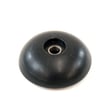
- Husqvarna line trimmer mow ball 532182217 (wear item if the head drags on hard surfaces)
- Line trimmer carrier plate 594935003 (can affect line retention if damaged)
| Term you hear | Typical cutting method | OK for 917773706? |
|---|---|---|
| Line trimmer / whipper snipper / snipper | Nylon line | Yes |
| Brush cutter | Metal blade | No |
Using the correct 0.155-in line and the correct cut length helps prevent excessive vibration, improves trimming performance, and reduces premature wear on the trimmer head components.
Last updated: January 2026
How do I know what size trimmer line I need?
For the Craftsman high wheel line trimmer model 917773706, use 0.155-inch diameter trimmer line. For best trimming and a balanced head, cut replacement line to 18-3/4 inches and keep installed lines within 1 inch of each other (see the 917773706 owner's manual).
- Line diameter: 0.155 in
- Cut line length: 18-3/4 in
- Replace line when worn to: half its original length
- Material: nylon trimmer line only (no wire, rope, or string)
- Balance: installed lines should not vary by more than 1 inch
| Item | Spec for 917773706 | If it’s wrong |
|---|---|---|
| Line diameter | 0.155 in | Too small can slip; too large can bind and cut poorly |
| Line length | 18-3/4 in | Too short trims poorly; uneven lengths can cause vibration |
| Material | Nylon | Non-nylon can break off and cause injury |
- Match the package label to 0.155 in diameter.
- If you buy bulk line, measure and cut each piece to 18-3/4 in before installing.
- After installation, compare both lines; keep them within 1 inch of each other.
- If trimming performance drops, replace the line once it’s worn to half length.
If the trimmer head does not retain line even with the correct diameter, inspect the cutting head components for wear. A worn carrier plate can make line installation and retention unreliable.
- Check the line trimmer carrier plate 594935003 for cracks, wallowed holes, or damage.
Using the specified line diameter and cut length keeps the trimmer head balanced, reduces vibration, and improves cutting performance. It also helps prevent premature wear on the head and drive components.
Last updated: January 2026