Owner’s manual
 Error Codes



What is the most common problem with Maytag refrigerators?
Cooling performance problems are the most common issue we see with Maytag refrigerators like model MFI2570FEZ01, often showing up as the fridge not getting cold enough or running too long. Many cases trace back to airflow restrictions, dirty coils, door seal leaks, or ice and water system issues that affect operation.
Most common symptoms (and what they usually point to)
- Fridge warm, freezer OK: airflow problem, damper issue, or evaporator fan problem
- Both sections warm: dirty condenser coils, condenser fan issue, or sealed system/compressor concern
- Runs constantly: door not sealing, coils clogged with dust, or temperature set too cold
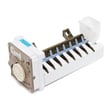
- Ice maker or dispenser not working: water filter restriction, low water pressure, or a frozen water line
- Water tastes off or smells: filter overdue, water line issues, or food odor transfer
Quick checks we recommend first (no parts guessing)
- Confirm temperature settings and give the unit 24 hours to stabilize after changes.
- Clean condenser coils and make sure airflow around the cabinet is not blocked.
- Check door gaskets for gaps, tears, or areas that do not grip paper when the door is closed.
- If ice or water is slow, replace the filter and purge air from the dispenser.
- Verify household water pressure is in a normal range; many Maytag systems are designed around 35 to 120 psi water supply.
For model-specific operating and troubleshooting steps, use the MFI2570FEZ01 owner's manual.
Common causes and the “best next step”
| Problem area | What you notice | Best next step |
|---|---|---|
| Airflow inside fresh food section | Warm fridge, freezer seems normal | Inspect vents; listen for fan; check damper operation |
| Door sealing | Frost, moisture, long run times | Inspect and reseat gasket; clean sealing surfaces |
| Water filtration | Slow dispenser, small ice cubes | Replace filter; follow how to replace the water filter in a Maytag refrigerator |
| Electrical controls | Odd temps, intermittent operation | Power reset; then consider control diagnostics |
Why it matters
Cooling and ice maker complaints often start as simple maintenance issues (airflow, coils, filter). Fixing those early helps prevent food spoilage, reduces energy use, and avoids strain on major components like the compressor.
Last updated: January 2026
Why does my Maytag bottom freezer build up ice on the bottom?
Ice building up on the bottom of the freezer in your Maytag MFI2570FEZ01 almost always happens when the defrost drain clogs. Defrost water can’t flow to the drain pan, so it refreezes on the freezer floor and gradually turns into a thick ice sheet.
Most common causes
- Defrost drain hole blocked by ice, food particles, or debris
- Drain tube restricted, kinked, or partially frozen
- Freezer door not sealing well, causing excess frost that overwhelms the drain
- Heavy humidity from frequent door openings or warm food placed in the freezer
What to do first (safe DIY steps)
- Unplug the refrigerator.
- Remove the freezer drawer/bins and lift out the ice buildup as it loosens (avoid sharp tools).
- Melt the ice around the drain area using warm water (turkey baster) or a hair dryer on low.
- Flush the drain with warm water until it flows freely.
- Check the drain tube for restrictions and make sure it routes down to the drain pan.
For model-specific access points and disassembly guidance, follow the steps in the MFI2570FEZ01 owner's manual.
Parts that can be involved
If the drain tube is damaged or won’t clear, replacement is sometimes the most reliable fix.
| Symptom | What it points to | What to check next |
|---|---|---|
| Ice sheet only on freezer floor | Clogged defrost drain | Drain hole and drain tube routing |
| Frost on packages plus ice floor | Door leak adding moisture | Gasket seal and door alignment |
| Water pooling then freezing repeatedly | Partial drain restriction | Flush drain longer; inspect tube for kinks |
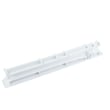
If you find the tube is split, brittle, or missing, the refrigerator drain tube W10619951 is a common related part for this model.
Why it matters
A clogged drain does more than create ice. It can cause water leaks, reduce airflow, and make the refrigerator work harder, which can affect cooling performance and energy use.
Quick prevention tips
- Keep food packages from blocking vents and the drain area
- Wipe up spills quickly so debris doesn’t wash into the drain
- Confirm doors close fully and the gasket seals all the way around
Last updated: January 2026
How wide is a 25.6 cubic foot refrigerator?
Most 25.6 cu. ft. refrigerators are about 35 to 36 inches wide. For your Maytag MFI2570FEZ01 bottom-mount refrigerator, the exact cabinet width and required clearances are listed in the MFI2570FEZ01 owner's manual.
Typical width ranges by style
Capacity alone does not set the width; the refrigerator style does.
- French door / bottom-mount (like MFI2570FEZ01): typically 35 to 36 inches wide
- Side-by-side: typically 35 to 36 inches wide
- Top-freezer: often 28 to 33 inches wide
| Refrigerator style | Typical width | Notes |
|---|---|---|
| French door / bottom-mount | 35 to 36 in. | Most common for 25 to 26 cu. ft. |
| Side-by-side | 35 to 36 in. | Narrower doors, similar overall width |
| Top-freezer | 28 to 33 in. | Usually smaller capacity at similar height |
Fit and clearance tips (what to measure)
When you are planning a space, we recommend measuring more than just the cabinet width.
- Measure the opening width at the front and back (walls are not always square)
- Confirm door swing clearance if the refrigerator sits next to a wall
- Plan for rear clearance for airflow and water line routing (if equipped with an ice maker)
- Check top and side ventilation space so the unit cools efficiently
- Measure depth with doors and handles if you are fitting into a tight kitchen run
Why it matters
A refrigerator that is even 1 inch too wide can prevent proper installation, limit door swing, and reduce ventilation. The manual also calls out ventilation and wall-clearance guidance that helps prevent warm temperatures and high energy use.
Last updated: January 2026
What are the disadvantages of a bottom freezer refrigerator?
A bottom-freezer design like the Maytag MFI2570FEZ01 keeps fresh food at eye level, but the tradeoff is that frozen items sit lower and are usually stored in deep drawers. That can mean more bending, heavier lifting, and more time digging for items compared with a top-freezer layout.
Common disadvantages to expect
- More bending and squatting to reach frozen foods, especially items at the bottom of the drawer.
- Heavier lifting when pulling out a loaded freezer drawer (bulk meats, frozen meals, ice bags).
- Organization challenges because drawer-style freezers stack items; smaller packages can get buried.
- More cold air loss during access since a wide drawer is often open longer while you search.
- Potential door and drawer alignment sensitivity; if the cabinet is not level, doors and drawers can feel “off” (leveling and alignment steps are covered in the MFI2570FEZ01 owner's manual).
Bottom freezer vs. top freezer: quick comparison
| Feature | Bottom freezer | Top freezer |
|---|---|---|
| Access to fresh food | Easier (less bending) | Harder (more bending) |
| Access to frozen food | Harder (lower drawer) | Easier (upper shelf) |
| Freezer organization | Drawer stacking | Shelf/bin visibility |
| Best for | Fresh-food heavy households | Freezer heavy households |
Tips to reduce the downsides
- Use bins to separate categories (meat, vegetables, snacks) so you are not digging.
- Keep the heaviest items toward the top of the freezer drawer.
- Avoid blocking refrigerator air vents; airflow problems can make temperatures swing and increase frost. The manual notes to check vents before changing temperature settings.
- Set realistic temps and give cooling time after changes; factory set points are typically 38°F for the refrigerator and 0°F for the freezer.
- If you use the water dispenser or ice maker, keep filtration current to help prevent flow issues; follow how to replace the water filter in a Maytag refrigerator.
Why it matters
Most “disadvantages” come down to ergonomics and storage style. If your household uses the freezer heavily or you have mobility concerns, the lower drawer and stacked storage can be a daily frustration.
Last updated: January 2026