Owner’s manual


What is a MVW7232HW?
MVW7232HW is the base model identifier for a Maytag top-load washer; your specific Sears PartsDirect model is Maytag MVW7232HW0, which is a version/variant of that MVW7232HW series. For model-specific care, installation requirements, and maintenance steps, use the MVW7232HW0 installation & care manual.
Maytag model numbers often include a suffix (like 0) that identifies a specific production version. That suffix can affect which replacement parts fit and which instructions apply.
- MVW7232HW: the model family/series identifier
- MVW7232HW0: the exact version we use for parts matching
- Using the full model number helps avoid ordering the wrong lid lock, inlet valve, or drive components
If you are confirming you have the right model before ordering parts, we recommend checking:
- The model tag shows MVW7232HW0 (not just MVW7232HW)
- It is a Maytag top-load washer
- Your symptoms match the system involved (fill, drain, lid lock, spin)
- You reference the correct documentation for setup and care
We cannot verify feature claims like capacity, cycle count, or “smart” options from the model-specific documentation provided here (it is an installation and care manual, not a full feature spec sheet). What we can confirm for MVW7232HW0 from the manual are key installation and operating requirements.
| Item | What we can confirm for MVW7232HW0 | Where it’s used |
|---|---|---|
| Electrical supply | 120 V, 60 Hz, 15 or 20 A | Safe power connection |
| Water pressure | 20-100 psi | Proper filling and valve operation |
| Standpipe height | 39" to 96" | Prevents drain/siphon issues |
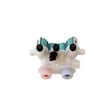
When you search “MVW7232HW,” you will see general product listings, but parts and repair guidance should match MVW7232HW0 exactly. That is the best way to ensure correct fit for items like the washer water inlet valve W11165546 and other model-specific components.
Last updated: January 2026
What is the lifespan of a Maytag washer?
Maytag doesn’t publish a guaranteed “lifespan” for the Maytag MVW7232HW0 washer, and the model’s use and care information focuses on maintenance rather than a set number of years. In practice, how long it lasts depends most on installation, load habits, and routine care outlined in the MVW7232HW0 installation & care manual.
The MVW7232HW0 manual does not list an expected service life, but it does call out maintenance items that directly impact longevity and reliability.
- Use only High Efficiency (HE) detergent and avoid over-dosing
- Run the Clean Washer cycle at least monthly or every 30 wash cycles
- Leave the lid open between uses to help the tub dry and reduce odor-causing residue
- Inspect hoses periodically for bulges, kinks, cuts, wear, or leaks
- Replace inlet hoses about every 5 years to reduce the risk of hose failure
Across top-load washers like the MVW7232HW0, early wear usually comes from vibration, residue buildup, and water-supply issues.
- Frequent overloading (extra stress on drive and suspension)
- Poor leveling (excess vibration during spin)
- Too much detergent or non-HE detergent (buildup, odors, performance issues)
- Skipping routine cleaning (soil and detergent accumulation)
- Aging or leaking fill hoses (leak risk and water damage)
| Item | Practical interval | Why it helps |
|---|---|---|
| Clean Washer cycle | Monthly or every 30 cycles | Reduces buildup and odors |
| Lid left open after use | Every load | Helps the tub dry |
| Inspect fill hoses | Periodically | Catches wear before leaks |
| Replace fill hoses | About every 5 years | Reduces hose-failure risk |
Most “washer lifespan” problems are really preventable wear issues. Keeping the MVW7232HW0 level, clean, and supplied with good hoses helps avoid common breakdowns that lead to costly repairs.
Last updated: January 2026
What is the most common problem with a Maytag washer?
For the Maytag MVW7232HW0 washer, we can’t identify a single “most common” failure from model-specific documentation alone; that kind of ranking typically comes from service-history data. In practice, the issues customers report most often on top-load washers are draining/spinning problems, filling/sensing problems, and lid lock related no-start conditions. Use the MVW7232HW0 washer manual to match your exact symptom to the right checks.
- Won’t start or stops early: lid not fully closed, lid lock not engaging, or a control sensing issue.
- Won’t drain or won’t spin: kinked/incorrect drain hose setup, a restriction in the drain path, or a drain pump problem.
- Stuck on sensing or fills slowly: low water pressure, clogged inlet screens, or an inlet valve issue.
- Excessive vibration or “walking”: washer not level, load out of balance, or suspension wear.
- Odor or residue: too much HE detergent, frequent cold washes, or skipped monthly cleaning.
- Confirm the lid closes firmly and nothing is caught under it.
- Verify both hot and cold faucets are fully open.
- Inspect inlet hose screens for debris (turn water off first).
- Check the drain hose for kinks; confirm it’s installed correctly and not shoved too far into the standpipe.
- Run a Rinse & Spin cycle empty to see if it drains and spins normally.
If your troubleshooting points to a component, these are examples of compatible parts listed for MVW7232HW0:
| Symptom | Compatible part example | What it affects |
|---|---|---|
| Won’t start, lid won’t lock/unlock | Lid lock-sol W11700916 | Safety interlock that allows the cycle to run |
| Won’t fill or fills slowly | Washer water inlet valve W11165546 | Hot/cold water flow into the washer |
| Leaks or poor draining due to hose issues | Hose asm - d W11244231 | Drain hose routing and water evacuation |
Nailing down the symptom first prevents unnecessary part swaps and helps avoid repeat cycle failures, standing water, and out-of-balance spinning that can stress the drive system.
Last updated: January 2026