Owner’s manual
 Error Codes



How to fix E3 on a Frigidaire washer?
On the Frigidaire LTF530DS0 washer, an E3 code is commonly tied to a door or lid not being securely closed or not locking. We fix it by confirming the door closes fully, the washer sits level, and the lock system engages at the start of the cycle (see the LTF530DS0 owner's manual).
- Press the door closed firmly; do not force it if it is locked.
- Start a cycle and watch for the door lock indicator behavior.
- Wait 1 to 2 minutes for the lock to release before opening after a stop.
- Level the washer front-to-back and side-to-side; recheck after moving it.
- Remove items that may be caught between the door and the boot (gasket).
- Power reset: unplug for 2 minutes, then plug back into a grounded outlet and retry.
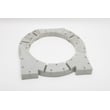
If the door is fully closed but the washer will not lock at the start, the door lock assembly is the most common fix. For this model, match the replacement to the correct lock style and wiring.
Common symptom-to-part mapping
| What you notice | Most likely area to check | What we typically replace |
|---|---|---|
| Door closes but won’t lock to start | Door lock mechanism, latch alignment | Door catch 131763256 |
| Stops mid-cycle and won’t unlock right away | Normal lock delay, control logic | Follow stop/unlock steps in the manual |
| E3 after moving the washer | Leveling, installation, power | Re-level; verify proper outlet |
The washer is designed to lock the door during the entire wash cycle for safety. If the control does not sense a closed, locked door, it can stop the cycle and trigger an error to prevent leaks and injury.
- Use the error code list and troubleshooting flow in Frigidaire front load washer error codes to narrow down whether you are dealing with a lock issue, a control issue, or a setup problem.
Last updated: February 2026
Where to find model number on a Frigidaire washer?
On the Frigidaire LTF530DS0 washer, the model number and serial number are printed on the washer serial plate at the top, inside the door opening. Open the door and look along the upper edge of the door frame area to find the label.
- Unplug the washer or keep hands clear of moving parts (no need to remove panels).
- Open the washer door fully.
- Look at the top of the door opening (the upper lip of the front opening).
- Find the sticker or metal plate labeled Model and Serial.
- Write down both numbers and keep them with your purchase date.
| Label item | What it’s used for | When you’ll need it |
|---|---|---|
| Model number | Identifies the exact washer design | Ordering parts, checking compatibility |
| Serial number | Identifies your unit’s production run | Service history, warranty paperwork |
| Date of purchase (you add this) | Helps track ownership timeline | Service and maintenance records |
We use the model number to match the correct Frigidaire washer parts and diagrams for your exact configuration. That prevents ordering the wrong door lock, drain pump, water inlet valve, or other components.
For a diagram-style reference and other identification details, check the LTF530DS0 owner's manual.
Last updated: February 2026
Why is my Frigidaire top load washer leaking from the bottom?
A bottom leak on your Frigidaire LTF530DS0 washer usually comes from a drain problem (pump or drain hose), a loose clamp, or oversudsing that forces water out low on the cabinet. Start by checking the drain path and hose routing, then inspect for cracks or seepage during drain and spin. See the LTF530DS0 owner's manual for safety and service guidance.
- Unplug the washer before inspecting; use a properly grounded outlet when operating (no extension cords).
- Run a Rinse/Spin and watch for the first sign of water: fill, agitate, drain, or spin.
- Check the drain hose for kinks, splits, or a loose connection at the pump and standpipe.
- Look for water trails under the pump area and along the base frame.
- Reduce detergent if you see excessive suds; oversudsing can mimic a leak.
| Where you see water | Most likely cause | What to do next |
|---|---|---|
| During drain or spin | Drain pump seepage or cracked housing | Inspect pump body and ports; replace if leaking (see washer drain pump 137108000) |
| Constant drip near rear | Drain hose split or loose clamp | Re-seat and clamp; replace hose if soft/cracked (see washer drain hose 134592700) |
| Only with heavy loads | Out-of-balance vibration loosening connections | Level the washer, redistribute load, recheck clamps |
| Suds/water at base | Too much detergent or wrong type | Use less HE detergent; run a rinse cycle |
- Confirm when it leaks: fill vs. drain vs. spin.
- Inspect the drain hose path: straighten any kinks (a kink can also leave loads too wet after spin).
- Check the pump area: look for mineral tracks, wetness at the pump seam, or dripping at hose ports.
- Verify the washer is stable: if it vibrates, adjust leveling legs and keep loads balanced.
A bottom leak can damage flooring and can also lead to poor draining and overly wet loads after spin. Fixing the drain path early prevents bigger issues with the pump, hose connections, and vibration.
Last updated: February 2026