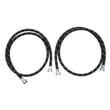
Installation guide
 Owner’s manual


Who is the estate washer made by?
Estate washers (including model ETW4400WQ1) are made by Whirlpool Corporation; Estate is a Whirlpool brand used on certain laundry appliances.
We recommend checking the model and serial tag on the cabinet and matching it to the documentation for ETW4400WQ1.
- Look for the model/serial label under the lid or along the lid opening
- Match the model number exactly: ETW4400WQ1
- Use the brand and model details shown in the ETW4400WQ1 owner's manual
- Keep the model number handy when ordering parts like a lid switch or water inlet valve
Knowing Whirlpool is the manufacturer helps you choose compatible replacement parts, follow the correct safety and installation practices, and use the right troubleshooting steps for this direct-drive style top-load washer.
| Part type | Example part for ETW4400WQ1 | What it affects |
|---|---|---|
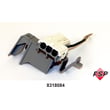
| Lid safety switch | Washer lid switch assembly WP8318084 | Spin and agitation enablement |
| Water fill valve | Washer water inlet valve assembly WPW10144820 | Filling, water temperature, slow fill |
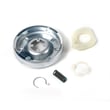
| Motor coupling | Coupling 285753A | Agitation/spin drive connection |
Last updated: February 2026
Where is the model number on an estate washer?
On the Estate ETW4400WQ1 washer, the model number is on the model and serial number label located under the washer lid. Lift the lid and look around the top rim of the opening for the label.
- Lift the lid fully and check the underside of the lid opening first
- Look along the top edge of the cabinet opening (front and sides)
- Wipe the area with a damp cloth; detergent residue can hide the print
- Use a flashlight and take a photo; zoom in to read small characters
- Write down both the model number and serial number for parts matching
| Label item | What it’s used for |
|---|---|
| Model number (ETW4400WQ1) | Matching diagrams and correct replacement parts |
| Serial number | Identifying production details for service and support |
| Other codes | Factory and manufacturing information |
We use the exact model number to match the correct washer parts for your configuration. Even small model variations can change which items fit, such as a lid switch, water inlet valve, or drain pump.
For the exact label location and how the information is used for service, check the ETW4400WQ1 owner’s manual.
Last updated: February 2026
Is 3.2 cubic feet a large capacity washer?
No. A 3.2 cubic foot washer is a small-to-medium capacity size by today’s standards, including for the Estate ETW4400WQ1; it works well for everyday loads for 1 to 3 people, but it is not considered “large capacity” for bulky bedding and big family loads.
- 1 to 2 laundry baskets of mixed clothing (depending on fabric weight)
- Several bath towels in one load
- Standard weekly loads for a small household
- Light bedding (sheets, thin blankets)
- Smaller comforters if you keep the load loose and balanced
| Washer tub size | Common label | Best for |
|---|---|---|
| 2.0 to 3.4 cu. ft. | Small to medium | Singles, couples, small loads |
| 3.5 to 4.4 cu. ft. | Medium to large | Regular family laundry |
| 4.5 cu. ft. and up | Large capacity | Bulky items, larger households |
Overloading reduces wash action, can leave detergent residue, and increases strain on drive components. If your loads are consistently heavy, you will see more wear on parts that help the washer agitate and spin.
- Load items loosely; don’t pack them down
- Keep the top of the load below the tub rim
- Wash bulky items one at a time when possible
- Balance heavy items (for example, add a few towels with a blanket)
- Use the right water level and cycle settings listed in the ETW4400WQ1 owner’s manual
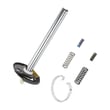
If the washer struggles to agitate or spin when the tub is full, common wear items on this style of top-load washer include the coupling 285753A and agitator dog 80040. Those parts help transfer motor power and maintain proper agitation.
Last updated: February 2026
What is the most expensive part to replace on a washing machine?
On an Estate ETW4400WQ1 washer, the most expensive repairs are typically major drive-system parts such as the gear case/transmission area, the drive motor, or the spin basket; these jobs often cost the most because the parts are pricey and the labor is extensive. For model-specific diagrams and part locations, use the ETW4400WQ1 owner's manual.
- Gear case/transmission components: high part cost and a deep tear-down
- Drive motor: expensive part and requires cabinet access
- Spin basket/tub-related parts: can involve seals, drive tube, and basket removal
- Timer or control components: part cost can be high; diagnosis matters
- Leak-related rebuilds: tub seal and gasket work can add labor quickly
These are examples of higher-cost parts we commonly see on this model page.
| Part type | Example part on this model | Why it can get expensive |
|---|---|---|
| Drive motor | Drive motor WP661600 | Higher part cost; multiple components must be removed to access it |
| Spin basket | Basket W10389329 | Basket removal can be labor-intensive; related wear parts may be needed |
| Timer/control | Washer timer WPW10199989 | Misdiagnosis is common; replacing the wrong control wastes money |
- Compare part cost + labor to the washer’s age and overall condition
- If the washer won’t spin or drain, confirm the failure before buying big parts
- Check for simple causes first (lid switch, coupler, drain pump, out-of-balance load)
- If there’s leaking, identify the source before replacing tub seals or gaskets
- Use the installation guide for safe access, leveling, and hookup basics that can prevent repeat issues
The “most expensive part” is often the one that requires the most disassembly. On top-load washers like the ETW4400WQ1, drive-system and basket-related repairs can stack labor time quickly, so accurate troubleshooting saves the most money.
Last updated: February 2026