Owner’s manual



How to hard reset a Kenmore dryer?
For Kenmore model 79681383410, the most reliable “hard reset” is a power reset: turn the dryer off, unplug it (or switch the breaker off) for about 1 minute, then restore power and press POWER. This clears many control glitches and lets you restart a cycle normally; see the 79681383410 use & care manual.
Reset steps we recommend (safe and effective)
- Press POWER to turn the dryer off.
- Unplug the dryer (or turn the dedicated breaker off).
- Wait 60 seconds.
- Restore power.
- Press POWER, select a cycle, then press START/PAUSE.
If the dryer still will not start after a reset
These checks solve most “dead” or “won’t start” complaints on electronic Kenmore dryers:
- Confirm the outlet has power; electric dryers need full 240V supply.
- Make sure the door is fully closed and latching.
- Check Control lock; on this style, it’s typically toggled by holding the Control Lock button for about 5 seconds.
- If the dryer starts then shuts off, check airflow restrictions and lint buildup.
- If the control panel is unresponsive after power is restored, the issue can be in the user interface or control.
Parts that commonly relate to “won’t start” symptoms
| Symptom | What it can point to | Example part for this model |
|---|---|---|
| Dryer won’t start when door closes | Door switch not closing circuit | Dryer door switch EBF61496102 |
| Random resets, dead panel, erratic buttons | Control board issue | Dryer electronic control board EBR76542927 |
Why it matters
A true power reset is the fastest way to rule out a temporary software lockup. If the problem returns quickly, it usually indicates a door-switch, power-supply, airflow, or control-board issue rather than something a reset can permanently fix.
Last updated: January 2026
Why does my dryer keep saying check lint screen?
On Kenmore dryer model 79681383410, the “check lint screen” or “check vent” message usually means the dryer is sensing restricted airflow. Cleaning the lint filter is the first step, but the warning often points to a kinked, crushed, too-long, or lint-clogged exhaust vent.
What this message means on model 79681383410
This model uses a duct blockage sensing feature (often shown as a “Check Vent” indicator) to alert you when airflow through the exhaust system is restricted. We recommend following the venting and maintenance guidance in the 79681383410 use & care manual.
Quick fixes to try first
- Remove and clean the lint filter before every load; wash off any fabric softener residue and let it dry fully.
- Check the vent hose behind the dryer for crushing, kinks, or sagging.
- Confirm you are using 4-inch rigid or semi-rigid metal duct, not plastic or thin foil.
- Clean lint from the wall duct and the outside vent hood; make sure the damper opens freely.
- Shorten the vent run if possible and reduce the number of elbows.
When a part may be causing the warning
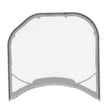
If the venting is clear but the message keeps returning, inspect the lint filter area for gaps, damage, or poor fit. A torn or warped filter can let lint bypass the screen and build up in the lint duct.
Helpful parts to check for this model:
Venting guidelines at a glance
| Item | Best practice | What triggers warnings |
|---|---|---|
| Vent material | Rigid or semi-rigid metal | Plastic or foil duct |
| Vent length | As short as possible | Long runs, multiple elbows |
| Outside hood | Clean, damper opens fully | Lint buildup, stuck damper |
Why it matters
Restricted airflow can cause long dry times, overheating, and repeated shutdowns. Keeping the lint filter, lint duct, and exhaust vent clear helps your Kenmore dryer run efficiently and reduces wear on components.
Last updated: January 2026
Where is Kenmore Dryer's model number?
On Kenmore dryer model 79681383410, the model and serial number are printed on an identification plate located inside the dryer door opening (on the cabinet/frame area). Open the door and look around the door opening for the label.
Where to look first (fastest checks)
- Open the dryer door and inspect the cabinet frame around the opening
- Check the door opening near the latch side and hinge side
- Look for a rectangular sticker or metal plate with Model and Serial fields
- Wipe dust off the label so the numbers are readable
- Take a photo of the label for parts ordering and service records
Other common label locations (if you do not see it inside the door)
For model 79681383410, the inside-door identification plate is the standard location. If the label is missing or damaged, these are the next most common places to check on similar Kenmore dryers:
| Location | What you will see | How to access |
|---|---|---|
| Back panel near the top | Model/serial sticker | Pull dryer forward and use a flashlight |
| Inside the door itself | Sticker on door edge | Inspect door edges and inner panel |
| Lower front area | Service tag on cabinet | Look near the toe panel area |
Why it matters
We use the exact model number to match the correct diagrams, wiring, and compatible replacement parts. Even small model-number differences can change parts like the lint filter, door switch, or control board.
Helpful references
- Use the 79681383410 use & care manual to confirm the identification plate location and record the model and serial number.
Last updated: January 2026
How much does it cost to replace a heating element in a Kenmore dryer?
For Kenmore model 79681383410, the heating element part itself is typically $20 to $120, depending on whether you buy the element only or a more complete heater-related setup. If you hire a technician, total replacement commonly runs $100 to $350 including labor.
What you’ll usually pay (parts vs. labor)
Here’s a practical breakdown for budgeting; your final total depends on access, diagnosis time, and whether other heat-safety parts test bad.
| Cost item | Typical range | Notes |
|---|---|---|
| Heating element (part only) | $20 to $120 | Element-only is usually cheaper than larger assemblies |
| Service labor | $80 to $230 | Varies by area and minimum service call |
| Total installed (common) | $100 to $350 | Parts + labor combined |
Parts that often get checked with the heater
On model 79681383410, a “no heat” complaint is not always the element. We often see airflow or temperature-sensing parts involved.
- Inspect the heater circuit and wiring connections for heat damage.
- Check the exhaust vent for restrictions; poor airflow can overheat and damage heater-related parts.
- Test temperature sensing and safety devices (thermostats, thermistor) if heat is weak or intermittent.
- If the dryer tumbles but won’t heat, confirm the correct power supply (electric models need full 240V).
- If you replace the element, clean lint buildup inside the cabinet while it’s open.
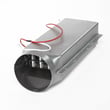
If you’re shopping for the correct replacement part for this model, start with the lg dryer heating element 5301EL1001H.
Why it matters
A failing heating element can look like a simple part swap, but restricted venting or a failed thermostat can cause repeat failures. Fixing airflow and verifying the heat-control parts helps protect the new element and restores normal dry times.
Model-specific tip
Use the 79681383410 use & care manual to confirm the recommended venting practices and the “dryer heating test” procedure; it’s a quick way to verify whether the dryer is producing heat after service.
Last updated: January 2026