Owner’s manual
 View engine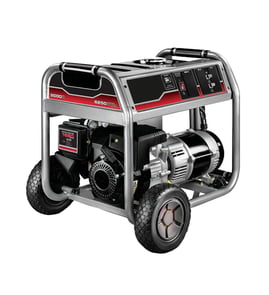





What is the most common problem with generators?
The most common problem we see with generators like the Craftsman 580325610 is a no-start condition caused by fuel-related issues (stale fuel, fuel valve off, dirty air cleaner) or an ignition issue (spark plug wire not connected). Electrical overloads and tripped breakers are also frequent.
Most common issues (and what to check first)
- Fuel valve set to OFF; confirm it is ON before starting.
- Stale or contaminated fuel; drain and refill with fresh fuel if it has been sitting.
- Dirty air cleaner; a restricted air cleaner can cause hard starting and poor running.
- Spark plug wire loose; make sure the wire is firmly connected.
- Tripped/open circuit breaker; reset if the engine runs but you have no AC output.
- Overload or shorted load; disconnect all cords, restart, then reconnect loads one at a time.
Quick symptom-to-cause guide
| Symptom | Most likely cause | Best first step |
|---|---|---|
| Engine will not start | Fuel valve OFF, out of fuel, stale fuel, ignition lead off | Verify fuel valve ON, add fresh fuel, check spark plug wire |
| Engine runs but no AC output | Circuit breaker open, bad cord/connection, faulty load | Reset breaker, try a known-good cord/device |
| Engine bogs down under load | Overload, engine speed too low, shorted load | Reduce load, disconnect loads and retest |
Why it matters
Most “generator problems” trace back to simple setup and maintenance items. Fixing fuel quality, airflow, and load management prevents repeated no-starts, reduces overheating risk, and helps protect the rotor and stator windings from damage.
Safety notes we follow during checks
- Disconnect the spark plug wire before servicing.
- Do not exceed the generator’s wattage/amperage capacity; connect loads only after the engine stabilizes.
- Keep the unit clean and dry; do not spray it with a garden hose.
For model-specific operating steps and troubleshooting tables, use the 580325610 owner’s manual.
Last updated: February 2026
How much oil does a Craftsman 580325610 ac generator take?
The Craftsman 580325610 AC generator takes 28 oz (0.875 qt) of engine oil when filled to the proper level on the dipstick. We recommend checking the oil level before every use and topping off as needed rather than filling to a measured amount.
Oil fill tips for the Craftsman 580325610
- Place the generator on a level surface before checking or filling.
- Add oil slowly, then recheck the dipstick level; overfilling can cause smoking and rough running.
- If the engine was running, let it sit a few minutes so oil drains back into the crankcase.
- Keep the oil cap and fill area clean so dirt does not enter the engine.
- Change oil on schedule to protect the engine under heavy loads.
Quick capacity reference
| Spec | Value |
|---|---|
| Oil capacity | 28 oz |
| Oil capacity (quarts) | 0.875 qt |
| Oil capacity (approx. liters) | 0.83 L |
What oil should we use?
Use the oil type and viscosity listed in the Craftsman 580325610 operator's manual. In most climates, small 4-cycle generator engines commonly use SAE 10W-30, but the manual chart is the right match for your temperature range.
Why it matters
Correct oil level is one of the biggest factors in generator reliability. Too little oil accelerates engine wear; too much oil can foam, increase crankcase pressure, and lead to oil in the air intake and exhaust.
Last updated: February 2026
What is the 20/20/20 rule for generators?
The 20/20/20 rule is a simple portable-generator safety reminder: run your Craftsman generator model 580325610 at least 20 feet from doors, windows, and vents; let the engine cool about 20 minutes before refueling; and use a carbon monoxide alarm (often around $20) to help detect dangerous CO.
How to apply it safely with model 580325610
- Place the generator on a level surface outdoors; never run it in a garage, shed, or near open windows.
- Start the generator and let the engine stabilize before you connect any loads.
- Plug loads in with the device switched OFF, then turn the device ON.
- Turn loads OFF and unplug them before shutting the generator down.
- Do not exceed the generator’s wattage or amperage capacity.
- Do not tamper with governed engine speed; correct frequency and voltage depend on it.
Outlet and load limits (quick reference)
Use this as a practical checklist when choosing what to power; exact details and diagrams are in the 580325610 owner’s manual.
| Connection point | What it’s for | Key limit to remember |
|---|---|---|
| 120V, 20A duplex receptacles | Standard 120V tools, lights, appliances | 20 amps max per outlet |
| 120/240V, 30A locking receptacle | 120V and or 240V loads via 4-wire cord set | Do not exceed generator output |
Why it matters
Carbon monoxide can build up quickly if a generator is too close to the home, and refueling a hot engine can ignite fuel vapors. Overloading or improper connections can also damage the generator and the equipment you are powering.
Last updated: February 2026
Can I run my house on a 6000 watt generator?
Yes, a 6000-watt class generator can run essential household loads, but it will not run an entire home at once. With the Craftsman 580325610, plan around about 5,600 running watts and manage starting surges so you only power a few key circuits at a time (not central A/C or an electric water heater). See the 580325610 owner's manual for load limits and safe connection guidance.
What you can typically power (and what to avoid)
A 6,000-watt class portable generator is best for “critical loads”:
- Refrigerator or freezer (starting surge is high)
- Sump pump (if applicable)
- Furnace blower (gas or oil heat)
- A few lights and phone chargers
- TV, router, small kitchen appliances (one at a time)
Avoid or limit these because they can exceed capacity quickly:
- Central air conditioning
- Electric water heater
- Electric range or clothes dryer
- Multiple high-draw tools running together
How to size your load correctly
The manual’s guidance is to total running watts for everything you want on at the same time, then add starting (surge) watts for the single largest motor load.
| Step | What to do | What to watch for |
|---|---|---|
| 1 | List items you want to run together | Keep the list short |
| 2 | Add running watts | Stay at or under the generator’s running limit |
| 3 | Add the biggest surge wattage | Motor loads can spike at startup |
Power management tips that prevent overloads
To protect the generator and your appliances, we recommend:
- Start the generator with nothing plugged in
- Plug in the largest load first, then let it stabilize
- Add one load at a time (sequentially)
- Turn loads OFF before shutting the generator down
- Never exceed receptacle limits (many 120V outlets are limited to 20 amps)
Why it matters
Overloading can trip breakers, cause low voltage, and damage connected devices. Managing loads and using a proper transfer switch or interlock helps you power essentials safely and consistently.
Last updated: February 2026
How long will a Craftsman 580325610 ac generator run?
A Craftsman 580325610 AC generator typically runs about 10 to 12 hours at 50% load on a full tank, assuming the engine is tuned correctly and the fuel system is clean. For the most accurate run-time guidance and operating limits, use the 580325610 operator's manual.
What changes the run time most
Run time is mainly a fuel-consumption question; the heavier the electrical load, the faster the generator uses gasoline.
- Load level: 25% load runs longer than 50%; near full load runs much shorter
- Connected devices: space heaters, sump pumps, and power tools can spike demand
- Engine condition: dirty air filter, old fuel, or carburetor issues increase fuel use
- Altitude and temperature: hot weather and high elevation reduce power and efficiency
- Fuel quality: stale gas can cause surging and poor run time
Quick run-time expectations (typical)
Use this as a practical planning guide for the Craftsman 5600-watt class generator.
| Approx. load | What it looks like | Typical run time per tank |
|---|---|---|
| 25% | lights, fridge, small electronics | 12 to 16 hours |
| 50% | fridge + furnace fan + some lights | 10 to 12 hours |
| 75% to 100% | multiple large loads, frequent tool use | 6 to 9 hours |
If run time is suddenly much shorter
These checks fix most “it used to run longer” complaints.
- Reduce load and reset any tripped breaker (see generator circuit breaker 202030GS)
- Replace or clean the air filter (restricted airflow increases fuel use)
- Drain old fuel and refill with fresh gasoline
- Check for fuel line cracks or leaks (consider fuel line kit 791745 if lines are brittle)
- Verify the generator is not being overloaded (overload wastes fuel and stresses the alternator)
Why it matters
Knowing expected run time helps you size fuel storage, plan refueling intervals, and avoid overload conditions that can trip the breaker or shorten alternator life.
Last updated: February 2026
What kind of oil goes in a Craftsman generator?
For the Craftsman 580325610 generator, we use 4-cycle engine oil and fill to the point of overflowing at the oil fill opening when the unit is level. The correct oil viscosity depends on ambient temperature; the 580325610 owner's manual lists the recommended oil grades.
Recommended oil type and viscosity
Most portable Craftsman generators with 4-cycle engines run best on SAE 10W-30 for general temperatures, and SAE 5W-30 (synthetic) for easier cold-weather starting. Use a quality detergent oil rated for gasoline engines.
Quick guide (typical)
| Outdoor temperature | Common choice | Why it helps |
|---|---|---|
| Below 40°F | SAE 5W-30 (synthetic) | Easier starting, better cold flow |
| 40°F to 100°F | SAE 10W-30 | Good all-around protection |
| Consistently above 100°F | SAE 10W-30 (check manual) | Helps maintain viscosity in heat |
How to check and add oil (model-specific steps)
We follow the same process outlined for the 580325610:
- Set the generator on a level surface.
- Clean around the oil fill area and remove the oil fill cap.
- Check oil before each use or at least every 5 hours of operation.
- Add oil slowly until it reaches the overflow point at the fill opening.
- Reinstall and fully tighten the oil fill cap.
Oil change intervals
Regular oil changes protect the engine and help prevent hard starting and low power.
- Change oil after the first 5 hours of operation.
- Change oil every 50 hours after that.
- Change oil more often in dusty/dirty conditions or extreme heat.
Why it matters
Using the right oil viscosity for the temperature helps the engine lubricate properly at startup and under load. Running low on oil or using the wrong grade can shorten engine life and cause performance problems.
Last updated: February 2026
Why is my Craftsman generator not starting?
If your Craftsman generator model 580325610 will not start, the most common causes are starting with loads plugged in, the unit not sitting level (which can trigger a shutdown), the fuel valve being OFF, or the choke and switch not set correctly. We also see old fuel and fuel-system varnish create hard-start problems.
Quick start checklist (model 580325610)
- Unplug all electrical loads before starting; do not start with devices plugged in and ON.
- Set the generator on a level surface.
- Turn the red fuel valve to ON.
- Move the choke lever to CHOKE for a cold start.
- Set the rocker switch to OFF, then pull the recoil handle slowly to resistance and pull rapidly.
- After it starts and warms up, move the choke toward RUN.
For the exact control locations and the step-by-step sequence, follow the 580325610 owner’s manual.
If it still will not start: what to check next
Fuel and storage-related issues
Old gasoline is a top reason generators will not start after sitting. If the unit was stored more than 30 days with fuel in it, gum deposits can form in the carburetor and fuel system.
- Drain old fuel and refill with fresh fuel
- Inspect fuel lines for cracking or leaks
- Check for fuel flow with the valve ON
- If fuel delivery is restricted, a fuel line kit can help on some builds (see fuel line kit 791745)
Electrical output side (after it starts)
If the engine starts but you have no power at the outlets, a tripped breaker is a common cause. Check and reset the breaker, then retest.
| Symptom | Most likely area | What we do first |
|---|---|---|
| No crank or no start | Starting setup, fuel delivery | Verify level surface, fuel valve ON, choke position |
| Starts then dies | Fuel quality, load applied too soon | Remove loads, use fresh fuel, restart |
| Runs but no AC power | Breaker or outlet wiring | Reset breaker, inspect outlet connections |
Why it matters
Starting with loads connected or running the generator off-level can prevent starting or cause shutdown during operation. Using fresh fuel and correct starting steps protects the engine, reduces kickback risk, and helps the generator produce stable voltage and frequency.
Last updated: February 2026
Is it worth repairing a generator?
Yes, repairing a generator is worth it when the core engine and alternator are in good shape and the fix is a normal wear item (fuel line, breaker, outlet, gasket). For a Craftsman 580325610, we typically recommend repair when the cost is clearly less than replacing the unit and reliability returns after maintenance.
Quick decision checklist
- Repair if it starts reliably, makes steady power, and needs a single clear fix (fuel delivery, breaker, outlet, tune-up).
- Repair if the problem matches a simple troubleshooting step in the 580325610 owner’s manual.
- Repair if the unit has been maintained (oil changes, clean air filter, fresh fuel).
- Replace if it repeatedly loses AC output, has major internal alternator damage, or keeps “bogging down” under normal loads.
- Replace if repair costs approach the price of a comparable new generator.
What the manual says to check first (common, low-cost fixes)
The troubleshooting chart for this model points to a few frequent causes that are often repairable:
- Reset an open breaker and reduce load if overloaded.
- Check for a bad extension cord or a bad connected device.
- Correct fuel and starting issues (fuel valve open, fresh fuel, clean air cleaner, good spark plug connection).
Parts that often make repair worthwhile
If your issue is isolated to one of these, repair is usually the smart move:
| Symptom | Likely area | Example part for this model |
|---|---|---|
| No AC output | Tripped/failed breaker | Generator circuit breaker 202030GS |
| Outlet damaged/loose | Receptacle/outlet | Briggs and stratton outlet-120v 20a 197731GS |
| Runs rough or stalls | Fuel delivery | Fuel line kit 791745 |
| Loud exhaust leak | Exhaust sealing | Engine exhaust gasket 695398 |
Why it matters
A generator that is only suffering from a fuel restriction, a weak electrical connection, or a tripped breaker can often be restored to safe, stable output with targeted repairs. That keeps your backup power dependable and avoids chasing repeated no-start or no-output problems.
Last updated: February 2026