

How to tell when a heating element is going out in a dryer?
In a Kirkland dryer model SEDS800JQ1, a heating element that’s going out usually shows up as no heat, weak heat, or dry times that keep getting longer even with a clean lint screen and good airflow. The most reliable confirmation is a continuity test of the element and related safety thermostats.
Common signs the heating element is failing
- Clothes take much longer to dry than normal
- Dryer runs but produces little or no heat
- Heat cuts in and out during a cycle
- Burning smell (often from lint or a hot spot on the element)
- Breaker trips on electric models (shorted element can cause this)
Quick checks before you test parts
Good airflow problems can mimic a bad element, so we check these first:
- Clean the lint screen thoroughly (including any fabric softener residue)
- Confirm strong airflow at the outside vent hood
- Inspect the vent duct for kinks, crushing, or heavy lint buildup
- Avoid overloading; heavy loads can extend dry time even with normal heat
What to test (and what the results mean)
Unplug the dryer (and shut off gas if applicable) before testing.
| What you test | Typical symptom when failed | What you’re looking for with a meter |
|---|---|---|
| Heating element | No heat or weak heat | Continuity through the element (open circuit means failed) |
| Thermal cut-off / thermal fuse | No heat (sometimes no run) | Continuity; open means it tripped and must be replaced |
| Operating thermostat / high-limit thermostat | Overheating or heat cycling issues | Continuity at room temp (varies by design) |
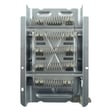
If the element is open or shorted, replacing the heater assembly is the fix; for this model, the correct replacement is the dryer element 279838.
Why it matters
A failing heater often traces back to restricted venting, which overheats the heater housing and can repeatedly trip safety devices. Fixing airflow helps the new heater and thermostats last longer and keeps drying performance consistent.
Helpful DIY guidance
For step-by-step troubleshooting focused on heating problems, use electric dryer wont heat troubleshooting video.
Last updated: February 2026
Is it worth repairing a dryer drum?
Yes, it can be worth repairing the drum on your Kirkland SEDS800JQ1 dryer when the problem is actually a wearable support or drive part (belt, idler pulley, rollers) rather than a damaged drum shell. If the drum itself is cracked, badly dented, or the repair total approaches about half the cost of a comparable new dryer, replacement is the better value.
Quick decision checklist
- If the dryer is under ~10 years old and otherwise reliable, repair usually makes sense.
- If you hear squealing, thumping, or scraping, the fix is often a wear item, not the drum.
- If the drum is physically damaged (crack, sharp edge, out-of-round), replacement costs rise fast.
- If multiple major parts are failing (motor plus heat plus drum support), replacement is usually smarter.
- If drying performance is poor due to airflow, fix the venting first before buying parts.
Common “drum problems” that are usually worth fixing
Many drum complaints trace back to parts that are straightforward to replace:
| Symptom | Most common cause | Example part for SEDS800JQ1 |
|---|---|---|
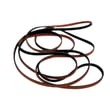
| Drum won’t turn | Broken/slipping belt | Dryer drum belt 341241 |
| Loud squeal or chirp | Worn idler pulley or support components | Idler pulley WP691366 |
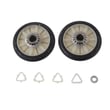
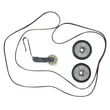
| Thumping/banging | Worn drum support components (often serviced as a kit) | Dryer repair kit 4392065 |
| Scraping plus poor airflow | Damaged blower wheel (can mimic drum rub) | Dryer blower wheel WP694089 |
When replacing the dryer is the better move
Replace the dryer instead of repairing the drum when:
- The drum is cracked, heavily dented, or has sharp edges that can snag clothes.
- The repair requires multiple high-cost components (for example, motor plus drum-related parts).
- You also have chronic long dry times from vent restrictions and the installation cannot be improved.
Why it matters
A dryer drum is a large, labor-intensive repair area. Fixing the true root cause (belt, idler pulley, blower wheel, or drum support wear) restores safe tumbling and proper airflow, which helps prevent overheating and repeat failures.
Last updated: February 2026
What are common dryer part failures?
On the Kirkland SEDS800JQ1 dryer, the most common part failures usually show up as no heat, no tumble, long dry times, or shutting off mid-cycle. The usual culprits are heating parts (element, thermostats, thermal cut-off), drum-drive parts (belt, idler), and airflow parts (blower wheel and venting).
Most common failures and what you’ll notice
- No heat or weak heat: heating circuit parts such as the dryer element 279838, operating thermostat, high-limit thermostat, or thermal cut-off kit
- Drum won’t turn (motor runs or hums): broken belt, seized drum support parts, or a failing idler pulley
- Squealing, thumping, or scraping: worn drum support components (often addressed with a repair kit)
- Dryer stops mid-cycle: overheating from restricted airflow or a safety device opening
- Won’t start: door switch, timer, or motor issues
Quick symptom-to-part checklist
| Symptom | Most likely area | Common parts to check on SEDS800JQ1 |
|---|---|---|
| Runs but no heat | Heating circuit | Dryer element 279838, thermal cut-off kit, thermostats |
| Tumbles poorly or not at all | Drum drive | Dryer drum belt 341241, idler pulley, motor |
| Long dry times | Airflow | Lint screen, vent duct, dryer blower wheel WP694089 |
| Won’t start | Start/safety/controls | Dryer door switch WP3406107, timer, motor |
Why it matters
Catching the right failure early prevents repeat breakdowns. For example, replacing a thermal cut-off without fixing a clogged vent often leads to another overheat shutdown and another blown safety fuse.
What we recommend checking first (fast, no parts)
- Clean the lint screen before every load
- Inspect and clear the vent run (crushed hose, lint buildup, blocked exterior hood)
- Confirm strong airflow at the outside vent while the dryer runs
- Try a timed dry cycle to compare heat and airflow consistency
- Listen for belt slip, squeal, or a motor hum without drum movement
For deeper troubleshooting steps, use our dryer takes a long time to dry guide to narrow airflow and heating causes.
Last updated: February 2026
What is the most expensive part to replace on a dryer?
On the Kirkland SEDS800JQ1 dryer, the drive motor is typically the most expensive single part to replace, especially if labor is included. Timers and major drum-support components can also be high-cost repairs compared with common wear items like belts and switches.
Most expensive dryer parts (typical)
These are the parts that most often drive the highest total repair cost (part price plus installation time):
- Drive motor (often the priciest part and labor-intensive)
- Timer or electronic control (when equipped)
- Drum support and friction components (rollers, idler, bearings)
- Heating system components (element on electric models)
- Cabinet or major panels (usually not replaced unless damaged)
Examples from SEDS800JQ1 parts
Here is how common SEDS800JQ1 parts usually compare in cost and why they matter.
| Part (example) | What it does | Why it can be costly |
|---|---|---|
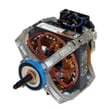
| Motor 279827 | Turns the drum and blower | Higher part cost; more teardown time |
| Timer WP3979618 | Controls cycle timing | Expensive component; diagnosis matters |
| Dryer element 279838 | Produces heat (electric) | Moderate-to-high part cost; heat issues can have multiple causes |
| Dryer drum belt 341241 | Spins the drum | Low-cost wear item; common DIY repair |
How we recommend deciding whether to repair
A “most expensive part” question is really about value. We use these checkpoints:
- Confirm the symptom first (no start, no heat, squeal, long dry times)
- Rule out airflow problems (lint screen, vent restriction) before replacing heat parts
- Price the likely parts and compare to the dryer’s age and condition
- Consider bundled wear repairs; a kit can prevent repeat tear-downs (example: dryer repair kit 4392065)
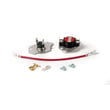
- Replace safety fuses only after fixing the cause (overheating from poor airflow), such as when using a thermal kit like dryer thermal cut-off fuse kit 279816
Why it matters
Misdiagnosing an expensive part (like a motor or timer) can turn a simple dryer fix into an unnecessary major repair. Starting with airflow checks and basic electrical tests often prevents replacing the wrong component.
Related DIY help: dryer takes a long time to dry
Last updated: February 2026