Owner’s manual
 Error Codes


What is a refrigerator bottom mount?
A bottom-mount refrigerator is a design where the freezer is located on the bottom and the fresh-food (refrigerator) section is on top. Your LG LMXS30796S is a bottom-freezer, French door style unit, so everyday refrigerated items sit at eye level for easier access (see the LMXS30796S owner’s manual).
How a bottom-mount layout is arranged
In a bottom-mount refrigerator like the LG LMXS30796S, you typically have:
- Fresh-food compartment on top (main doors)
- Freezer compartment on the bottom (drawer-style freezer)
- Separate storage zones inside, such as crispers and specialty drawers
- Optional features depending on the exact configuration (ice and water dispenser, Door-in-Door)
Why people choose bottom-mount refrigerators
Bottom-mount designs are popular because they prioritize the items you use most.
- Less bending to reach fresh foods (milk, produce, leftovers)
- Freezer drawer can hold bulky frozen items more efficiently
- French door top section can reduce cold-air loss versus a single wide door
- Often includes flexible storage features (adjustable shelves, deli or chill drawers)
Bottom-mount vs. top-freezer: quick comparison
| Feature | Bottom-mount (like LMXS30796S) | Top-freezer |
|---|---|---|
| Fresh-food access | Higher, easier reach | Lower, more bending |
| Freezer access | Lower drawer | Upper door |
| Typical organization | Wide shelves, multiple zones | Simpler layout |
Why it matters
Knowing your refrigerator is bottom-mount helps when you are looking up parts, diagrams, and repair steps because many components and access points (like the freezer drawer rails, evaporator area, and door alignment procedures) are specific to bottom-freezer designs.
Last updated: January 2026
What is the most common problem with an LG refrigerator?
For the LG LMXS30796S refrigerator, one of the most common real-world issues we see is cooling and airflow trouble that leads to frost buildup (especially in the freezer) or warmer-than-normal temperatures. These symptoms often trace back to door sealing, airflow blockage, or defrost-related components.
Common issues we see most often
Across LG French door and bottom-mount designs like LMXS30796S, these are frequent problem areas:
- Frost buildup in the freezer drawer or on packages
- Refrigerator section getting warm while the freezer seems OK
- Ice maker not making enough ice or clumping ice
- Water dispensing slowly (often after long filter use)
- Odors that return quickly after cleaning (air filter overdue)
For model-specific operating tips and feature details (ice maker, filters, alarms), use the LMXS30796S owner’s manual.
Quick checks before assuming a part has failed
Many “common problems” are caused by setup or conditions, not a failed compressor or control board.
- Confirm doors close fully and nothing is holding them open
- Keep air vents clear; avoid packing food tightly against the back wall
- Verify temperature settings (typical defaults are 37°F fresh food and 0°F freezer)
- Reduce frequent door openings; warm, humid air drives frost and condensation
- Clean condenser cover and vents with a vacuum attachment (do not remove panels)
When it points to a part
If the symptoms repeat after the checks above, these parts are commonly involved depending on what you’re seeing:
| Symptom | Commonly related system | Example compatible part for this model |
|---|---|---|
| Heavy frost, poor cooling recovery | Defrost system | Refrigerator defrost heater assembly MEE62805303 |
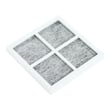
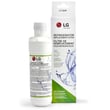
| Odors that persist | Air filtration | LG refrigerator air filter ADQ73214408 |
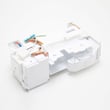
| Ice production issues | Ice maker system | LG refrigerator ice maker AEQ73110210 |
Why it matters
Frost buildup and airflow restriction can make the cooling system run longer, raise temperatures, and reduce ice production. Catching the cause early helps protect food quality and can prevent secondary issues like water leaks from melting frost.
Last updated: January 2026
Why does ice build up in the bottom of my LG refrigerator?
Ice building up under the bottom drawer in your LG LMXS30796S is most often caused by defrost water not draining correctly; instead of flowing to the drain pan, it backs up, leaks, and freezes in the lowest area. We use the LMXS30796S owner’s manual to confirm normal defrosting and maintenance guidance.
Most common causes (and what to check first)
- Clogged defrost drain (food debris, ice, or sludge blocking the drain opening or tube)
- Drain trough iced over from repeated door openings or high humidity
- Door not sealing well (warm, moist air increases frost and meltwater)
- Refrigerator not level (water can spill out of the drain trough instead of flowing into the drain)
- Freezer drawer left slightly open (creates heavy frost that later melts and refreezes)
Quick fix steps you can try safely
- Unplug the refrigerator and remove the lower freezer baskets/drawer so you can access the iced area.
- Melt the ice with towels and a hair dryer on low (keep heat moving; do not overheat plastic).
- Clear the drain path: flush the drain opening with hot water using a turkey baster or squeeze bottle until it flows freely.
- Check the door gaskets for gaps, tears, or sticky residue; clean with mild soap and water and dry.
- Confirm leveling: the cabinet should be slightly higher in front so doors close firmly.
When a part is likely involved
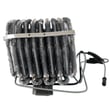
If the drain keeps freezing back up soon after clearing it, the issue can be related to airflow/defrost performance in the freezer compartment. In that case, inspecting the evaporator area and related components may be necessary; a common assembly tied to that area is the refrigerator evaporator assembly ADL74221802.
| Symptom | Most likely cause | Best next step |
|---|---|---|
| Ice sheet under bottom drawer | Drain blocked/frozen | Defrost and flush drain with hot water |
| Water pooling then freezing repeatedly | Door leak or unit not level | Check gasket seal and leveling |
| Heavy frost plus ice buildup | Drawer not closing fully | Clear obstructions, verify closure |
Why it matters
When defrost water cannot drain, it refreezes and can eventually interfere with drawer operation, airflow, and temperature stability. Fixing the drain and sealing issues early helps prevent repeat ice buildup and food thawing.
Last updated: January 2026