Owner’s manual
 Error Codes


How do you remove the bottom freezer drawer on a Whirlpool refrigerator?
On the Whirlpool WRF736SDAM14, you typically remove the freezer drawer front (not the entire slide rail system) by fully opening the drawer, removing the two top inside screws, then lifting the drawer front up to release the plastic studs from the glide brackets. See the WRF736SDAM14 user manual for the exact steps.
Before you start
Disconnect power if you will be working around wiring or the ice maker area, and remove food so the drawer is lighter.
- Use two people if possible; the drawer front is awkward to handle
- Empty the freezer drawer to prevent spills and reduce weight
- Open the drawer fully so you can access the top inside screws
- Use the correct tool (commonly a 1/4-inch hex driver)
Step-by-step: remove the freezer drawer front
- Open the freezer drawer to full extension.
- Remove the two screws at the top, inside the drawer front (one left, one right) that secure the drawer front to the drawer glides.
- Lift up on the drawer front to release the plastic studs from the drawer glide bracket slots.
- Set the drawer front aside on a protected surface.
Reinstalling the drawer front
Align the bottom plastic studs with the glide bracket slots, seat the studs, then reinstall and tighten the two top screws.
| Task | What you do | What to watch for |
|---|---|---|
| Remove drawer front | Remove 2 top inside screws, lift up to release studs | Do not pry hard; lift straight up |
| Reinstall drawer front | Align studs to slots, then reinstall screws | Keep glides steady so studs seat correctly |
Why it matters
Removing the drawer front is often needed for moving the refrigerator through a doorway, cleaning, or accessing lower components. Doing it the correct way helps prevent broken glide brackets, stripped screws, and drawer alignment issues.
Last updated: January 2026
Why is ice forming in the bottom of my freezer Whirlpool?
Ice on the bottom of the freezer in your Whirlpool WRF736SDAM14 is most often caused by a partially blocked defrost drain, which lets defrost water overflow and refreeze on the freezer floor. A door seal leak or frequent door openings can also add moisture that turns into ice.
What to check first (quick triage)
- Look for a sheet of ice on the freezer floor or under the lower basket; that strongly points to a drain issue.
- Check the freezer drawer seal for gaps, tears, or areas that do not contact the cabinet evenly.
- Confirm the freezer is closing fully (food packages or a misaligned drawer can hold it open).
- Note when it happens: after a power outage, after leaving the door open, or after heavy use.
How to clear a likely clogged defrost drain
- Unplug the refrigerator (or turn cooling off, then disconnect power).
- Remove food and bins from the freezer drawer.
- Melt the ice on the freezer floor (towels plus a bowl of hot water in the freezer works well).
- Clear the drain opening (typically behind the rear freezer panel area) using hot water and a flexible plastic tube or pipe cleaner.
- Verify drainage: pour a small amount of hot water into the drain area and confirm it flows to the drain pan.
For model-specific safety and access guidance, follow the steps in the WRF736SDAM14 user manual.
When a part may be involved
If the drain keeps freezing back up, the defrost system may not be melting frost fast enough, or airflow and moisture control may be off. On this model, a failed defrost heater can contribute to defrost problems.
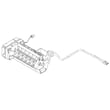
- Consider inspecting the refrigerator defrost heater WP12729128 if you see heavy frost buildup behind the freezer’s rear panel.
Symptoms vs. likely cause
| What you see | Most likely cause | What to do |
|---|---|---|
| Solid ice sheet on freezer floor | Defrost drain restricted | Defrost fully and clear drain |
| Frost on packages and walls | Door seal leak or door ajar | Clean/inspect gasket, confirm closure |
| Heavy frost behind rear panel | Defrost system issue | Check heater and related defrost components |
Why it matters
When defrost water cannot drain, it refreezes and can block the freezer drawer, reduce airflow, and lead to warmer temperatures and poor ice production.
Last updated: January 2026
Why is my Whirlpool refrigerator leaking at the bottom?
On Whirlpool model WRF736SDAM14, a bottom leak is most often caused by a clogged or frozen defrost drain that makes meltwater overflow and run onto the floor. It can also be caused by a slow leak in the water supply system for the ice maker or dispenser.
Quick checks (start here)
- Note where the water shows up: under the freezer drawer, under the fresh-food section, or behind the unit.
- If puddles appear after defrost cycles (intermittent), suspect the defrost drain.
- If leaking happens during ice or water dispensing, suspect the water supply system.
- Check the water filter area for drips after a filter change.
- Look behind the refrigerator for wet tubing or fittings.
Most common cause: clogged or frozen defrost drain
When the drain is blocked, defrost water cannot reach the drain pan and backs up until it spills out at the bottom.
Safe DIY steps
- Unplug the refrigerator.
- Remove the freezer drawer contents as needed.
- Melt visible ice with warm (not boiling) water.
- Flush the drain with warm water until it flows freely.
- Confirm the drain pan is seated correctly if you can access it.
For model-specific access and safety notes, follow the WRF736SDAM14 use & care manual.
Water supply leaks: filter, tubing, or inlet valve
If WRF736SDAM14 is connected to a water line, leaks can come from loose fittings, a cracked tube, or a valve that seeps.
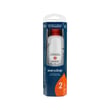
- Re-seat the filter and flush the system after installing a new filter.
- Tighten fittings gently (do not overtighten).
- Replace damaged tubing.
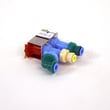
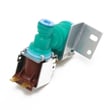
- If you see dripping at the valve area, consider replacing the refrigerator water inlet valve assembly WPW10341329.
Symptom-to-cause guide
| What you notice | Most likely cause | Where to focus |
|---|---|---|
| Puddle every few days | Defrost drain restriction | Freezer drain path |
| Leak only during ice/water use | Water line or valve leak | Back of unit, valve area |
| Drips after filter change | Filter not seated or air in system | Filter housing, flushing |
Why it matters
Bottom leaks can damage flooring and can also signal ice buildup in the drain system that may worsen over time. Fixing the source early helps prevent repeat puddles and hidden moisture.
Last updated: January 2026