Owner’s manual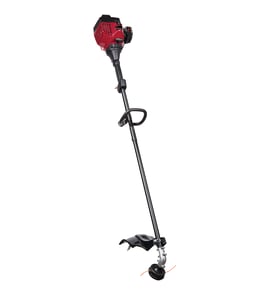




Do trimmer plus attachments work with Craftsman?
Yes, many TrimmerPlus attachments work with Craftsman power heads, including the Craftsman 316711023 gas line trimmer, as long as the trimmer uses a TrimmerPlus-compatible attachment coupler. The key is matching the attachment interface (coupler style), not just the brand name.
How to confirm compatibility on model 316711023
We recommend checking the attachment/coupler section in the 316711023 owner's manual and comparing it to the TrimmerPlus attachment requirements.
Use this quick checklist:
- Confirm your trimmer has a detachable shaft with an attachment coupler (not a fixed, one-piece shaft).
- Look for a coupler release mechanism (typically a knob or clamp) where the upper and lower shafts join.
- Verify the attachment drive connection style (square/hex/flexible drive) matches the attachment.
- Check that the attachment shaft diameter matches the coupler opening.
- Make sure the attachment locks in fully and does not wobble after tightening.
What “works with Craftsman” usually means
Many universal attachment systems are shared across brands (often made by the same manufacturer), so an attachment may list Craftsman among compatible brands. Compatibility still depends on the specific coupler system used on your trimmer.
Common outcomes
| What you see on the trimmer | What it typically means | Next step |
|---|---|---|
| Detachable shaft with coupler | Attachments often fit | Compare coupler specs in the manual |
| Fixed shaft (no coupler) | Attachments will not fit | Use trimmer-specific heads/guards |
| Coupler present but won’t lock | Interface mismatch | Verify drive and shaft diameter |
Why it matters
Using an attachment that does not fully seat and lock can strip the drive shaft, cause vibration, or damage the clutch. Confirming the coupler match protects the drive system and keeps the trimmer running smoothly.
Last updated: February 2026
How to replace line on Craftsman gas trimmer?
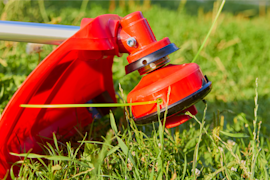
On the Craftsman gas line trimmer model 316711023, replacing the cutting line usually means removing the trimmer head cover, loading new line to the correct length, then reinstalling the cover and confirming the line feeds smoothly when you bump the head. For model-specific line routing, use the 316711023 owner's manual.
Quick steps to reload trimmer line
- Shut the engine off and let the muffler and cutting head cool completely.
- Remove the cutting head cover (most heads use tabs you press in, or a twist-off cap).
- Pull out any old line and clear debris from the spool channels.
- Cut two equal lengths of new line (many bump heads use two lines); keep them the same length for balance.
- Feed each line end into its own eyelet/channel, then wind the spool in the direction shown on the head.
- Reinstall the cover and pull both line ends to confirm they move freely.
Choosing the right replacement line
Most gas trimmers like the Craftsman 316711023 run best when the line diameter matches the head design. If the line is too thick, it can jam; if it is too thin, it breaks quickly.
| What you notice | Most likely cause | What to do |
|---|---|---|
| Line will not feed when bumped | Line wound the wrong direction or crossed | Rewind neatly in the correct direction |
| Line feeds but breaks constantly | Line too thin or brittle | Use the correct diameter; replace old line |
| Head vibrates a lot | Unequal line lengths | Reload with equal lengths |
If the head still will not feed
These checks fix most “no feed” complaints without replacing the whole head:
- Make sure the spool is seated fully under the cover.
- Clean packed grass/dirt from the spool cavity.
- Inspect the cover for cracks or worn tabs; replace if it will not latch.
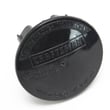
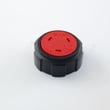
If your cover is damaged, we recommend replacing it with the exact part listed for this model: line trimmer cutting head cover 753-06765.
Why it matters
Correctly loaded line reduces vibration, improves cutting performance, and prevents premature wear on the cutting head, drive shaft, and clutch.
Last updated: February 2026
What is the difference between a 2.4 and 2.7 trimmer line?
A 2.4 mm trimmer line is best for lighter trimming and longer run time, while a 2.7 mm trimmer line is thicker for tougher weeds and more durability. For your Craftsman gas line trimmer model 316711023, the right choice depends on the cutting load and what the cutting head is designed to accept (check the 316711023 owner's manual).
Quick comparison: 2.4 mm vs 2.7 mm
- 2.4 mm: cleaner cuts on grass, less engine load, typically quieter
- 2.7 mm: better on thick weeds, more abrasion resistance, typically uses more fuel
- Thicker line can reduce RPM if the engine or clutch is already weak
- Thinner line can break faster in rocky areas or along fences
- Always match the line shape and diameter to the head and spool limits
| Feature | 2.4 mm line | 2.7 mm line |
|---|---|---|
| Best for | grass, edging, light weeds | heavy weeds, brushy growth |
| Durability | medium | higher |
| Engine load | lower | higher |
| Line consumption | lower | higher |
How to choose the right line for model 316711023
- Confirm the maximum line diameter your cutting head supports in the 316711023 owner's manual.
- If you mostly trim lawn edges weekly, start with 2.4 mm.
- If you routinely cut thick weeds, step up to 2.7 mm (as long as the head allows it).
- If the trimmer bogs down with thicker line, service the basics first (air, fuel, spark).
Why it matters
Line diameter changes cutting performance and how hard the engine works. Using the correct size helps your Craftsman 316711023 maintain RPM, reduces stalling, and can extend clutch and drive shaft life.
Last updated: February 2026
What is the fuel mix for a Craftsman gas trimmer?
For the Craftsman gas line trimmer model 316711023, we use a 40:1 fuel mix: 40 parts fresh unleaded gasoline to 1 part 2-cycle engine oil. Mix it in an approved fuel can before filling the tank; do not mix oil directly in the trimmer’s fuel tank. See the 316711023 operator's manual for the exact fuel and oil recommendations for your engine.
40:1 mix amounts (quick chart)
Use this table to measure accurately:
| Gasoline amount | 2-cycle oil needed (40:1) |
|---|---|
| 1 gallon | 3.2 fl oz |
| 1/2 gallon | 1.6 fl oz |
| 1 quart | 0.8 fl oz |
| 1 liter | 25 ml |
How we recommend mixing and fueling
- Use fresh, clean unleaded gasoline.
- Use 2-cycle oil intended for air-cooled engines.
- Add about half the gas to the fuel can first, then add oil, then add the remaining gas.
- Cap the can and shake to blend thoroughly.
- Fill the trimmer on a cool engine, away from ignition sources.
If it runs poorly after mixing fuel
A wrong mix or stale fuel can cause hard starting, surging, or stalling. These checks fix most issues:
- Drain old fuel and remix fresh 40:1 fuel.
- Clean or replace the air filter (a restricted filter can make it run rich); consider the mtd line trimmer air filter 753-06417.
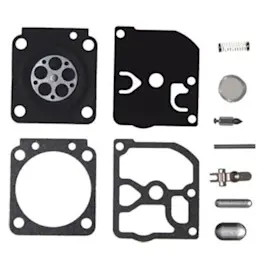
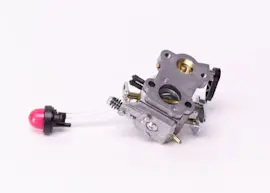
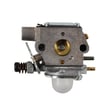
- If it still won’t run, the carburetor may need service; the mtd line trimmer carburetor 753-06190 is a common replacement.
Why it matters
A correct 40:1 ratio protects the engine from internal wear (too little oil) and helps prevent plug fouling and heavy smoke (too much oil). It also improves starting and throttle response.
Last updated: February 2026
Why does my Craftsman trimmer die when I give gas?
When your Craftsman gas line trimmer model 316711023 dies as you squeeze the throttle, the engine is usually running too rich or starving for fuel under load. The most common fixes are cleaning or replacing the air filter, correcting fuel issues, and addressing carburetor or fuel-line restrictions using the steps in the 316711023 owner's manual.
Quick checks that fix most “dies when I give it gas” problems
- Replace a dirty air filter; a clogged filter can make the engine bog and stall. Consider the mtd line trimmer air filter 753-06417 if yours is oil-soaked, torn, or won’t clean up.
- Use fresh, properly mixed fuel (old fuel and incorrect mix ratios cause hesitation and stalling).
- Open the fuel cap and retry; if it runs better briefly, the cap vent can be restricted.
- Inspect the fuel tank and pickup for debris or cracked lines; leaks and restrictions show up most when you accelerate.
- Warm the engine, then accelerate gradually; a cold engine can stall if you snap the throttle.
Fuel and air: what to look for
| Symptom when throttling | Most likely area | What we recommend |
|---|---|---|
| Bogging, black smoke smell | Air filter, carburetor too rich | Replace/clean air filter; check carburetor |
| Dies instantly like it ran out of gas | Fuel delivery restriction | Check fuel cap vent, tank pickup, lines |
| Runs on choke but dies off choke | Lean condition | Check air leaks, carburetor, fuel supply |
Parts that commonly solve the issue
If the basics do not help, these model-matched parts are common next steps:
- Mtd line trimmer carburetor 753-06190 (plugged internal passages, metering issues)
- Mtd line trimmer fuel tank assembly 753-06183 (cracks, pickup problems, contamination)
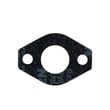
- Lawn & garden equipment engine carburetor mount gasket 753-06253 (air leak at carb mount)
Why it matters
Stalling on acceleration usually means the engine cannot maintain the correct air-fuel mixture when load and RPM increase. Fixing the root cause prevents hard starting, plug fouling, and poor cutting performance.
Last updated: February 2026