Owner’s manual


How do I tell what model my Kenmore dryer is?
Your Kenmore dryer’s model number is printed on the model and serial number plate; on Kenmore model 11070922990, it’s typically found in the door opening area. Record both the model and serial numbers so we can match the correct parts, features, and troubleshooting steps using the 11070922990 owner's manual.
Check these common locations on Kenmore gas dryers:
- Inside the dryer door opening (on the cabinet frame)
- On the back panel of the dryer
- Along the door opening edge near the latch area
- On the cabinet near the lint screen housing (varies by design)
Kenmore model numbers often start with a 3-digit prefix (for example, 110 or 796). That prefix helps identify the manufacturing source, which is important because parts like a thermal fuse, igniter, or timer can differ by design.
- Full model number (all digits, no spaces)
- Serial number
- Date of purchase (helpful for records)
| Item | What it’s used for | Example format |
|---|---|---|
| Model number | Matching parts and diagrams | 11070922990 |
| Serial number | Production run details | Letters and numbers |
Use these practical options:
- Look for a second label on the rear panel
- Check your purchase paperwork for the full model number
- If the dryer runs but you need common service parts, match by component type (for example, a no-heat issue often involves the dryer thermal fuse WP3390719 or ignition parts)
Using the exact model number prevents ordering the wrong Kenmore dryer parts and helps us point you to the right procedures in the manual, including operating steps, venting requirements, and troubleshooting guidance.
Last updated: February 2026
How to open Kenmore dryer front panel?
To open the front panel on a Kenmore gas dryer model 11070922990, we unplug power first, then release the top so we can access the front-panel mounting screws (often inside the door opening and along the top edge). After removing screws, we lift the panel up and off, supporting any wiring.
- Unplug the dryer from the grounded outlet before starting.
- Shut off the gas supply valve if you will be working near the burner or gas valve.
- Wear cut-resistant gloves; cabinet edges can be sharp.
- Use two people if you need to move or tip the dryer; it is heavy.
- Keep the vent from getting crushed or kinked when repositioning the dryer.
- Disconnect power and pull the dryer forward enough to work.
- Release the top panel: on many Kenmore 110-style dryers, spring clips are located a few inches in from each front corner; a putty knife helps release them so the top can tilt up.
- Remove front-panel fasteners:
- Open the door and remove screws around the door opening (if present).
- Remove screws at the top edge of the front panel (accessible once the top is raised).
- Lift the front panel up to unhook it from the lower retaining tabs, then pull it slightly forward.
- Disconnect any wiring (such as a door switch harness) only after noting where it reconnects.
For the exact clip locations and screw points used on your configuration, follow the cabinet access instructions in the 11070922990 owner’s manual.
Opening the front panel is usually done to diagnose noise, no-heat, or no-start problems. Common checks include:
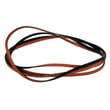
- Belt routing and drum support rollers
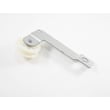
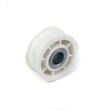
- Idler pulley movement and alignment
- Lint buildup around the blower housing and duct
- Door switch operation and harness connections
- Burner area inspection (igniter and flame sensing components)
| Symptom | Common area | Example part for model 11070922990 |
|---|---|---|
| Squealing or thumping | Drum support | Support kit WPW10314173 |
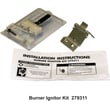
| Dryer runs but no heat | Burner ignition | Dryer igniter 279311 |
| Starts then stops, or won’t run | Overheat protection | Dryer thermal fuse WP3390719 |
Removing the front panel the right way prevents bent cabinet panels, broken plastic clips, and pinched wiring. It also gives you safe access to key wear items like the idler pulley, drum supports, and thermal safety devices.
Last updated: February 2026
What is the average lifespan of 11070922990?
A Kenmore gas dryer like model 11070922990 typically lasts 13 years with normal household use. Regular airflow maintenance (lint screen and venting) and avoiding overloads help the dryer heat safely, dry faster, and reach its full service life; see the 11070922990 owner's manual.
- Airflow and venting: restricted exhaust makes the dryer run hotter and longer.
- Load size: overloading causes uneven drying and faster wear (the manual notes overcrowding can make items wear out faster).
- Heat system condition: ignition and gas valve components cycle constantly on a gas dryer.
- Drum support wear: rollers, idler pulley, and seals wear over time.
- Electrical protection parts: a blown thermal fuse usually points to an overheating or airflow issue.
- Clean the lint screen every load; replace a damaged screen such as screen W10120998.
- Inspect and clean the vent path regularly; crushed or long vent runs shorten dryer life.
- Do not overload; mix large and small items for better tumbling.
- If drying times increase, address airflow before replacing heat parts.
- If the dryer will not run or stops mid-cycle, check for overheating causes and test the dryer thermal fuse WP3390719.
| Symptom | Common cause | Example part on this model |
|---|---|---|
| Squealing or thumping | Drum support or belt path wear | Dryer idler pulley 279640 |
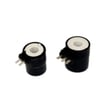
| Runs but no heat | Ignition or gas valve circuit issue | Dryer igniter 279311 or dryer valve coil kit 279834 |
| Long dry times, hot cabinet | Airflow restriction | Venting and lint buildup (service first) |
A dryer that is forced to run hot or run long to dry clothes wears out key components faster (motor, thermostats, drum support) and can repeatedly open safety devices like the thermal fuse.
Last updated: March 2026