


How to hard reset a Kenmore dryer?
To hard reset your Kenmore dryer model 11070172001, unplug the power cord (or switch the breaker off) for 5 minutes, then restore power and start a timed dry cycle. This clears many temporary control and sensor glitches; if the dryer still will not run or heat, a failed safety or start circuit part is usually the cause.
Hard reset steps (safe, works for most Kenmore dryers)
- Turn the dryer OFF.
- Unplug the dryer (or turn the breaker OFF).
- Wait 5 minutes.
- Restore power.
- Open and close the door once, then select Timed Dry and press Start.
- If the control is still unresponsive, repeat once and confirm the outlet has power.
If it still will not start after the reset
These checks isolate the most common no-start causes on a gas commercial dryer:
- Confirm the door fully closes; a bad door switch can prevent starting.
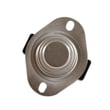
- Check for a blown thermal cut-off/high-limit from restricted airflow.
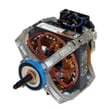
- Listen for a hum with no drum movement (often a belt or motor issue).
- Inspect the power cord and terminal block for heat damage or loose connections.
- Clean the lint screen and verify strong airflow at the exterior vent.
Quick symptom-to-part guide
| Symptom after reset | Most likely area | Example part for 11070172001 |
|---|---|---|
| No response at all | Power supply, cord, timer/control | Power cord, timer |
| Starts then stops quickly | Overheat safety opened | Dryer high-limit thermostat W11050897 |
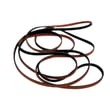
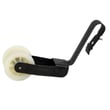
| Motor hums, drum does not turn | Belt/idler/drum support | Dryer drum belt 341241 |
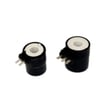
| Runs but no heat | Ignition circuit or gas valve coils | Dryer valve coil kit 279834 |
Why it matters
A hard reset only clears a temporary “stuck” state. If airflow is restricted or a safety thermostat opens, the dryer can keep shutting down until the venting is corrected and the failed part is replaced.
Last updated: February 2026
What is the E1 code on a Kenmore dryer?
On Kenmore dryer model 11070172001, an E1 code is a control-detected fault that commonly involves the dryer’s temperature and heat-safety circuit. We treat it as a heat/temperature troubleshooting issue first: verify airflow, then check the thermostats, sensor wiring, and burner heat operation.
What to do first (safe, fast checks)
- Disconnect power before removing any panels.
- Clean the lint screen and confirm strong airflow at the outside vent.
- Check the vent run for kinks, crushed flex duct, or heavy lint buildup.
- Inspect wiring connectors near the blower housing and burner area for loose plugs or heat damage.
- Run a timed dry cycle and note whether the burner ignites and stays on.
Parts to focus on for heat and temperature faults
For this Kenmore gas commercial dryer, these parts are common starting points when a code relates to heat control or overheating:
Quick symptom-to-check table
| What you notice | Most likely area to check | What you do next |
|---|---|---|
| Dryer shuts down or shows E1 after getting very hot | Airflow restriction, high-limit trip | Clean venting and lint path; test high-limit thermostat |
| No heat, but drum tumbles | Ignition/heating circuit | Check igniter, radiant sensor, gas valve coils, and wiring |
| Heat cycles erratically, long dry times | Operating thermostat, airflow | Verify venting; test operating thermostat |
Why it matters
Temperature-related faults are tied to drying performance and safety. Restoring proper airflow and confirming the thermostats and heat circuit are working correctly prevents repeated shutdowns and protects components like the blower wheel, wiring, and burner system.
Last updated: February 2026
What is the average lifespan of 11070172001?
A Kenmore gas commercial dryer like model 11070172001 typically lasts 15 to 20 years with proper venting, routine lint cleaning, and timely replacement of wear items such as belts, rollers, and thermostats.
What affects lifespan most
- Airflow and venting: restricted venting overheats the burner and cycling controls.
- Lint control: lint buildup stresses the blower wheel and raises operating temperatures.
- Load size and duty cycle: commercial use and frequent cycles shorten life.
- Heat system condition: weak ignition or gas valve issues cause repeated cycling and extra wear.
- Drum support wear: worn rollers, shafts, or idler parts strain the motor and belt.
Parts that commonly determine “end of life” (and are often repairable)
If the dryer is otherwise in good shape, these parts often restore performance:
- Dryer drum belt 341241 (no-tumble or squealing)
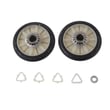
- Dryer repair kit 4392065 (roller and idler wear symptoms)
- Dryer operating thermostat WP3387134 (temperature control problems)
- Dryer high-limit thermostat W11050897 (overheating shutdowns)
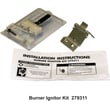
- Igniter 279311 (no-heat or intermittent heat)
Quick lifespan check: repair or replace?
| What you notice | Most likely area | Typical next step |
|---|---|---|
| Drum will not turn, motor runs | Belt, idler, drum support | Inspect belt path, replace wear parts |
| Runs but no heat | Ignition or gas valve circuit | Test igniter, coils, sensors |
| Long dry times, cabinet hot | Venting or airflow | Clean lint path and vent, check blower |
| Repeated overheating trips | Airflow or thermostats | Correct venting, replace failed thermostat |
Why it matters
Commercial gas dryers rely on steady airflow to keep burner temperatures stable. When airflow drops, safety thermostats trip more often and components like the igniter, radiant sensor, and motor wear faster, cutting years off the dryer’s service life.
Last updated: March 2026








