Installation guide
 Owner’s manual


How to identify Kenmore dryer model?
To identify your Kenmore dryer model, we look for the model and serial tag on the dryer cabinet, most often just inside the door opening. For Kenmore model 11062102311, the tag is typically on the door frame or on the back of the cabinet near the top.
Where to find the model number tag
Check these common locations on Kenmore electric and gas dryers:
- Inside the dryer door opening on the cabinet frame (most common)
- On the back of the dryer cabinet near the top edge
- Around the door opening area (left or right side of the frame)
- Occasionally behind the lower access panel (if your design has one)
For diagrams and model-specific details, use the 11062102311 owner's manual.
What the model number looks like (and why it matters)
Kenmore model numbers are usually a long number string. For this dryer, the model number is 11062102311. Using the exact model number helps us match the correct parts list, wiring, and installation requirements.
Model vs. serial number
| Item | What it tells us | Example format |
|---|---|---|
| Model number | Which design and parts fit | 11062102311 |
| Serial number | Production run and date info | Letters and numbers |
Tips for reading the tag correctly
- Copy the model number exactly as printed (all digits, no spaces)
- Take a clear photo before ordering parts
- If the tag is worn, wipe it gently and use a flashlight at an angle
- Match the full model number, not just the first few digits
Why it matters
Kenmore dryers can look similar across many versions, but parts like the drive belt, door switch, and heating element can vary by model. Using the correct model number prevents wrong-part returns and speeds up troubleshooting.
Last updated: February 2026
What size is a Kenmore Model 11062102311 dryer?
The Kenmore electric dryer model 11062102311 is a 29-inch wide dryer. From the installation dimensions, it measures about 43 3/8 inches tall and 27 3/4 inches deep (depth varies by door style). For exact fit planning, use the 11062102311 installation guide.
Dimensions you can plan around
These are the key cabinet dimensions shown in the installation instructions:
- Width: 29 in (737 mm)
- Height: 43 3/8 in (1102 mm) (with leveling legs set appropriately)
- Depth: 27 3/4 in (705 mm) (typical cabinet depth)
- Door clearance: allow room for the door to open fully
- Rear clearance (typical): plan at least 5 1/2 in behind the dryer for the exhaust vent and elbow
| Measurement | Approx. size | Notes |
|---|---|---|
| Width | 29 in | Standard full-size footprint |
| Height | 43 3/8 in | Leveling legs affect final height |
| Depth | 27 3/4 in | Door style can change overall depth |
| Rear clearance | 5 1/2 in minimum | For venting connection with elbow |
How to measure your space correctly
We recommend measuring the installation area before ordering parts or moving the dryer:
- Measure wall-to-wall width at the floor and at mid-height
- Measure depth from the back wall to the front edge of where the dryer will sit
- Add space for the vent duct, power cord, and strain relief
- Confirm the floor is reasonably level (a slope over about 1 inch can affect operation)
Why it matters
Correct sizing prevents installation headaches like a crushed vent, a kinked power cord, or a door that cannot open fully. Proper clearances also help airflow, which improves drying performance and helps protect components like the dryer heating element and thermostats.
Last updated: February 2026
How to hard reset a Kenmore dryer?
For the Kenmore 11062102311 electric dryer, a hard reset is a power reset: disconnect power for 1 to 5 minutes, then restore power and try a cycle again. This clears many control glitches and is the first step before deeper troubleshooting.
Hard reset steps (safe power reset)
- Turn the dryer OFF.
- Unplug the dryer (or switch OFF the breaker) for 1 to 5 minutes.
- Plug back in (or switch the breaker ON).
- Close the door fully, select a timed cycle, and press and hold PUSH to START until the drum begins moving.
- If the dryer still will not run, follow the checks in the 11062102311 owner's manual.
If it still will not start after a reset
These are the most common causes on this style of Kenmore electric dryer:
- Door not fully closed (the door switch must engage).
- Start button not pressed and held long enough.
- A tripped breaker or blown fuse (electric dryers typically need two fuses or a 2-pole breaker; the drum can turn with no heat if one side is out).
- Incorrect power supply (electric dryers require 240V).
- Loose wiring or a failed door switch.
Quick symptom guide
| What you see | What it usually points to | What to do next |
|---|---|---|
| No lights, no response | No power | Check breaker, cord, outlet |
| Runs but no heat | One breaker leg tripped, heating circuit issue | Reset both breaker poles; verify 240V |
| Stops when door moves | Door switch issue | Inspect/replace dryer door switch WP3406107 |
Why it matters
A power reset is fast and prevents unnecessary parts replacement. If the dryer is shutting down due to airflow or overheating protection, the reset will not fix the root cause, so checking venting and heat-related components becomes the priority.
When to check airflow and heat safety parts
If the dryer runs but dries slowly or overheats, address airflow first:
- Clean the lint screen before every load.
- Inspect and clear the exhaust vent run and outside hood.
- Avoid crushing or kinking the vent behind the dryer.
- If overheating has occurred, inspect heat safety components such as the thermal cut-off kit.
Last updated: February 2026
What does sru cll mean on a dryer?
On a Kenmore electric dryer model 11062102311, “SRU CLL” indicates a service call message; it shows up when the control detects a condition that needs troubleshooting or repair rather than a normal cycle setting.
What to do first (safe, quick checks)
- Press Cancel/Stop to clear the display, then try a normal cycle.
- Unplug the dryer for 1 minute, plug it back in, and recheck the display.
- Confirm the door fully closes; a failing door switch can prevent normal operation.
- Clean the lint screen and make sure airflow is strong; restricted venting can trigger heat-related problems.
- If the dryer will not run or heat, stop using it and schedule service.
Common causes on electric dryers
| What you notice | Likely area to check | Example part that can be involved |
|---|---|---|
| Dryer will not start or stops when door moves | Door switch circuit | Dryer door switch WP3406107 |
| Runs but no heat, or heat cuts out | Heating circuit safety devices | Dryer thermal cut-off fuse kit 279816 |
| Long dry times, overheating, burning smell | Venting restriction or airflow issue | Vent system, lint filter, blower path |
Why it matters
“SRU CLL” is the dryer’s way of telling you the control is not seeing normal operating conditions. Clearing the message without fixing the cause can lead to repeated shutdowns, poor drying performance, or overheating from blocked venting.
Where to find model-specific guidance
Use the troubleshooting and “Assistance or Service” sections in the 11062102311 owner’s manual. If you are installing or reworking the vent or power cord, follow the 11062102311 installation guide to confirm electrical and venting requirements.
Last updated: February 2026
What is the average life of a Kenmore dryer?
A Kenmore electric dryer like model 11062102311 typically lasts 10 to 13 years. With consistent airflow maintenance (lint screen and venting) and timely replacement of normal-wear items, it’s common for these dryers to reach 15 years of service.
Typical lifespan and what changes it
Most dryer life comes down to heat stress and airflow. When airflow is restricted, components run hotter and fail sooner.
- Normal household use: 10 to 13 years
- Well-maintained, lighter use: about 15 years
- Heavy use or poor venting: often under 10 years
- Wear items (belts, bulbs, some thermostats) can need replacement during the dryer’s life
Maintenance that extends dryer life
Use these habits to reduce overheating and strain on the motor and drum support system:
- Clean the lint screen every load
- Check the vent path for strong airflow and clear lint buildup regularly
- Avoid overloading; it stretches the belt and stresses drum rollers
- Use Auto/moisture-sensing cycles when available to reduce overdrying heat time
- Address new noises early (squeal, thump, rumble) before they damage the drum or motor
Common wear parts you may replace over time
These are normal service items for many Kenmore 110-series dryers:
| Symptom | Likely wear area | Example part for this model |
|---|---|---|
| Drum not turning, motor runs | Drum drive | Belt 341241 |
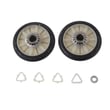
| Squealing or intermittent drum movement | Idler/tension system | Dryer idler pulley WP691366 |
| Long dry times, overheating shutdown | Heating safety circuit and venting | Dryer thermal cut-off fuse kit 279816 |
Why it matters
A dryer that runs hot or takes too long to dry usually is not “just getting old”; it’s often telling you airflow is restricted or a wear part is failing. Fixing that early protects the heating element, thermostats, and drive motor.
For model-specific care and venting requirements, follow the 11062102311 owner’s manual and the 11062102311 installation guide.
Last updated: February 2026
How do I know if my Kenmore dryer thermal fuse is blown?
If your Kenmore electric dryer model 11062102311 runs but has no heat, or it will not run at all, a blown thermal fuse (or thermal cut-off) is a common cause. The sure way to know is to unplug the dryer and test the fuse for continuity with a multimeter, as outlined in the 11062102311 owner’s manual.
What you’ll typically notice when the thermal fuse is blown
A blown thermal fuse is a safety device response, usually triggered by overheating from restricted airflow.
- Dryer will not start (no motor run)
- Dryer runs but produces no heat
- Cycle starts then stops quickly
- Burning smell or very hot cabinet (stop using it)
- Lint buildup or a crushed/kinked vent behind the dryer
How to test it (quick, accurate check)
- Unplug the dryer (electric shock hazard).
- Access the thermal fuse or thermal cut-off on the blower housing or heater housing (location varies by build).
- Pull one wire off the fuse terminal.
- Set your multimeter to continuity (or lowest ohms).
- Touch probes to the two fuse terminals.
- Good fuse: continuity (near 0 ohms)
- Blown fuse: no continuity (open circuit)
Don’t confuse a blown fuse with a power supply problem
This model is an electric dryer, and electric dryers commonly use two household fuses or two breakers. You can have a turning drum but no heat if one side of the 240V supply is lost.
| Symptom | More likely cause | What to check first |
|---|---|---|
| Drum turns, no heat | House fuse/breaker issue or heater circuit issue | Both breakers/fuses, then heating circuit parts |
| Won’t start at all | Door switch, thermal fuse, timer/control, power | Door fully closed, start pressed, power |
Why it matters
A thermal fuse usually blows because the dryer overheated. Replacing the fuse without fixing airflow (lint filter, venting, blower) often leads to another failure.
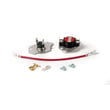
If you need the common safety fuse kit used on many Kenmore-built-by-Whirlpool dryers, match your model to the dryer thermal cut-off fuse kit 279816 and correct the venting issue before running a full heat cycle.
Last updated: February 2026
Are Kenmore dryers made by Whirlpool?
Yes, many Kenmore dryers, including common Kenmore 110-series designs like model 11062102311, were manufactured for Kenmore by Whirlpool (Kenmore is a brand name, and different manufacturers have built Kenmore dryers over the years). For model-specific operating and care details, use the 11062102311 use & care guide.
What “made by Whirlpool” means for parts and repairs
Kenmore-branded appliances are often built by major manufacturers; the builder can vary by model family and production run. For Kenmore 110 model numbers, the design and parts layout commonly align with Whirlpool-built platforms, which helps when you are diagnosing issues like no heat, no start, or noisy operation.
- Expect many service procedures to match Whirlpool-style electric dryer construction
- Common wear items include the drum belt, idler pulley, and drum support components
- Heating complaints often involve the heating element and safety thermostats/fuses
- Airflow problems (venting) can cause overheating and repeated thermal fuse failures
Quick part examples that commonly match Whirlpool-built Kenmore 110 dryers
If you are troubleshooting or planning a refresh, these are typical parts customers replace on this style of Kenmore electric dryer:
| Symptom | Common part to check | Example part for this model |
|---|---|---|
| Drum not turning, motor runs | Drum belt | Belt 341241 |
| No heat, tumbles normally | Heating circuit | Dryer element 279838 |
| Runs but shuts off from overheating | Safety cutoffs | Dryer thermal cut-off fuse kit 279816 |
| Squealing, thumping, poor tumbling | Drum support wear | Dryer repair kit 4392065 |
Why it matters
Knowing the likely manufacturer helps you choose the right troubleshooting steps and replacement parts the first time. On Whirlpool-built Kenmore 110 dryers, airflow and drum-drive wear are the two biggest drivers of repeat problems.
Helpful next steps
- Confirm your full model number from the door opening or cabinet label
- Follow venting and airflow checks in the 11062102311 installation instructions
- Use the troubleshooting section in the 11062102311 use & care guide for symptom-based checks
- If your dryer shows an error code on an electronic control, use the Kenmore 110 series electronic control model dryer error codes guide
Last updated: February 2026
How much does it cost to replace a heating element in a Kenmore dryer?
For Kenmore electric dryer model 11062102311, replacing the heating element typically costs $50 to $350 total. The part itself is usually $20 to $120, and professional labor commonly adds $100 to $250, depending on access, venting condition, and local rates.
Typical cost breakdown
Here is what we see most often for an electric dryer heating repair:
- Heating element part: $20 to $120 (element-only vs. assembly varies)
- Service call / diagnostic (if used): $0 to $120
- Labor: $100 to $250
- Related safety parts (sometimes needed): $15 to $70
- Total typical range: $50 to $350
| Scenario | What you pay for | Typical total |
|---|---|---|
| DIY element replacement | Part only | $20 to $120 |
| DIY plus safety parts | Element + thermal parts | $35 to $190 |
| Pro repair | Diagnostic + labor + parts | $150 to $350 |
Parts that are commonly replaced with the element
If the dryer overheated or airflow was restricted, we often replace heat-related safety parts at the same time so the new element is protected.
- Dryer element 279838
- Dryer thermal cut-off fuse kit 279816
- Dryer operating thermostat WP3387134
- Dryer high-limit thermostat WP3977767
What to check before you buy parts
Your installation instructions include a quick heat check: after the dryer runs about 5 minutes, you should feel heat when you open the door. If there is no heat, the guide calls out checking both household fuses or breakers (many electric dryers use two). See the 11062102311 installation guide.
- Confirm the cycle and temperature setting are correct
- Check both breakers/fuses for the dryer circuit
- Clean the lint screen and verify strong airflow at the vent outlet
- Inspect venting for kinks, crushing, or heavy lint buildup
- If the dryer heats once then stops, suspect a thermal cut-off or thermostat
Why it matters
A failed heating element can be the root cause, but poor airflow can also cause overheating that repeatedly blows a thermal cut-off. Fixing venting issues at the same time helps the dryer heat safely, dry faster, and reduces repeat repairs.
Last updated: February 2026
What is the code F23 on a Kenmore dryer?
On Kenmore electric dryer model 11062102311, F23 is treated as a temperature-sensing circuit fault on many Kenmore 110-series electronic-control dryers. In practice, we troubleshoot it as a problem with the exhaust temperature sensor circuit (sensor, wiring, or control input) and confirm with airflow and meter checks.
What to check first (quick, safe steps)
Follow electrical and venting safety guidance in the 11062102311 installation guide before opening panels or testing.
- Unplug the dryer or shut off the breaker; let the heater area cool.
- Clean the lint screen; confirm strong airflow at the outside vent hood.
- Inspect the vent duct for kinks, crushed sections, or lint blockage.
- Check accessible wire connectors for looseness or heat damage.
- If the dryer overheats or shuts down, stop using it until airflow is corrected.
How we diagnose F23 on this platform
A temperature-sensing fault is usually confirmed with a multimeter test of the sensor circuit and a visual inspection of the harness routing near hot components.
| What you find | What it points to | What to do next |
|---|---|---|
| Poor airflow or very hot cabinet/exhaust | Vent restriction causing abnormal temps | Clear/replace venting; re-test dryer |
| Sensor circuit shows open/short | Failed sensor or broken wire | Repair wiring or replace the failed sensor used on your version |
| Readings are stable but code returns | Intermittent connection or control issue | Reseat connectors; inspect harness; evaluate control if needed |
Why it matters
The temperature-sensing circuit helps the control regulate heat and prevent overheating. When the control loses a reliable temperature signal, it can stop the cycle, shut off heat, or display repeated fault codes.
Related code reference
To compare code families and symptoms used across Kenmore electronic-control dryers, use our Kenmore 110 series electronic control model dryer error codes guide.
Last updated: February 2026