Owner’s manual


What is the average lifespan of a Kenmore washer?
A Kenmore washer typically lasts 10 to 15 years. For your Kenmore washer model 11028902790, that same 10 to 15-year range is the practical average; lifespan is most affected by load size, cycle frequency, and keeping the tub, hoses, and moving drive parts in good condition.
What helps a Kenmore washer reach the high end of its lifespan
- Avoid overloading; heavy loads strain the drive system and suspension.
- Use the correct water level and temperature settings for the load.
- Level the washer so it does not bang during spin.
- Keep the lid area and tub clean to reduce odor and residue buildup.
- Address small issues early (new noises, slow drain, weak agitation).
For model-specific operating and care tips, follow the cycle and option guidance in the 11028902790 owner’s manual.
Parts that commonly affect “how long it lasts”
Even a solid washer can feel “worn out” when a few service parts start slipping or failing. On model 11028902790, these are common wear-related items:
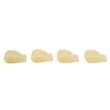
- Agitation problems: agitator dog 80040
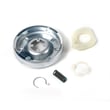
- No spin or intermittent operation: lid switch, motor coupling, clutch
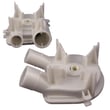
- Drain issues: drain pump, drain hose
- Excessive vibration: suspension components
Quick symptom-to-part map (high level)
| Symptom | Often involved | What you notice |
|---|---|---|
| Agitator moves poorly | Agitator dogs | Clothes not circulating well |
| Won’t drain | Drain pump or hose | Water left in tub |
| Won’t spin | Lid switch or drive components | Wet clothes at end |
| Loud banging | Suspension parts or leveling | Tub hits cabinet during spin |
Why it matters
Knowing the typical 10 to 15-year lifespan helps you decide when routine maintenance and targeted part replacement makes sense versus planning for a replacement washer. Many “end of life” complaints are actually a single failed component that restores normal washing once repaired.
Last updated: January 2026
How many cubic feet is a Kenmore Model 110 washer?
For Kenmore washer model 11028902790, the exact tub capacity in cubic feet is not identified in the model-specific information we have available; this model is labeled “Super Capacity Plus” in the 11028902790 owner’s manual.
What “Super Capacity Plus” usually means
Kenmore 110-series top-load washers are commonly described by size labels (such as “Super Capacity” or “Super Capacity Plus”) rather than listing a precise cubic-feet number on the console or in quick-reference pages.
Typical capacity ranges you may see for similar Kenmore top-load designs:
- Standard capacity: about 2.5 to 3.1 cu. ft.
- Super capacity: about 3.2 to 3.5 cu. ft.
- Extra-large / newer high-capacity designs: about 3.6 cu. ft. and up
How to confirm capacity for your exact washer
If you need a precise number (for load sizing, moving, or comparing models), these are the most reliable ways to confirm it for 11028902790:
- Check the model/serial tag (often under the lid or on the cabinet rim) for additional identifiers.
- Look for a specification page included with the original paperwork packet.
- Compare the basket and tub style shown in the 11028902790 owner’s manual to listings that publish capacity by exact model.
- If you are troubleshooting performance (small loads, poor turnover), focus on water level setting and cycle selection rather than cubic feet.
Why it matters
Capacity affects how full you can load the basket while still getting proper agitation, rinsing, and spin performance. Overloading can also increase wear on drive components.
| What you’re doing | Why capacity matters | Practical tip |
|---|---|---|
| Washing bulky items | Needs room for turnover | Use the highest water level that matches the load |
| Comparing to a new washer | Helps match “load size” claims | Compare by model, not just “110” prefix |
| Diagnosing poor wash action | Overloading mimics mechanical issues | Reduce load size before replacing parts |
Last updated: January 2026
How to unclog drain hose on Kenmore washer?
To unclog the drain hose on your Kenmore washer model 11028902790, we recommend unplugging the washer, turning off the water, then removing the drain hose and flushing it out with hot water. If the clog returns, inspect the drain pump and hose for debris and kinks; see the 11028902790 washer manual.
Step-by-step: clear the drain hose safely
- Unplug the washer to prevent the motor from starting unexpectedly.
- Turn off both water supply valves.
- Pull the washer forward and place towels and a shallow pan under the hose area.
- Remove the external drain hose from the standpipe or laundry tub.
- If accessible, remove the hose from the washer outlet and check the hose end for lint, coins, or a sock.
- Flush the hose with hot water; for buildup, soak the hose end in hot water with vinegar, then flush again.
If the hose is clear but the washer still will not drain
A “hose clog” symptom is often caused by a restriction at the pump or a collapsing hose.
- Check for a kinked hose behind the washer.
- Look for slow draining only on heavy loads (can point to partial restriction).
- Inspect the pump inlet hose for debris.
- If the pump is noisy, jammed, or leaking, the pump may need replacement.
Helpful parts for this model:
Quick comparison: what the symptom usually means
| What you see | Most common cause | What to do first |
|---|---|---|
| Water drains very slowly | Partial clog or kink | Remove and flush drain hose |
| Hums but will not drain | Pump jam or failed | Check pump for debris |
| Drains, then backs up | Standpipe/drain issue | Clear household drain |
Why it matters
A restricted drain path can leave water in the tub, cause poor spin performance, and strain the drain pump. Clearing the hose early helps prevent repeat no-drain problems and reduces the chance of leaks.
Last updated: January 2026