


Can you still get parts for Kenmore appliances?
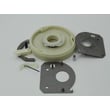
Yes. We still carry replacement parts for Kenmore appliances, including the Kenmore washer model 11082870120. The key is matching parts by your full model number, then choosing the correct component (for example, a drive, drain, or agitation part) based on the symptom.
Use the model number on the washer’s lid frame or cabinet opening and match it exactly to 11082870120. Then narrow by the problem you’re seeing.
- Start with the full model number, not the washer’s series name
- Identify the symptom (won’t drain, won’t spin, won’t agitate, leaks)
- Check common wear items first (coupler, pump, clutch)
- Replace only the failed part, not multiple “just in case”
- Confirm compatibility before ordering (similar Kenmore models can use different parts)
Here are examples of in-stock parts commonly replaced on this style of Kenmore top-load washer:
| Symptom | Likely part | Example part for 11082870120 |
|---|---|---|
| Won’t agitate or weak agitation | Agitator dogs / cam | Agitator dog 80040 |
| Won’t drain or drains slowly | Drain pump | Water pump WP3363394 |
| Motor runs but basket won’t move | Motor coupling | Coupling 285753A |
| Spins poorly or slips under load | Clutch | Clutch 285785 |
Kenmore washers were built by major manufacturers and use serviceable components, so keeping a model like 11082870120 running is often a straightforward parts replacement instead of a full washer replacement.
Last updated: February 2026
How to force a Kenmore Elite washer to drain?
To force-drain a Kenmore washer model 11082870120, we unplug it first, then manually remove water through the drain system (hose or pump) so you can clear the clog and restore normal draining. Most “won’t drain” problems come from a blocked pump, kinked hose, or a failed drain pump.
- Unplug the washer (do not rely on the control knob being OFF).
- Turn off both water supply valves to prevent accidental filling.
- Bail out water from the tub with a cup into a bucket if the tub is full.
- Check the drain hose at the standpipe or sink; straighten kinks and clear lint or a sock at the end.
- If the washer still will not drain, plan to inspect the pump; the drain pump on this model is the water pump WP3363394.
- Drain hose: Look for a kink behind the cabinet or a clog where it enters the standpipe.
- Pump inlet: Small items can lodge between the tub-to-pump hose and the pump.
- Pump impeller: Coins, hair pins, and fabric can jam the impeller so it hums but will not move water.
| Symptom | Most likely cause | What to do next |
|---|---|---|
| Hums but no draining | Pump jammed | Check pump for debris; replace if damaged |
| Drains slowly | Partial clog in hose/pump | Clear hose and pump path |
| No sound from pump | Electrical issue or failed motor | Check lid switch and wiring; replace pump if needed |
A washer that cannot drain cannot spin properly; that leaves clothes soaking wet and can strain the drive system. Clearing the drain path quickly helps prevent repeat clogs and reduces wear on components like the motor coupling and clutch.
If your Kenmore top-load washer shows an unbalance-related code during drain or spin, use our Kenmore top load washer ue and ue error codes guide to match the symptom to the next check.
Last updated: February 2026
How to hard reset kenmore washer?
To hard reset a Kenmore washer model 11082870120, we typically power-cycle it: unplug for 1 minute, plug back in, then run a quick cycle to confirm the control responds normally. If the washer is stuck in a mode or won’t start, a reset plus a basic control check usually restores operation.
- Press Pause/Cancel (or Stop) once to end the current cycle.
- Unplug the washer (or switch the breaker off).
- Wait 60 seconds.
- Plug back in (or turn breaker on).
- Lift and close the lid once, then select Rinse/Spin and press Start.
A “reset” won’t fix a failed lid switch, drain problem, or drive issue. These checks narrow it down fast:
- Confirm the outlet has power (test with a lamp).
- Make sure the lid closes firmly; a bad lid switch can prevent spin.
- If water won’t drain, check for a clogged or failing pump.
- If it fills but won’t agitate or spin, the motor coupling is a common failure point.
- If it agitates weakly or “ratchets,” the agitator dogs are often worn.
| Symptom after reset | Most likely area to check | Common related part for this model |
|---|---|---|
| Won’t spin, acts like lid is open | Lid switch circuit | Switch W10820036 |
| Won’t drain or drains slowly | Drain pump or blockage | Water pump WP3363394 |
| Motor runs but no agitation/spin | Motor coupling | Coupling 285753A |
| Agitator moves one way or slips | Agitator dogs/cam | Agitator dog 80040 |
Resetting clears a “hung” control state, but it does not correct mechanical failures. Matching the symptom (no drain, no spin, weak agitation) to the right system helps you avoid replacing the wrong part and gets your Kenmore washer back to normal faster.
Last updated: February 2026
How to identify a Kenmore washer model?
To identify your Kenmore washer model, we look for the model/serial tag on the washer cabinet or around the control area. On Kenmore model 11082870120, the tag is typically on the back of the control panel, under the lid opening, or on the cabinet near the bottom edge.
Check these common locations first:
- Back of the control console (often easiest to see from behind)
- Under the lid around the tub opening (top-load washers)
- Left or right side of the main cabinet near the bottom front edge
- Rear panel of the washer cabinet
- If your washer is a front-load style: inside the door opening or on the door jamb
Most Kenmore washers use a printed sticker or metal plate that includes:
- Model number (example: 11082870120)
- Serial number
- Electrical rating (volts/amps)
- Sometimes a manufacturing date code
| What you see on the tag | What it means | What to do with it |
|---|---|---|
| Model number (110xxxxxxxx) | Kenmore model family identifier | Use it to match diagrams and parts |
| Full model number (11082870120) | Exact version of your washer | Use it for exact-fit parts |
| Serial number | Unique unit identifier | Helpful for service history |
Using the full model number prevents ordering the wrong part when multiple Kenmore 110-series washers look similar. Once you confirm the model, we can match exact items like the coupling 285753A or water pump WP3363394 when you are troubleshooting agitation or draining problems.
Last updated: February 2026
Is it worth repairing a Kenmore washing machine?
Yes, it’s usually worth repairing a Kenmore washer, especially a proven model like Kenmore 11082870120, when the fix is a common wear part and the machine otherwise fills, agitates, drains, and spins normally. Repairs that restore core functions (drain, spin, agitation) typically deliver the best value.
We look at the type of failure first, then the cost and effort.
- Repair when the problem is a common, contained failure (no major rust, no repeated leaks)
- Repair when the washer is mechanically solid but won’t agitate, spin, or drain
- Replace when the tub or cabinet is badly rusted, or multiple major systems are failing
- Replace when you have recurring leaks that have damaged the floor or wiring
- Repair when the fix is a known wear item and you can confirm symptoms match
These are frequent, high-impact fixes for top-load Kenmore 110-style washers:
| Symptom | Likely area | Example part for Kenmore 11082870120 |
|---|---|---|
| Won’t agitate well, clothes barely move | Agitator drive | Agitator dog 80040 |
| Motor runs but washer won’t agitate or spin | Drive connection | Coupling 285753A |
| Won’t drain or drains slowly, may hum | Drain system | Water pump WP3363394 |
| Spins poorly or makes burning/rubbing smell in spin | Spin drive | Clutch 285785 |
A washer that only needs a coupling, pump, clutch, or agitator repair often returns to normal operation for years because these are designed wear components. Replacing a targeted part also avoids the learning curve and installation changes that come with a new washer.
- Confirm the washer fills with hot and cold water (inlet valve issues can mimic other problems)
- Listen for motor sound during agitate and spin (running vs. silent changes the diagnosis)
- Check for standing water in the tub (points to drain pump or blockage)
- Inspect for oil or water leaks under the machine (can indicate seal or gearcase concerns)
- Note whether the basket reaches full spin speed or stops early (often clutch or drive-related)
Last updated: February 2026
What is the average lifespan of a Kenmore washer?
A Kenmore washer like model 11082870120 typically lasts 10 to 15 years with normal household use. How long yours runs depends most on load size, how often you wash, and whether wear items (like the drive coupling and pump) get replaced before they cause bigger damage.
- Overloading (stresses the drive system, clutch, and suspension)
- Unbalanced loads (increases vibration and tub wear)
- Hard water and detergent buildup (can affect valves and draining)
- Drain restrictions (overworks the pump)
- Delayed small repairs (a minor part failure can cascade into major wear)
- Loud grinding or banging during spin
- Frequent failure to drain or slow draining
- Agitation is weak or stops (common wear area in top-load designs)
- Burning smell, repeated tripped breaker, or motor struggles to start
- Water leaks that return soon after tightening hoses
These are typical wear items that often restore normal washing and reduce strain on major components:
| Symptom | Common wear area | Example part for this model |
|---|---|---|
| Won’t drain or leaves water | Drain pump | Water pump WP3363394 |
| Agitator moves poorly or slips | Agitator drive parts | Agitator dog 80040 |
| Motor runs but washer won’t agitate/spin | Drive connection | Coupling 285753A |
Replacing a small, high-wear part early often prevents secondary damage to higher-cost assemblies (like the drive motor, clutch, or basket drive). That is the simplest way to keep a Kenmore washer running closer to the 15-year end of the typical range.
Last updated: February 2026
What is the cubic foot of my Kenmore washer model 11082870120?
Kenmore washer model 11082870120 is a standard top-load, agitator-style platform; the wash basket capacity for washers in this design class is typically about 3.0 to 3.5 cu. ft. Use that range for load planning, and size loads by basket fill level for best cleaning.
If you want a closer estimate without a spec sheet, we use these practical checks:
- Measure the inside basket diameter and depth (in inches)
- Multiply: diameter x diameter x depth x 0.000226 to estimate cubic feet (approximation)
- Compare your result to the typical ranges in the table below
- Use the “loose fill” rule: mixed loads should sit below the top row of holes
- If you routinely need more room, reduce load size to improve turnover and rinsing
| Washer type | Typical capacity (cu. ft.) | What it means for loading |
|---|---|---|
| Compact top-load | 1.5 to 2.5 | Small mixed loads, limited bulky items |
| Standard top-load with agitator | 3.0 to 3.5 | Most family loads, towels in smaller batches |
| Large-capacity top-load | 3.6 to 5.5+ | Bulkier loads, fewer cycles |
Capacity directly affects wash action and balance. Overloading reduces agitation and rinsing, and it increases strain on the drive system during spin.
Poor turnover can make the washer feel smaller than it is. These common wear parts are worth checking:
- Agitator dog 80040 (helps the upper agitator ratchet and pull items through)
- Coupling 285753A (connects the drive motor to the gearcase; wear can reduce agitation and spin)
- Clutch 285785 (helps the basket reach and hold full spin speed)
Last updated: February 2026